
BALINEWSID.COM, JAKARTA — The Indonesian government is accelerating the development of the country’s digital economy and financial ecosystem, with the value of the digital economy projected to reach between US$180 billion and US$340 billion by 2030.
The government is strengthening cooperation among ministries and agencies, financial authorities, regional governments and industry players to accelerate the national digital economic and financial transformation.
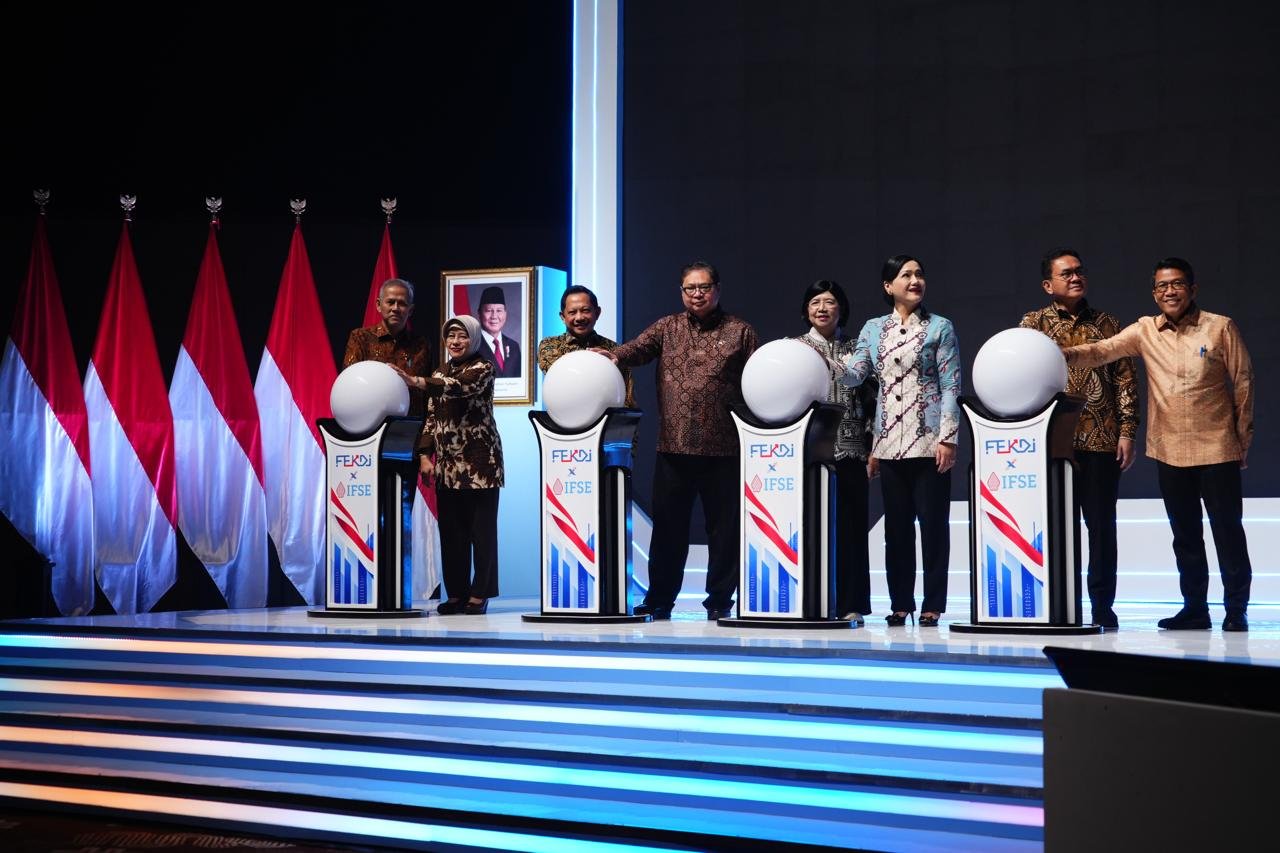
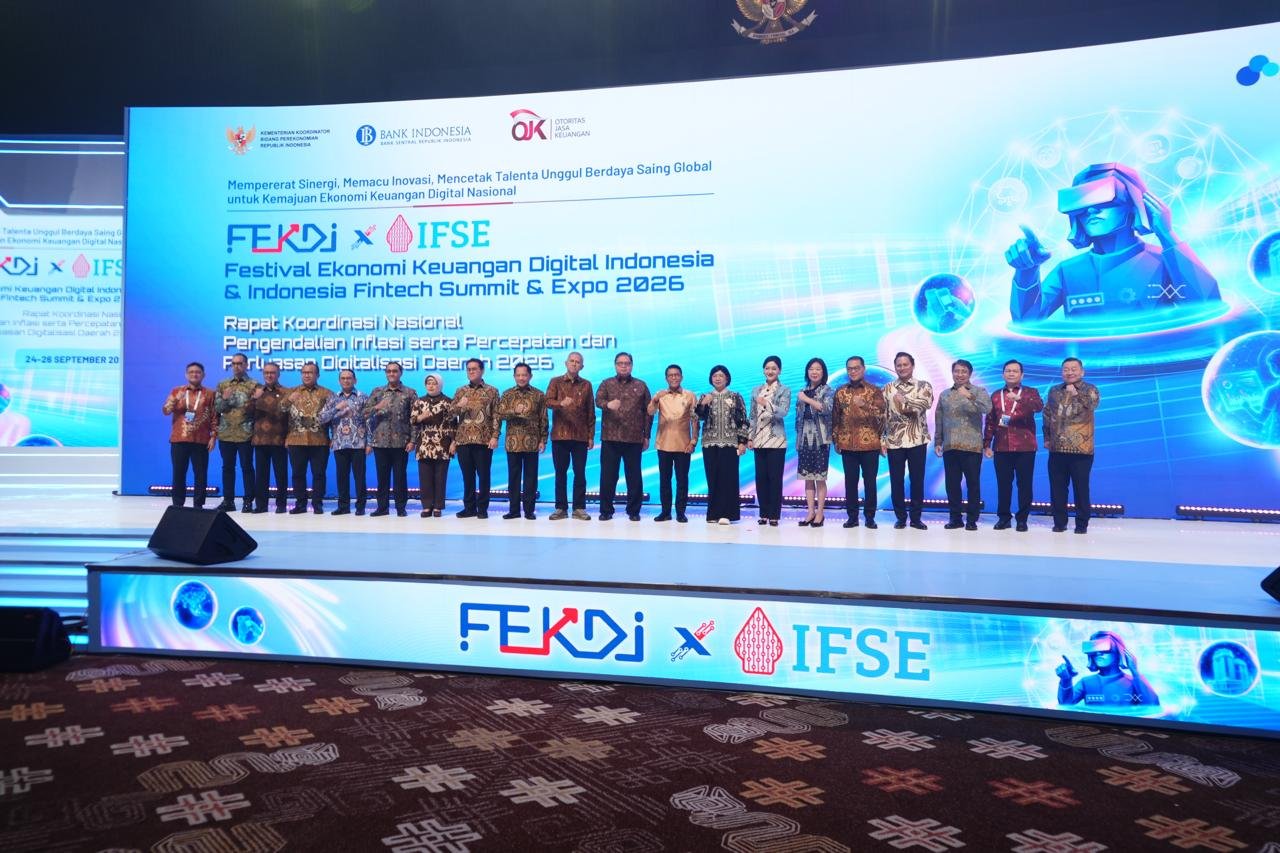
The commitment was highlighted at the Festival Ekonomi Keuangan Digital Indonesia (FEKDI) and Indonesia Fintech Summit and Expo (IFSE) 2026, held at the Jakarta International Convention Center (JICC) from Sept. 24 to 26.
Coordinating Minister for Economic Affairs Airlangga Hartarto said the expansion of the digital economy needs to be supported by a resilient national economy and well-coordinated policies.
“Indonesia’s digital economy in 2025 is estimated to have approached US$100 billion and is projected to reach US$180-340 billion by 2030,” Airlangga said during the opening ceremony of FEKDI x IFSE 2026 on Thursday.
Indonesia’s economy grew 5.45% in the first half of 2026, while annual inflation stood at 3.19% in August 2026, according to the government.
The expansion of digital payments has also continued. As of June 2026, the Quick Response Code Indonesian Standard (QRIS) had 65.77 million users and 44.86 million merchants. Micro, small and medium enterprises (MSMEs) accounted for 96.68% of the merchants.
The government is also expanding digital financial services at the regional level. By 2026, 518 of 546 regional governments, or 94.9%, had established digital ecosystems.
Meanwhile, non-cash collections of regional taxes and levies reached Rp165 trillion in the first half of 2026, an annual increase of 10.6%.
Connectivity based on low Earth orbit (LEO) satellite technology has also reached 269 regional governments in cooperation with all Bank Indonesia representative offices, Airlangga said.
The government is also expanding the use of the Indonesia Credit Card (KKI) by regional governments and ministries and agencies. The card is scheduled to be available for use on the national e-catalogue starting in October 2026, while cooperation between the e-catalogue, marketplaces and MSMEs will also be expanded.
For 2027, the government plans to direct regional digitalization toward improving public services, strengthening regional investment climates, better management and monetization of regional government assets, and developing digital infrastructure.
AI Expands in Financial Services
Financial inclusion and literacy have also continued to increase alongside digitalization.
The Financial Services Authority (OJK) 2026 survey recorded a financial inclusion index of 93.61%, while the financial literacy index stood at 69.57%.
The government said Indonesia’s financial inclusion rate was above the OECD average of 63%.
Artificial intelligence (AI) is also increasingly being used in the financial sector to create new economic value and improve decision-making. Among its applications are automated Know Your Customer (KYC) verification and credit scoring.
The government is also focusing on developing digital talent to support the digital economy. Programs include technology talent exchanges between Indonesia and Singapore, pilot projects for the gig economy, a Super Tax Deduction of up to 200% for vocational training and the Digital Talent Scholarship program.
At the regional and international levels, Indonesia is participating in negotiations for the ASEAN Digital Economy Framework Agreement (DEFA). Indonesia has also become a founding member of the World AI Cooperation Organization (WAICO), which provides opportunities for AI-related human resource training in China.
The FEKDI x IFSE 2026 event carries the theme “Strengthening Synergy, Accelerating Innovation, Developing Globally Competitive Talent for the Advancement of the National Digital Economy and Financial Ecosystem.”
The three-day event brings together government institutions, regulators, industry players and other stakeholders through a series of interactive discussions.
The agenda includes high-level talks on policy coordination to accelerate digital economic and financial transformation and improve economic productivity. Other sessions cover the future development of capital markets, digital innovation as a driver of economic growth, and the adoption of technology and business-process best practices across digital economy and financial ecosystems.
Deputy for Coordination of SOE Business Development at the Coordinating Ministry for Economic Affairs, Ferry Irawan, was among the speakers at Casual Talk 1, which focused on accelerating the digital economy and financial sector to support economic productivity.
The event was attended by, among others, the chairman of the House of Representatives Commission XI, the home affairs minister, the trade minister, the Bank Indonesia governor, the chairman of the OJK Board of Commissioners, the head of Statistics Indonesia (BPS), the head of the Deposit Insurance Corporation (LPS), government officials, as well as representatives from ministries, agencies, banks and the national fintech industry.



Discussion (0)
No comments yet.