
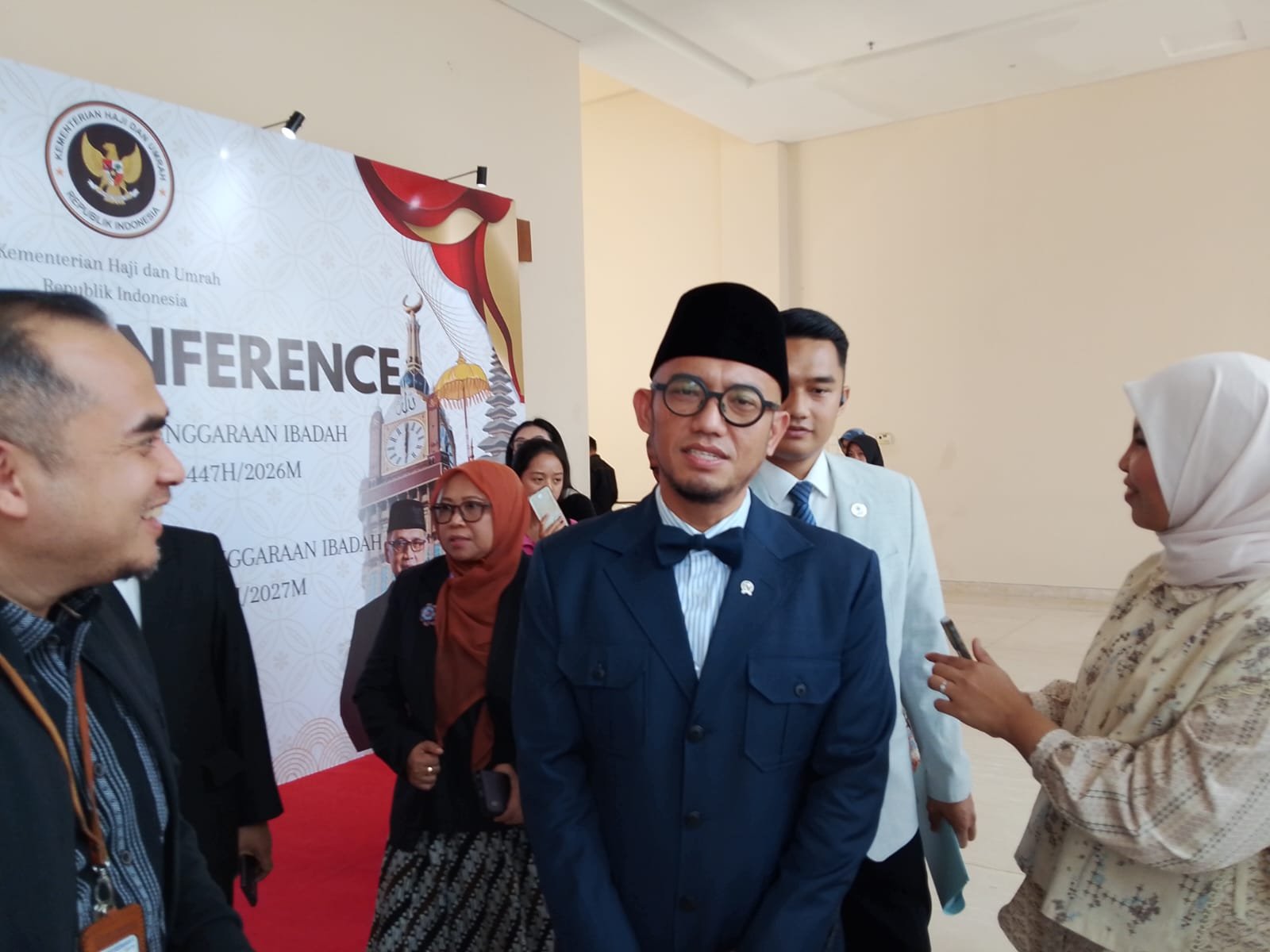
BALINEWSID.COM, BADUNG — Indonesia’s Ministry of Hajj and Umrah (Kemenhaj) held a meeting in Bali on Thursday (Sept. 24, 2026) to evaluate the implementation of the 1447 H/2026 Special Hajj pilgrimage and coordinate preparations for the 1448 H/2027 Special Hajj.
The two-day meeting, held on Sept. 24–25 at Four Points by Sheraton Bali, Ungasan, brought together relevant stakeholders to review the implementation of this year’s Special Hajj and discuss strategic preparations for next year’s pilgrimage.
Deputy Minister of Hajj and Umrah Dahnil Anzar Simanjuntak attended the meeting and delivered the opening remarks. In his address, Dahnil highlighted the concept of “Three Hajj Successes” (Tri Sukses Haji) as a framework for the implementation of Hajj and Umrah programs.
“The Three Hajj Successes are success in rituals, success in the Hajj economic ecosystem, and success in civility and civilization,” Dahnil said.
He said the three aspects form an important part of Kemenhaj’s transformation, with the implementation of Hajj and Umrah expected to focus not only on the religious aspects of the pilgrimage but also on delivering broader benefits.
According to Kemenhaj’s strategic framework, the three pillars include improving the quality of Hajj services, strengthening the Hajj economic ecosystem, and improving governance and character development through civility and civilization.
During the evaluation of the 1447 H/2026 Special Hajj, participants discussed several aspects of the pilgrimage, including the participation of Special Hajj pilgrims, guidance and oversight of Special Hajj services, immigration support, and the implementation of health eligibility requirements, known as istitha’ah.
The meeting also reviewed the implementation and supervision of the Special Hajj program, as well as the use of Kemenhaj information systems, including SISKOHAT and SISKOPATUH, to support the administration and delivery of Special Hajj services.
The results of the evaluation will serve as the basis for recommendations involving participants and relevant speakers. The recommendations are expected to support follow-up measures aimed at improving the implementation of the Special Hajj in subsequent years.
Meanwhile, preparations for the 1448 H/2027 Special Hajj included discussions on Special Hajj policies and the implementation of business-to-business (B2B) mechanisms.
Other topics included business activity standards for Special Hajj Organizers (PIHK), policies on the settlement and refund of Special Hajj pilgrimage deposits, as well as the promotion of the Hajj Village (Kampung Haji) initiative.
Through the meeting, Kemenhaj sought to strengthen coordination among relevant stakeholders and use the findings from the 2026 evaluation as a basis for improvements while preparing for the 2027 Special Hajj.



Discussion (0)
No comments yet.