
BALINEWSID.COM, TANGERANG SELATAN — Indonesia needs to strengthen its satellite technology capabilities to maintain communication during disasters while ensuring the long-term sustainability of outer space, the National Research and Innovation Agency (BRIN) said.
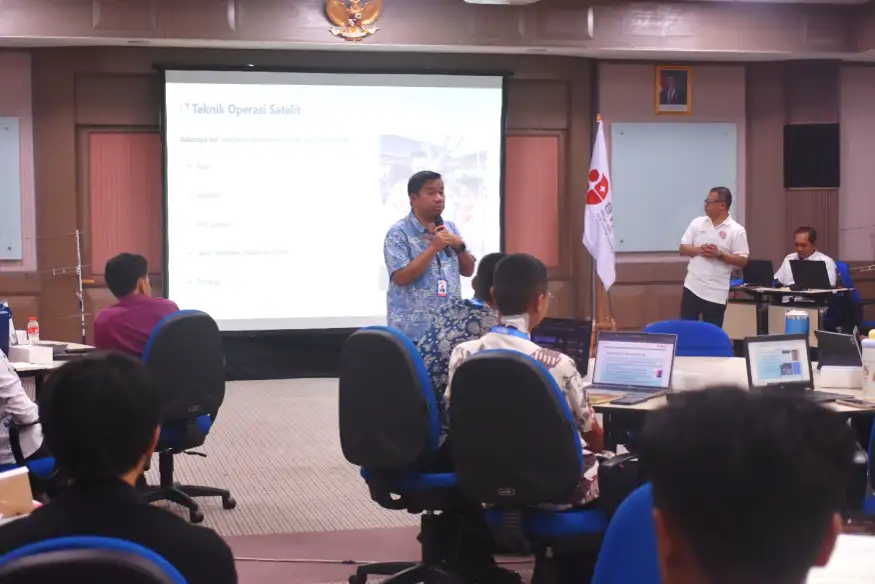
The challenges were highlighted by Wahyudi Hasbi, head of BRIN’s Satellite Technology Research Center, during an interactive discussion with students at the Indonesia Research and Innovation Fair (IRIFair) 2026 Aerospace Talent School at the B.J. Habibie Science and Technology Center in Serpong, South Tangerang, on Wednesday (Sept. 23).
Wahyudi said Indonesia’s geographical conditions and vulnerability to natural disasters have created a need for satellite-based communication systems. Terrestrial communication networks can be disrupted or completely cut off during disasters.
He said this was one of the reasons behind the development of the LAPAN-A2/LAPAN-ORARI satellite to support emergency communications.
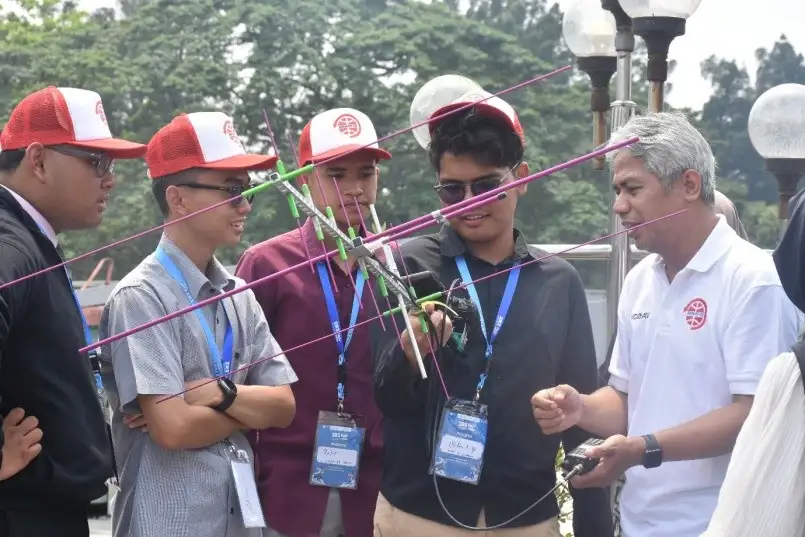
The LAPAN-A2 satellite is equipped with a voice repeater payload that supports amateur radio communications. The technology enables communication across Indonesia, from Sabang to Merauke, using handheld transceivers and simple antennas.
“If a disaster occurs, we must have the means of telecommunication. We have to build a system that is very affordable so that everyone can use it at any time,” Wahyudi said.
According to Wahyudi, satellite technology development follows a systems engineering approach, in which mission requirements are first translated into system requirements. The feasibility of the technology is then assessed based on technological readiness, funding availability and access to launch services.
Indonesia does not yet have its own rocket launch vehicle. Wahyudi said cooperation with India is one potential avenue for supporting the launch of Indonesian satellites.
He also highlighted Indonesia’s strategic geographical position near the equator, which provides advantages for satellite development and launches.
The selection of an equatorial orbit also takes into account how frequently a satellite can access Indonesian territory compared with satellites operating in polar orbits. LAPAN-A2, which operates in an equatorial orbit, can pass over Indonesian territory 14 times a day, Wahyudi said.
The discussion also addressed the growing number of satellites in orbit as satellite constellations expand to support communication needs.
Wahyudi said outer space could potentially be used for data storage because energy and cooling requirements could be more efficient than those of data centers on Earth.
“Why is space more efficient in terms of power? When we build cloud centers on Earth, the electricity requirements are very large because energy use on Earth is relatively less efficient,” he said.
However, the increasing number of satellites and other human-made objects in orbit has also raised concerns over space traffic and long-term sustainability.
Wahyudi explained that, under international law, outer space cannot be claimed as the sovereign territory of any individual country. Its use therefore requires responsibility and coordination among nations.
These conditions have contributed to the development of the concepts of space traffic management and space sustainability at the international level. Both are intended to help regulate the movement of space objects and ensure that outer space remains usable for future generations.
“We need to protect outer space so that it can still be used by our children and future generations. Sustainability is important because outer space plays an increasingly important role in supporting human life,” Wahyudi said.
One of the measures to support space sustainability is the management of satellites that have reached the end of their operational lives.
For satellites operating in Low Earth Orbit (LEO), there is a requirement for them to be removed from orbit no later than 25 years after the end of their operational mission. The rule is intended to reduce the accumulation of space debris that could interfere with or endanger active satellites in the future.



Discussion (0)
No comments yet.