
BALINEWSID.COM, DENPASAR — Bali can no longer rely solely on rising tourist arrivals and its reputation as one of the world’s top destinations. The island needs to move beyond sustainable tourism toward a regenerative tourism model that creates positive impacts for the environment, culture and local communities.
The call was made by Yoga Iswara, chairman of the Indonesian Hotel General Manager Association (IHGMA) Bali chapter and a Bali tourism practitioner, who said the island is facing a number of serious challenges that must be addressed to ensure the long-term future of its tourism industry.
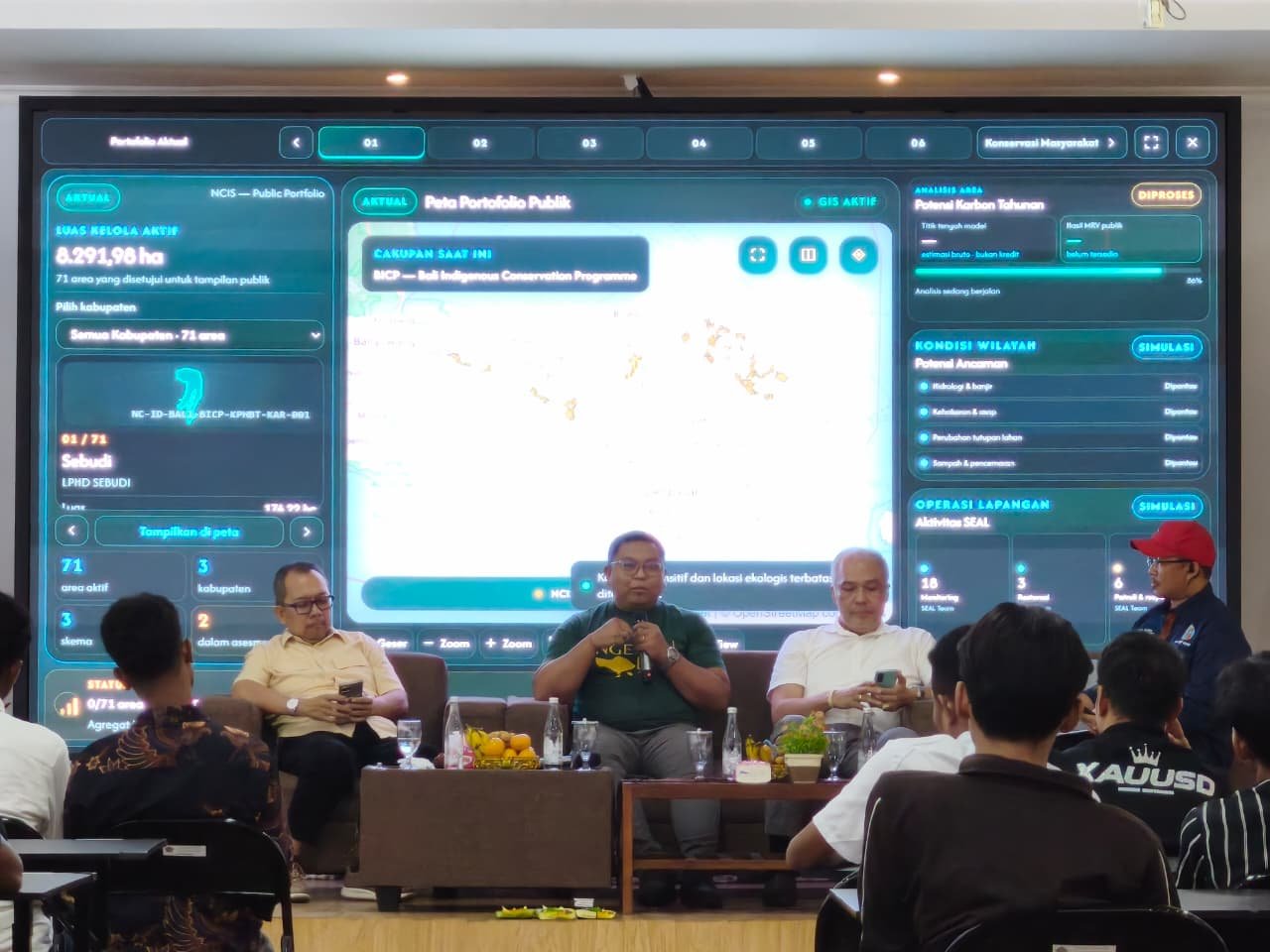
Yoga made the remarks during a public discussion organized by IWO Bali under the theme “Viewing Bali from a Different Perspective” on Sunday (Aug. 30, 2026).
According to Yoga, Bali faces at least six major tourism challenges, including regulations, infrastructure gaps, environmental pressures, land-use changes and the rapid expansion of tourism-related businesses.
One of the key issues, he said, is the regulatory and licensing system, which does not always reflect Bali’s unique characteristics.
“Bali does not hold the remote control. We do not hold the remote control. Take licensing, for example. Licensing is now handled through the OSS system,” Yoga said.
He warned that rapid development and the expansion of tourism businesses, including the growing number of beach clubs and other tourism ventures, could gradually erode Bali’s cultural character if not properly managed.
Another major challenge is the gap between tourism growth and supporting infrastructure. According to Yoga, rapid tourism development that is not matched by adequate infrastructure can lead to excessive concentration of tourism activities in certain areas.
“The growth is not in line with the existing infrastructure, creating concentration in certain areas,” he said.
Yoga also cautioned against comparing Bali directly with countries such as Thailand, Vietnam and Singapore.
“Bali is a small island competing with entire countries. Thailand and Vietnam, I think, it is unfair if a small island has to be compared with a country,” he said.
Tourism Awards Cannot Be the Ultimate Goal
Yoga also urged Bali not to become complacent with its reputation and various international tourism awards.
He warned that being recognized as a top destination could become a “false benefit” if fundamental problems such as waste, traffic congestion, water security and infrastructure remain unresolved.
“Be careful. Being named the best destination can become a false benefit for Bali,” he said.
According to Yoga, the ultimate goal of Bali’s tourism development should not be awards or visitor numbers, but ensuring that the island’s basic needs and cultural foundations remain protected.
“Our ultimate goal should not be to become the best destination, but to ensure that our water is secure, our infrastructure is good and our culture continues to improve,” he said.
He also argued that national tourism regulations may no longer fully suit Bali’s unique circumstances.
“Indonesia’s regulations are beginning to no longer fit Bali. Not every regulation is fit for every destination,” Yoga said.
From Sustainability to Regeneration
Yoga said Bali needs to take the next step beyond the concept of sustainable tourism.
In his view, sustainability primarily seeks to minimize negative impacts, while Bali has already accumulated environmental and social pressures that require active restoration.
Regenerative tourism, he explained, goes beyond reducing harm by creating positive impacts and helping restore what has already been damaged.
“With regenerative tourism, we not only reduce the negative impact, but also create a positive impact so that what is negative can be reduced and become positive,” he said.
Yoga encouraged tourists and tourism businesses to adopt the principle of leaving Bali in better condition than they found it.
“Try to leave Bali better than when you arrived,” he said.
He also promoted the concept of “post-profit”, arguing that profit should not be the sole objective of tourism businesses.
Using the analogy of the goose that lays the golden eggs, Yoga said businesses should not focus exclusively on extracting profits while neglecting the environment and ecosystem that generate those profits.
“Let’s take care of the goose so that the golden eggs will continue to exist. Don’t focus only on the golden eggs and forget to take care of the goose,” he said.
Tourist Numbers Are No Longer Enough
Yoga said tourist arrivals should no longer be the sole indicator of the success of Bali’s tourism industry.
The number of visitors remains important, he said, but Bali must also measure the economic and social benefits generated by tourism and the responsibilities that come with it.
“We should not say, ‘Bali tourism is doing well because tourist arrivals are increasing,’ and stop there. What we need now is to look at the benefits and the responsibilities,” Yoga said.
To support this shift, he said Bali needs greater authority over tourism management, particularly in regulatory matters. Special incentives for sustainable and regenerative tourism should also be considered.
Yoga also stressed the importance of restoring cultural tourism as the foundation of Bali’s tourism development. Tourism projects that have little connection with Balinese culture, he said, should be carefully assessed.
Despite the challenges, Yoga said Bali is not standing still.
He cited several measures already underway, including efforts to strengthen and formalize accommodation businesses. He said the number of officially registered accommodation units had increased from around 12,000 to 17,000 following government programs aimed at strengthening and socializing compliance.
The increase, he said, has contributed to tax compliance and business standardization.
Efforts to address traffic congestion are also continuing through road and shortcut construction, while the provincial government has restricted certain business classifications under the OSS licensing system.
“Bali is not standing still. Bali is incubating,” Yoga said.
Balinese Workers in High Demand Overseas
The discussion also highlighted another challenge facing Bali’s tourism sector: the migration of skilled workers to other regions and overseas.
Anggir Bayu Pamungkas of the Denpasar chapter of the Indonesian Islamic Students Movement (PMII) raised concerns about young Balinese people, particularly from Karangasem, who study tourism and hospitality but later choose to work on cruise ships or in hotels abroad.
Economic and tourism observer Trisno Nugroho said income differences are one of the factors driving workers to seek employment overseas.
He noted that hotel workers in Bali can potentially earn more than the minimum wage through service charges and other income components. However, higher earning opportunities overseas remain an attraction for many workers.
Trisno also pointed to the strong international demand for Balinese workers.
According to him, Balinese human resources have earned a strong reputation in the hospitality sector, with many working overseas in areas including spas, hospitality and the creative economy.
“Bali is famous not only for the island itself, but also for its people abroad. Balinese people are highly respected and appreciated overseas,” Trisno said.
He called for improvements in education and professional skills so Balinese workers can take advantage of emerging opportunities, including the potential development of Bali as a financial center and the Sanur Special Economic Zone.
With these challenges mounting, the future of Bali’s tourism industry can no longer be measured simply by how many tourists arrive.
Environmental protection, cultural preservation, infrastructure, equitable economic benefits and the quality of human resources must become central indicators of success if Bali wants its tourism industry not merely to grow, but to regenerate and remain viable for future generations.






Discussion (0)
No comments yet.