
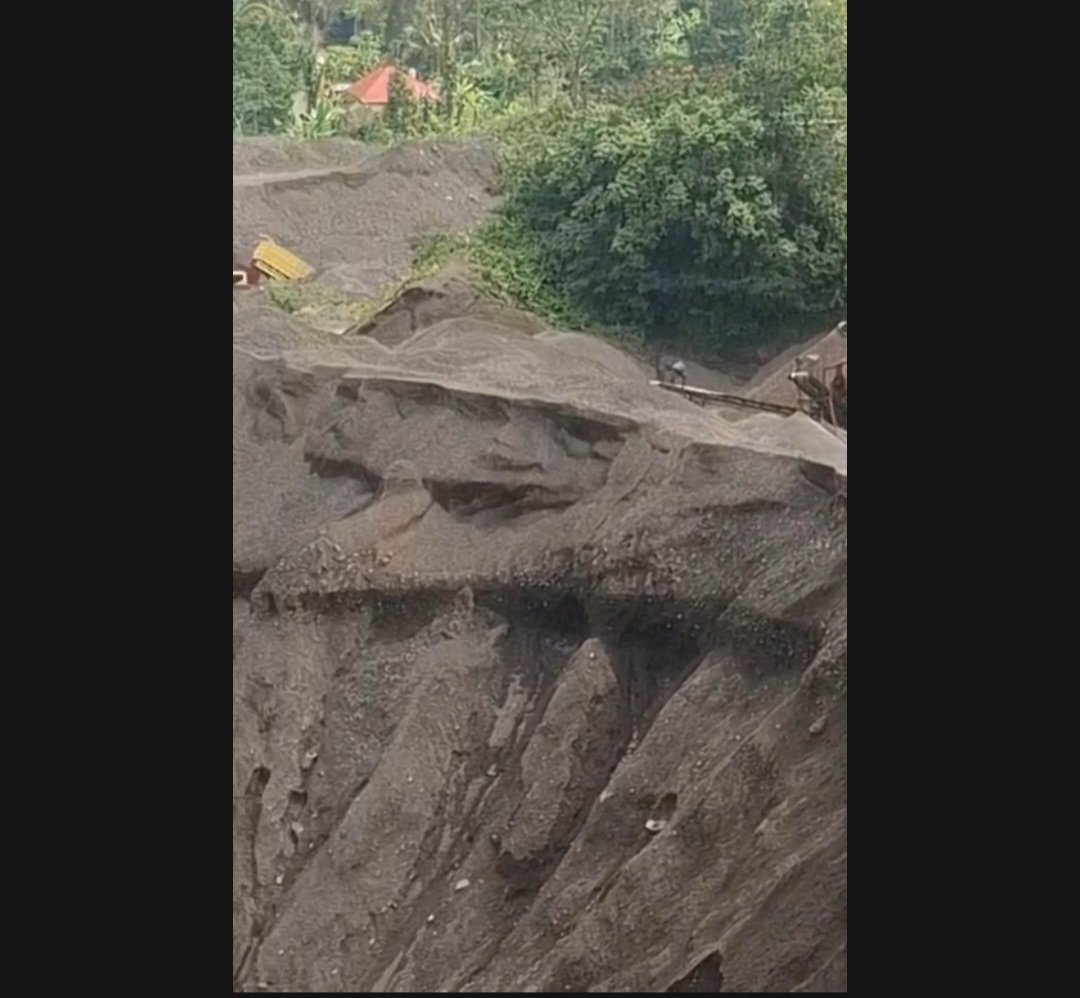
BALINEWSID.COM, DENPASAR – Sand and stone mining activities, locally known as Galian C, in Sebudi Village, Selat District, Karangasem Regency, have come under renewed public scrutiny after large excavation sites in the area drew widespread attention on social media.
Field observations revealed extensive mining operations that have significantly altered the landscape, creating massive pits resembling ravines. Some of the excavation sites are estimated to exceed 30 meters in depth, with dozens of mining points visible across the area near the slopes of Mount Agung.
The scale of the excavation has raised concerns about potential environmental impacts, including landslides, ecosystem degradation, and long-term changes to land structures in the region.
The situation has also prompted questions regarding government oversight of mining activities that have been operating in the area for years. Some observers have suggested that the extent of the excavation may indicate inadequate monitoring of natural resource exploitation.
Responding to the concerns, Karangasem Regent I Gusti Putu Parwata said the local administration is currently focused on improving the licensing system for Galian C mining operations.
“The situation is under control. Regarding Galian C, we are currently concentrating on organizing and improving the licensing process,” Parwata said after attending the submission of the Audit Report from Indonesia’s Supreme Audit Agency (BPK RI) at the Bali Regional Legislative Council (DPRD Bali) building in Renon, Denpasar, on Monday (June 8, 2026).
Parwata acknowledged that Karangasem remains heavily dependent on the mining sector, as much of the sand and stone materials used for construction projects across Bali originate from the regency.
“This dependence will continue until our tourism sector grows stronger. We are currently intensifying tourism development in Karangasem. Once tourism becomes stronger, we will be able to gradually reduce Galian C activities,” he said.
The regent also admitted that mining poses significant environmental risks and said the regional government has prepared a long-term strategy to reduce reliance on the sector.
“We realize that the risk of environmental damage caused by mining is very high. In the future, we will gradually shift our economic focus toward agriculture and tourism,” Parwata stated.
When asked about the number of licensed mining operations in the regency, Parwata revealed that only nine sites currently hold complete legal permits.
“Only nine locations have official permits,” he said.
His statement has further fueled public questions regarding the status of other mining operations active in Karangasem. Mining licensing authority currently falls under the jurisdiction of the Bali Provincial Government.
With mining pits reaching depths of more than 30 meters and continuing to expand in several locations, residents are now awaiting concrete measures from both the regency and provincial governments to ensure mining activities comply with regulations while preventing further environmental degradation.




Discussion (0)
No comments yet.