
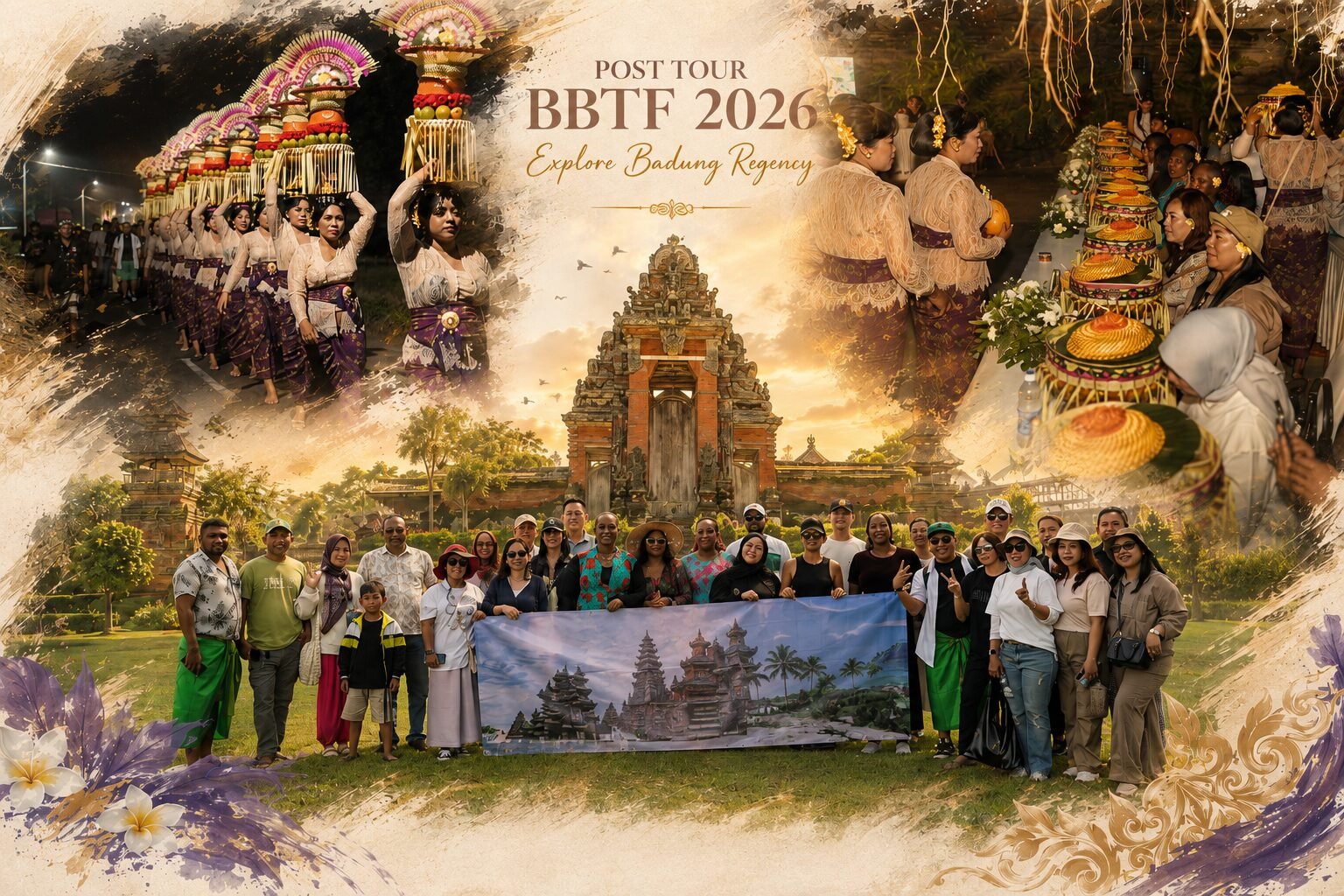
BADUNG, BALINEWSID.COM – Bali and Beyond Travel Fair (BBTF) 2026 concluded its post-tour program in Badung Regency by offering international buyers an immersive experience showcasing Bali’s culture, spirituality, and gastronomy through a series of visits culminating at Bongkasa Tourist Village on May 31, 2026.
The program brought together international buyers, media representatives, and tourism industry stakeholders who had participated in BBTF 2026. The event was attended by Bali Tourism Agency Head Anak Agung Putri Mas Agung, Tourism Marketing Officer I Ketut Gde Widiartha Negara, Badung Tourism Agency Secretary Ni Kadek Ari Armaeni, along with local government officials and tourism practitioners.
Speaking during the Rajalaya-themed dinner at Bongkasa Tourist Village, BBTF 2026 Chairman and ASITA Bali Chairman Putu Winastra emphasized that the post-tour was designed to help buyers gain a deeper understanding of Bali beyond conventional business meetings and promotional materials.
“Bali cannot be fully understood from a meeting table. Bali must be felt through its temples, villages, food, rituals, landscapes, and people,” Winastra said.
Throughout the day, participants visited several key destinations in Badung, including Taman Ayun Temple, known for its royal heritage and cultural significance, Sangeh Monkey Forest, which reflects the harmony between nature and local beliefs, and Pancoran Solas Mumbul Temple, where guests experienced melukat, a traditional Balinese purification ritual symbolizing spiritual cleansing and renewal.
The journey concluded in Bongkasa Tourist Village with a Rajalaya-inspired dinner that highlighted Balinese hospitality and cultural values. Winastra said the concept aligned closely with BBTF 2026’s theme, “Redefining Indonesia’s Gastronomy Journey: A Celebration of Taste, Culture, and Sustainable Heritage.”
According to him, gastronomy extends far beyond the food served on the table and encompasses the cultural processes and community values behind every dish.
“Gastronomy is not only what is on the plate. It is the farmer, the spices, the fire, the offerings, the hands that prepared the meal, and the community that welcomes all of us,” he explained.
Winastra noted that global travel trends increasingly show demand for authentic experiences that combine culture, nature, wellness, local cuisine, and meaningful interactions with local communities. Bali possesses all of these elements, he said, but they must be presented thoughtfully while maintaining sustainability.
He stressed that the future of tourism is no longer about adding more destinations to an itinerary but about creating deeper reasons for travelers to visit.
“Many destinations have beaches, luxury hotels, and beautiful sunsets. But Bali has something very rare: a living philosophy where nature, culture, spirituality, and daily life remain connected,” he said.
Winastra also highlighted the role of tourist villages such as Bongkasa in promoting quality tourism. Such destinations provide more personal experiences, encourage longer stays, increase visitor spending, and distribute economic benefits more broadly among local communities.
“Bongkasa represents a quieter, greener, more personal, and more human side of Bali. Here, travelers can engage directly with local people, enjoy traditional food, participate in village activities, and understand that hospitality is not only about service, but sincerity,” he said.
He encouraged international buyers and tour operators to introduce visitors not only to Bali’s famous attractions but also to destinations rich in cultural meaning.
“Bring travelers not only to the beach, but also to the village. Not only to the resort, but also to the community. Not only to the restaurant, but also to the story behind the food,” Winastra added.
Closing his remarks, Winastra expressed appreciation to the Badung Regency Government, Bongkasa Tourist Village, and all parties involved in organizing the BBTF 2026 post-tour. He said the experience was intended to help visitors see Bali not merely as a destination, but as a living story shaped by culture, people, and tradition.
“Thank you for taking the time to experience Bali not only as a destination, but as a living story,” he concluded. (*)

Discussion (0)
No comments yet.