
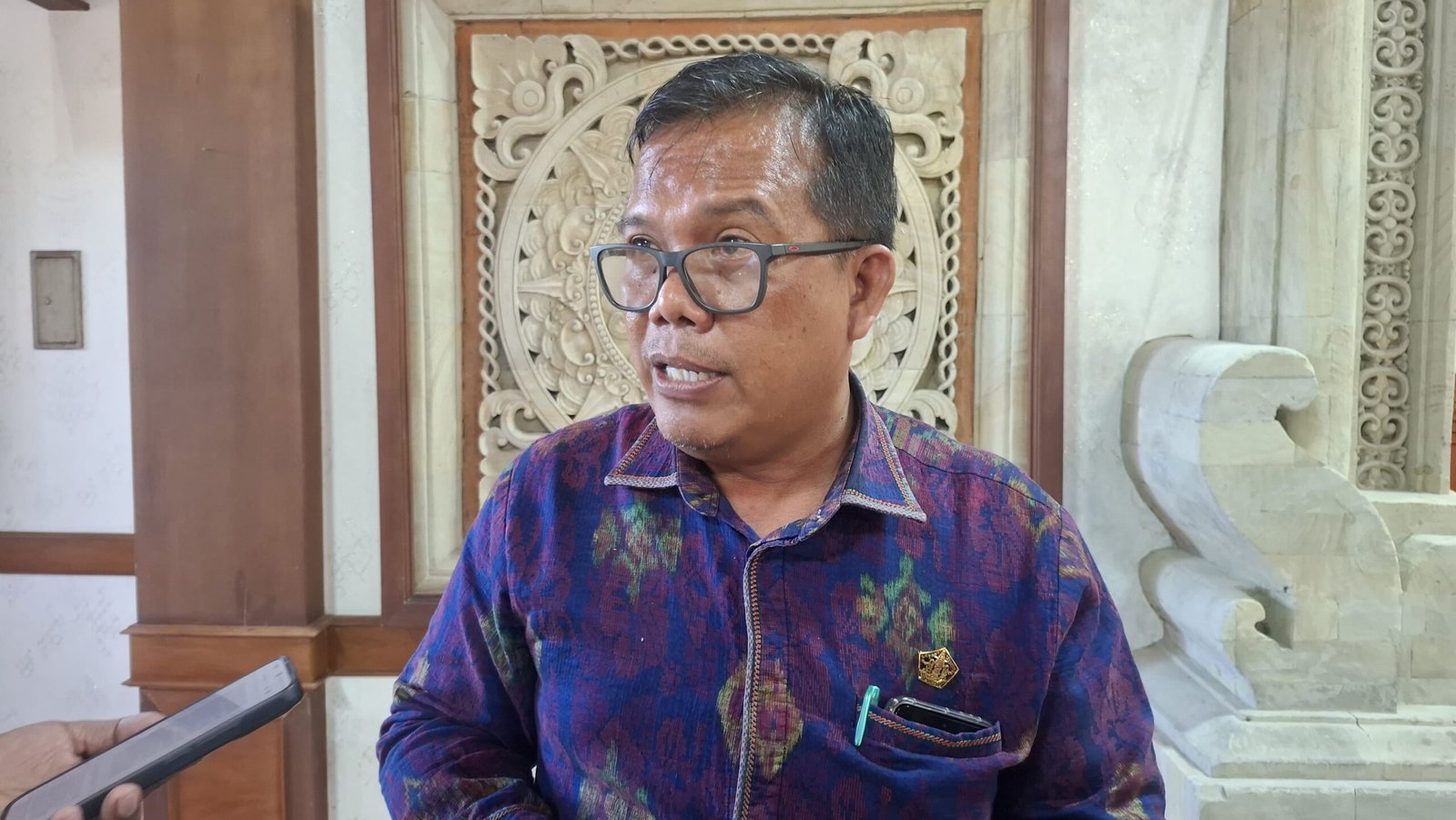
BALINEWSID.COM, DENPASAR — The Gerindra Party faction in Bali’s provincial legislature has called for stronger optimization of Foreign Tourist Levy (PWA) revenues, urging authorities to eliminate collection leakages and redirect funds toward tackling the island’s growing waste problem.
Gede Harja Astawa, Chair of the Gerindra faction at the Bali Regional House of Representatives (DPRD), highlighted the significant potential of the levy as a strategic funding source. His remarks come amid a steady increase in tourism-derived revenues.
According to data from the Bali Tourism Office, PWA collections reached more than Rp71.449 billion as of March 31, 2026, marking an 11.63 percent increase compared to the same period in 2025.
“The figure is already substantial. This means that if leakages can be minimized, the revenue could be far more optimal,” Astawa said following a legislative session on Tuesday (April 14, 2026).
He stressed that improving transparency and efficiency in the collection system is essential to ensure that the funds generate tangible benefits for regional development.
Astawa also urged Bali Governor Wayan Koster to lobby the central government to involve immigration authorities in collecting the Rp150,000 levy imposed on foreign tourists. He argued that such collaboration could strengthen oversight and improve compliance.
The Gerindra faction has consistently pushed for the optimized use of PWA funds to reinforce waste management systems across Bali—an issue that has drawn both national and international attention.
As part of the proposed solutions, Astawa suggested regulatory breakthroughs to support more effective levy collection mechanisms, including the formal involvement of immigration institutions.
He also proposed a concrete initiative: the procurement of organic waste shredding machines at the village level, enabling waste to be processed directly at its source.
“If organic waste can be handled at the village level, there will be no need to transport it elsewhere. This would significantly reduce the burden,” he explained, estimating the required budget at around Rp2.5 billion.
According to Astawa, such funding could substantially address upstream organic waste issues across villages. He also emphasized the need for bold policy steps to overcome existing technical constraints in the collection system.
“This requires courage to create breakthroughs, especially in making the levy system more effective,” he said.
He further underlined that Bali’s waste problem must be addressed comprehensively, from upstream to downstream, noting persistent disparities in waste management facilities across regions.
“We want a complete solution, not a partial one. This has already become a major issue,” he asserted.
Astawa concluded by reaffirming the DPRD’s commitment to its oversight, budgeting, and legislative functions, while implementation remains the responsibility of the regional government.
“We will continue to push and monitor so that these policies can be executed optimally,” he said.




Discussion (0)
No comments yet.