
BALINEWSID.COM, BADUNG – The Badung Regency Government is encouraging hotels, restaurants, cafés, and catering businesses (Horeka) across Bali to establish independent waste management facilities as part of efforts to reduce the volume of waste sent to final disposal sites (TPA). However, industry representatives say limited land availability remains a major obstacle, particularly for businesses operating in densely populated urban areas.
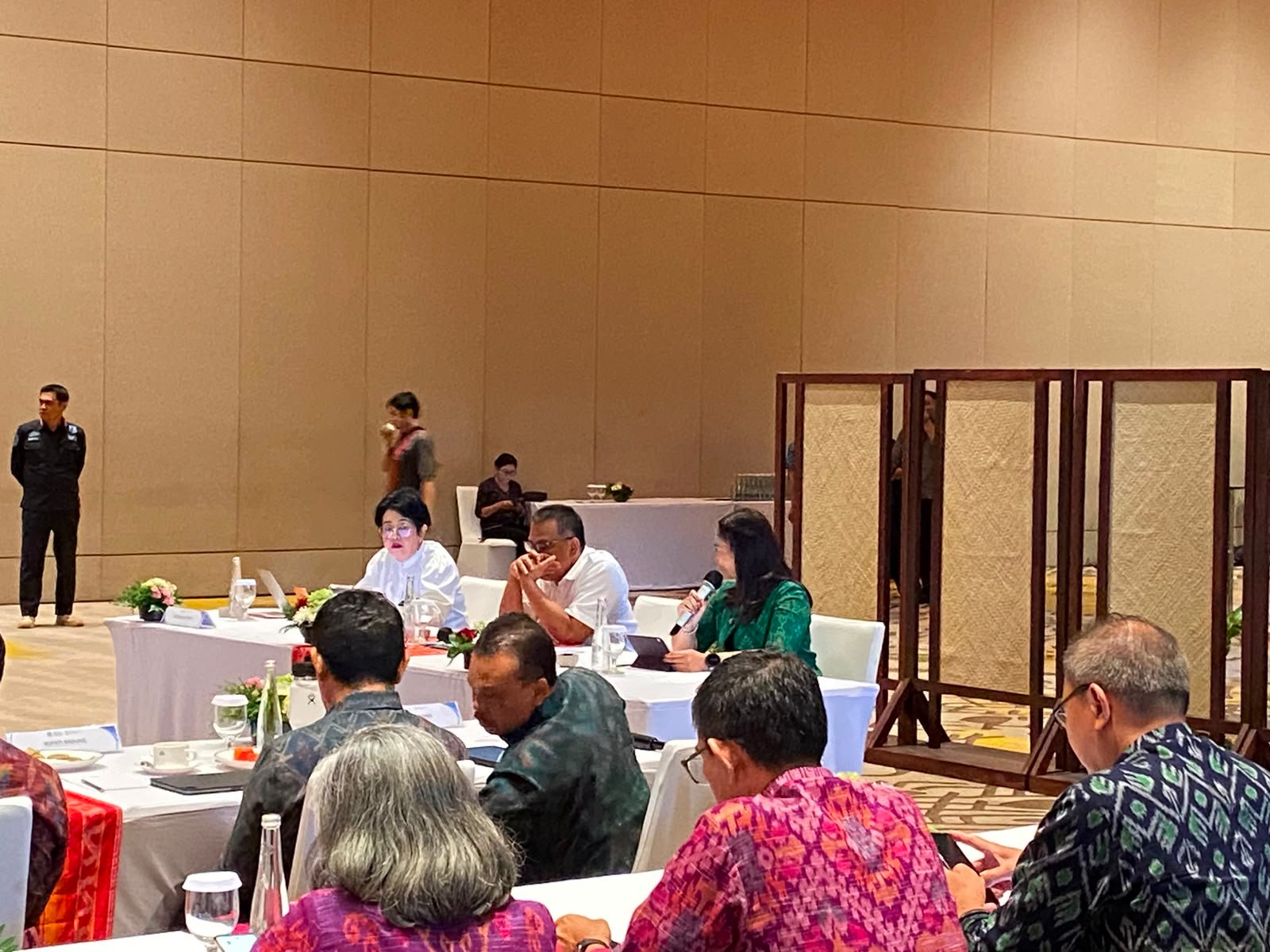
The initiative was highlighted by Badung Regent I Wayan Adi Arnawa, during a coordination meeting between the government and Horeka stakeholders at The Meru Sanur on Tuesday (June 9, 2026). The meeting was also attended by Environment Minister Muhammad Jumhur Hidayat and Deputy Tourism Minister Ni Luh Puspa.
Adi Arnawa stated that large-scale Horeka businesses have the capacity to process the waste they generate independently. He noted that the Horeka sector is one of the largest contributors to waste generation after households.
According to the Regent, Badung currently produces approximately 861 tons of waste per day. Around 55 percent originates from households, while the remaining 45 percent comes from the Horeka sector.
He explained that waste management within the Horeka industry is still largely handled by third-party operators or through self-managed systems that follow a “collect, transport, and dispose” model.
“When the system remains focused on collecting, transporting, and disposing, the waste ultimately ends up at landfill sites,” he said.
Adi emphasized that establishing independent waste processing facilities, particularly for organic waste, is essential to reducing the amount of waste transported to landfills. The government plans to gradually expand the policy, beginning with five-star hotels before extending it to four-star and three-star establishments.
“We will continue encouraging this approach. Next, we will also encourage four-star and three-star Horeka businesses to develop their own waste management systems,” he said.
Meanwhile, Bali chapter chairman of the Indonesian Hotel and Restaurant Association (PHRI), **Tjokorda Artha Ardana Sukawati**, widely known as **Cok Ace**, said not all businesses have the ability to build independent waste management facilities.
According to him, the feasibility of self-managed waste treatment depends heavily on the availability of land owned by each business. Hotels, restaurants, and cafés with larger properties are generally better positioned to establish waste processing facilities.
Businesses located in crowded urban areas, however, often face significant challenges due to limited space.
“If they have sufficient land, managing waste independently is certainly easier. But for those without adequate land, their capacity is generally limited to sorting waste,” Cok Ace said.
He added that managing organic waste remains the biggest challenge for Horeka operators because it requires dedicated space and specialized facilities.
Cok Ace also argued that the Horeka sector’s contribution to Bali’s overall waste problem is often overstated. Based on PHRI Bali data, waste generated by hotels, restaurants, and cafés accounts for only around 11 percent of the island’s total waste production.
“It often appears as though we are the primary cause of Bali’s waste problem. In reality, about 89 percent of waste comes from sectors outside Horeka,” he said.
Despite these challenges, Cok Ace reaffirmed the tourism industry’s commitment to supporting waste reduction efforts. He noted that a number of hotels and restaurants in Bali have already begun implementing independent waste management systems within their operations.
“Of the 11 percent of waste generated by the Horeka sector, a portion is already being managed independently by individual businesses,” he said.
The government hopes stronger collaboration with tourism industry stakeholders will accelerate waste reduction efforts and help create a more sustainable waste management system while easing pressure on Bali’s landfill facilities.



Discussion (0)
No comments yet.