
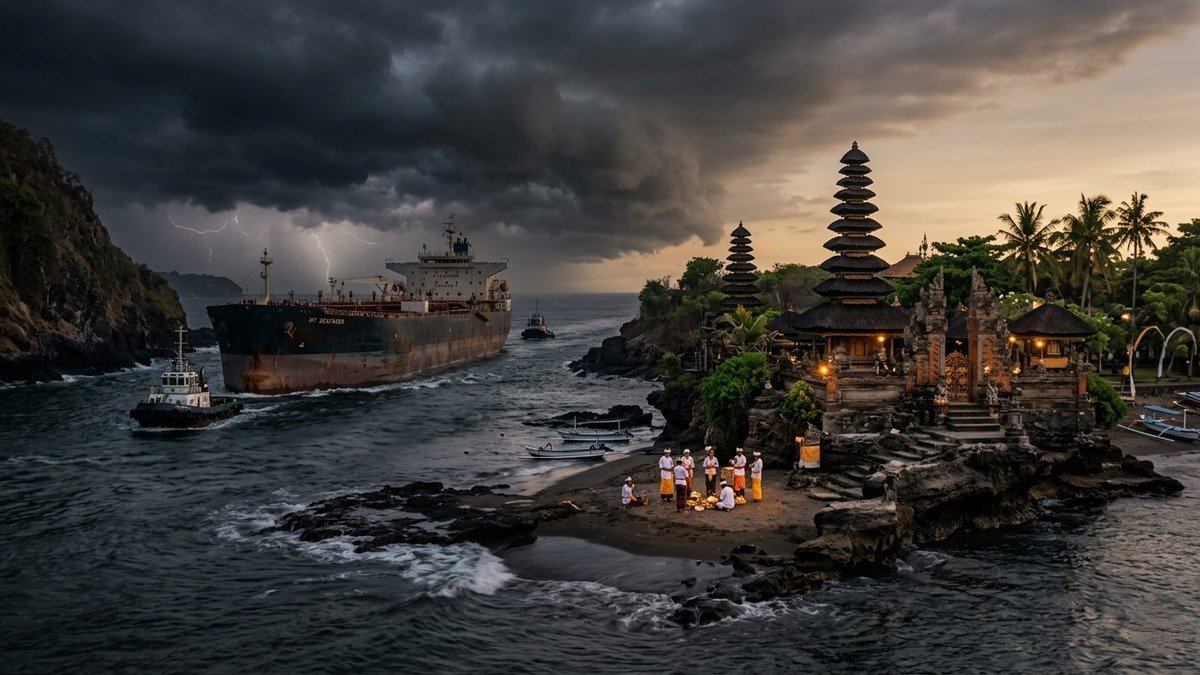
BALINEWSID.COM, DENPASAR – Rising tensions in the Strait of Hormuz have renewed concerns over global energy supply stability, with potential ripple effects reaching Bali’s tourism-driven economy.
Bali Governor Wayan Koster assured that the current situation remains under control. “Bali is safe,” he said briefly to reporters.
However, analysts warn that the risks of an energy crisis are more likely to emerge indirectly, through rising costs and disruptions in mobility that could broadly affect economic activity.
The Strait of Hormuz is a critical route for global oil distribution. Any disruption in the area could drive up global energy prices, including aviation fuel, directly impacting air transportation.
Giostanovlatto, founder of Hey Bali and a tourism industry player, said the tourism sector is particularly sensitive to energy volatility.
“Bali’s tourism heavily depends on mobility. If aviation fuel prices rise or flight frequencies are reduced, the impact on tourist arrivals will be immediate,” he said.
He explained that the effects typically unfold gradually, starting with a decline in bookings, shorter stays, and reduced tourist spending—early indicators of a slowdown in the sector.
Data shows that accommodation and food services contribute more than 20 percent to Bali’s Gross Regional Domestic Product (GRDP). Overall, tourism-related activities account for an estimated 75 to 80 percent of the island’s economy.
This heavy reliance means that pressure on tourism would not only affect hotels and restaurants but also spill over into local transportation, trade, and informal employment.
Beyond tourism, an energy crisis could also increase operational and distribution costs. Media Production Fixer Prazuni Firzan Nasution said energy disruptions tend to have layered economic impacts.
“When energy supply is disrupted, transportation costs rise, goods distribution becomes more expensive, and this ultimately weakens purchasing power and business activity, including small and medium enterprises,” he said.
He noted that Bali is particularly vulnerable due to its lack of domestic energy resources. Its dependence on external supply means global disruptions are quickly felt locally, either through price hikes or operational pressures.
Analysts emphasize that the main risk lies not in immediate energy shortages, but in indirect effects such as higher costs and reduced mobility. Increased ticket prices or fewer flights could prompt tourists to delay trips or choose more affordable destinations.
Such conditions could lower hotel occupancy rates and reduce income for small businesses in tourist areas.
Amid these risks, observers suggest several mitigation measures. Diversifying tourist markets—particularly by strengthening domestic and regional visitors—could help cushion potential declines in international arrivals.
Policy readiness and economic support systems are also seen as crucial in mitigating the impact of prolonged global pressure.
Geopolitical tensions in the Middle East, including the conflict between the United States and Iran, further heighten risks to global energy stability. For Indonesia, the situation is compounded by its high dependence on energy imports.
National fuel consumption has exceeded 80 million kiloliters per year, while domestic production meets only about half of that demand. Limited operational reserves—less than one month—make the energy supply particularly vulnerable to disruption.
Dependence is also evident in liquefied petroleum gas (LPG), with national demand reaching around 8–9 million metric tons annually, most of which is imported, primarily from the Middle East.
In the event of supply disruptions, three major risks could emerge: fuel shortages, LPG shortages, and power outages. These could trigger a domino effect on economic activity, logistics distribution, and social stability.
Bali, with its tourism-dependent economic structure, is considered one of the regions most vulnerable to such impacts.
Lessons from the COVID-19 pandemic have shown how global mobility disruptions can quickly paralyze the island’s economy, causing a sharp decline in tourist arrivals and business activity.
For now, Bali remains in a stable condition. However, analysts stress the importance of vigilance and preparedness in anticipating worst-case scenarios.
In an increasingly interconnected global economy, external shocks can rapidly translate into local impacts. Bali’s main challenge is maintaining stability amid its high dependence on external factors.








Discussion (0)
No comments yet.