
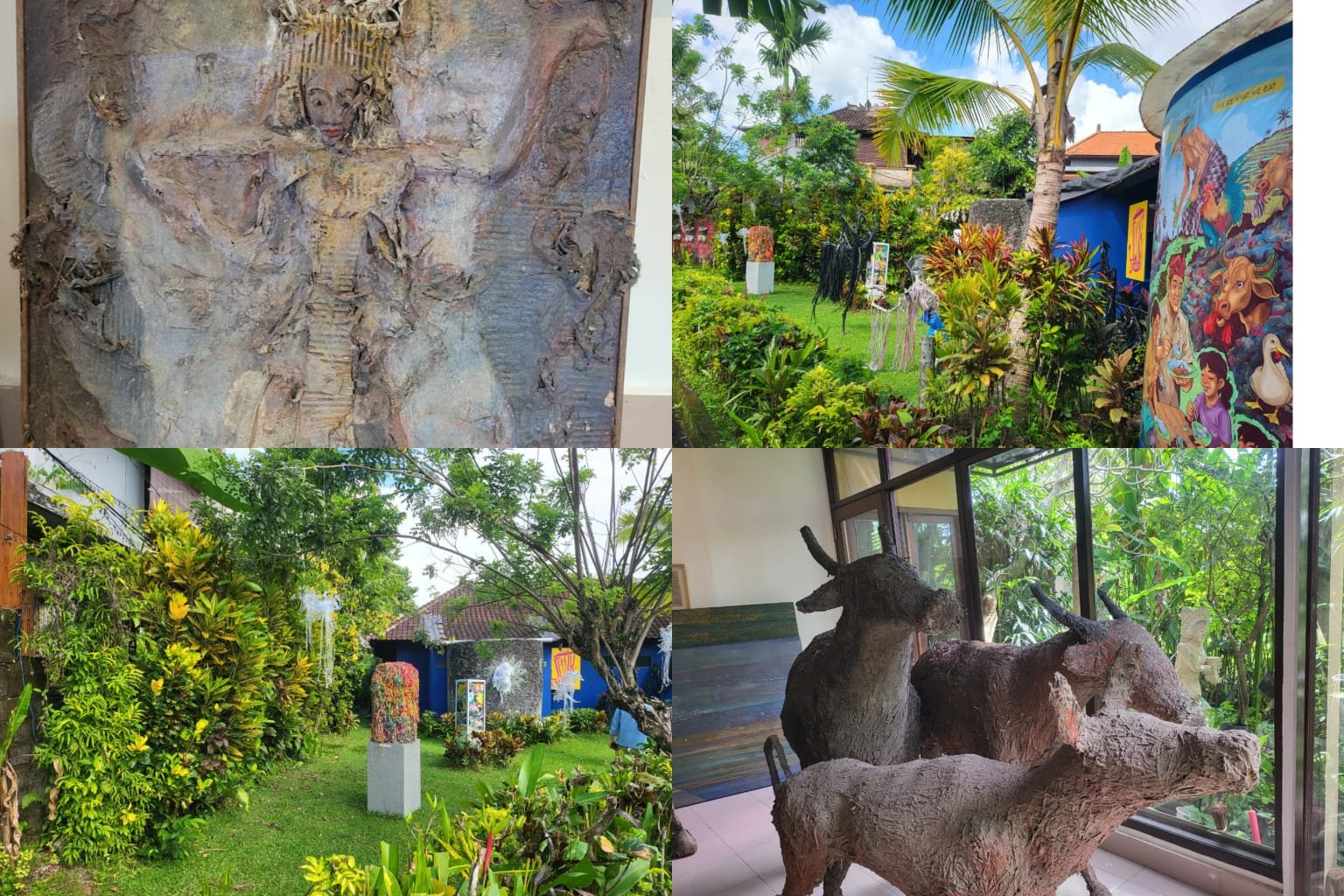
BALINEWSID.COM, UBUD — Bali is facing a silent war. The enemy is not weapons or disease, but plastic waste that continues to flood rivers, beaches, and rice fields across the island every day. Yet in a small alley in Sanggingan, Ubud, a group of artists has started a unique resistance movement — not with protests or anger, but through art.
Eight artists from Bali and abroad have joined forces under a movement called Junkyard Collective Bali, transforming discarded plastic waste into striking artworks designed to raise public awareness about the island’s growing environmental crisis.
The modest gallery, located on Jalan Raya Sanggingan Gang Bintang in Ubud, welcomes visitors free of charge. There are no entrance fees and no price tags attached to the artworks. According to the collective, the goal is not to sell paintings or sculptures, but to deliver a strong message about the urgent threat posed by plastic pollution.
Behind the initiative is Dr. I Made Jodog, an academic and Vice Rector of the Indonesian Institute of the Arts (ISI) Bali. However, at Junkyard Collective, Jodog appears not as a university official, but as an artist deeply concerned about Bali’s environmental future.
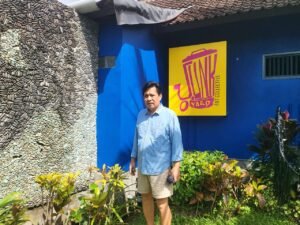
His concern dates back to the late 1990s when he led a youth organization in his village and witnessed the river beneath his home slowly turning into a dumping site for plastic waste. Although he organized river clean-ups and educated local residents, the plastic kept coming.
“We are not thinking about money. We are thinking about awareness,” Jodog said.
That philosophy has become the spirit behind every artwork displayed inside the gallery.
One of the most eye-catching installations is a giant jellyfish made entirely from used plastic bags. Its transparent body floats in the air, moved gently by electric fans. At first glance it appears beautiful, but at the same time disturbing — symbolizing a hidden environmental threat surrounding human life.
“When a jellyfish stings you, you wake up. This jellyfish is designed to sting your awareness,” Jodog explained.
Another artist, Arde, created paintings using layers of melted plastic waste ironed together to resemble canvas. From a distance, the artworks appear ordinary. But upon closer inspection, visitors are confronted with the reality that the beauty comes from the very waste people often throw away carelessly.
Meanwhile, artist Wayan Suja created a sculpture of a woman representing nature. Plastic waste spreads from the lower part of the sculpture like roots gripping the earth, while eggplants and chili plants grow directly from the upper section of the artwork.
The message is clear: humanity is trying to grow life on top of mountains of its own waste.
Artist Prangawardana chose a different approach by creating lelakut — traditional Balinese scarecrows — from used plastic materials. While scarecrows are traditionally used to frighten birds away from rice fields, these works aim to frighten humans into stopping careless littering.
Through these creations, Junkyard Collective Bali is not simply holding an art exhibition. The group is building a social movement centered on public environmental awareness.
Jodog hopes the Bali government will recognize art as an effective tool for environmental activism. According to him, artists do not always need to take to the streets in anger. Art itself can become a powerful form of protest capable of touching people emotionally.
“We express our concerns through artworks. But we also hope there will be attention, facilitation, and support for movements like this,” he said.
The gallery is open to everyone, including foreign tourists, students, expatriates, local residents, and international art communities.
There is no business target and no profit-oriented agenda behind the movement. Instead, the collective is driven purely by idealism and a desire to help save Bali from an increasingly alarming plastic waste crisis.
Junkyard Collective Bali has become proof that waste does not always end up in landfills. In the hands of artists, plastic can be transformed into a weapon of resistance, a symbol of warning, and a powerful reminder for society to care more about the environment.
And from a small alley in Ubud, that message of resistance is beginning to echo far beyond Bali.
Because in the end, art is not only meant to be admired — but also to awaken awareness.



Discussion (0)
No comments yet.