
BALINEWSID.COM, NAGOYA, Japan — The Indonesian government is pushing to strengthen the country’s automotive industry and expand its role in global supply chains by accelerating technology adoption, developing skilled human resources and widening market access.
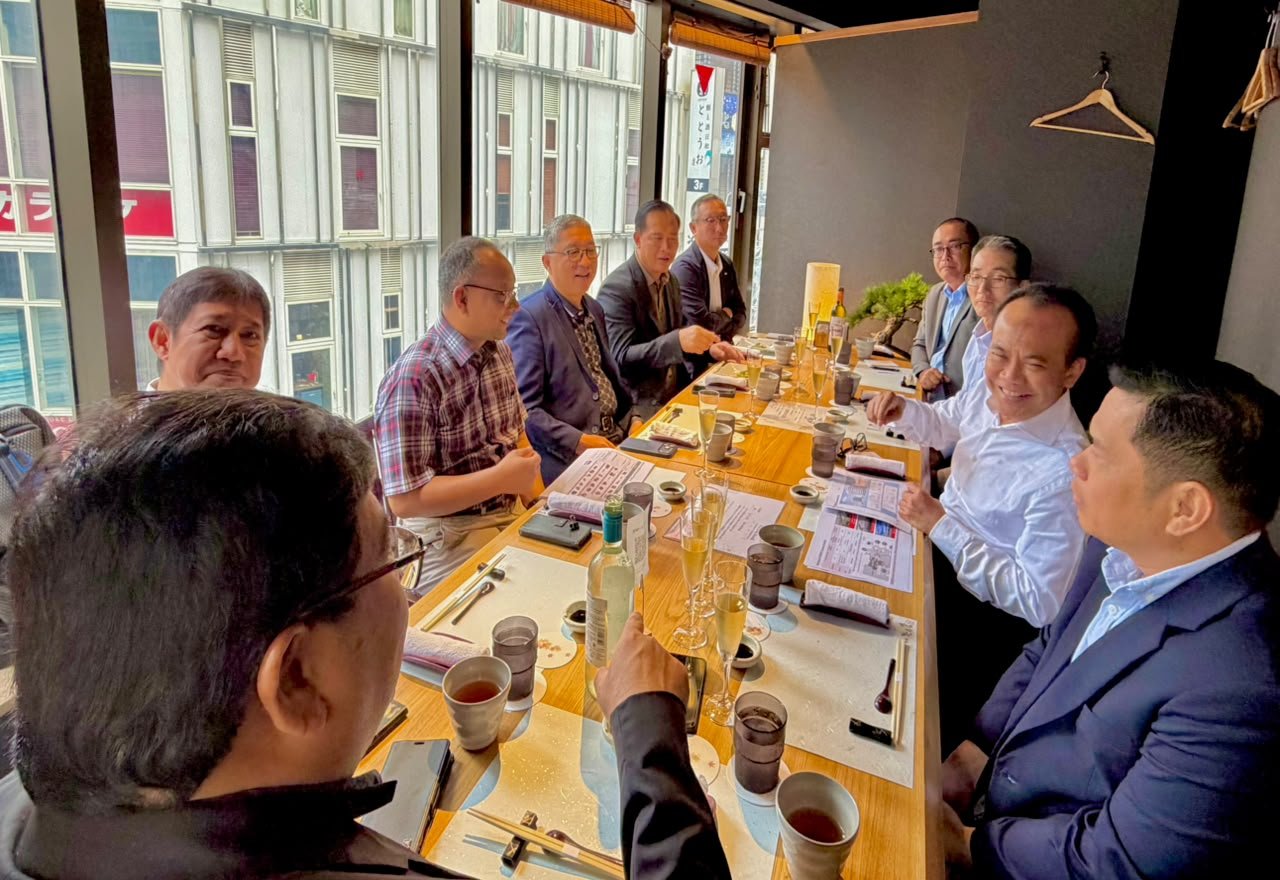
The push was highlighted during a Business Discussion Lunch held by the Coordinating Ministry for Economic Affairs with Indonesian automotive industry players and Japanese business partners in Nagoya on Saturday (Sept. 19).
The meeting marked the final agenda of the ministry’s working visit to Nagoya. The Indonesian delegation was led by Coordinating Ministry for Economic Affairs Secretary Susiwijono Moegiarso and included Deputy for Trade and Digital Economy Coordination Ali Murtopo Simbolon, as well as executives from PT Toyota Motor Manufacturing Indonesia (TMMIN), Denso Indonesia, Aisin Indonesia and Advics Indonesia.
Susiwijono said the competitiveness of the industrial sector depended on a combination of technological capabilities, skilled human resources and a strong supply-chain ecosystem.
“The competitiveness of industry is built on a combination of technological mastery, human resource development and a strong supply-chain ecosystem,” Susiwijono said.
The government also highlighted Indonesia’s growing network of international trade agreements as part of efforts to expand market access for domestic industries.
Indonesia has signed 25 international trade agreements, including free trade agreements (FTAs) and comprehensive economic partnership agreements (CEPAs), according to the government.
One of the agreements expected to play an important role is the Indonesia-European Union Comprehensive Economic Partnership Agreement (IEU-CEPA). The ratification process is scheduled to begin in November 2026, with implementation targeted for January 2027.
The government views expanded market access as an important component of its strategy to maintain economic growth momentum amid expectations of an improved global economic outlook in 2027, which it projects at around 3.2% to 3.3%.
Domestically, the government continues to strengthen consumption and investment as the main pillars of economic growth. Social assistance programs, subsidies and fiscal incentives are being implemented to maintain household purchasing power and support demand.
At the same time, the government is seeking to develop new sources of economic growth, particularly in artificial intelligence (AI) and the semiconductor industry.
Indonesia has established cooperation with ARM earlier this year, joined WAICO and is currently exploring cooperation and maintaining communication with PAX Silica.
The government expects Indonesia’s participation in global technology initiatives to boost productivity, particularly in the automotive sector, which is becoming increasingly dependent on semiconductors and intelligent technologies.
However, business representatives used the Nagoya forum to raise several concerns regarding Indonesia’s investment climate.
Among the issues discussed were licensing challenges, access to financing for small and medium-sized industries supporting the automotive sector, and domestic component level certification, or Tingkat Komponen Dalam Negeri (TKDN), during the transition toward electric vehicles.
The government welcomed the feedback and reaffirmed its commitment to improving policies and addressing investment barriers through concrete measures.
The meeting also underscored Indonesia’s position as a strategic partner for Japan in the automotive and automotive-components industries.
Indonesia is not only a major market for Japanese automotive companies but also an important part of the global value chain, with production facilities serving export markets in more than 100 countries.
The government said continued cooperation between Indonesia and Japan could help strengthen investment, supply chains and industrial capabilities while increasing the automotive sector’s contribution to Indonesia’s economic growth.



Discussion (0)
No comments yet.