
BALINEWSID.COM, JAKARTA — The Indonesian government is strengthening public information transparency to support investment certainty, attract higher-quality investment and promote more inclusive regional economic growth amid growing global uncertainty and technological disruption.
Haryo Limanseto, Expert Staff for Regional Development at the Coordinating Ministry for Economic Affairs, said transparent, accurate and easily accessible information was essential to reducing uncertainty and strengthening investor confidence.
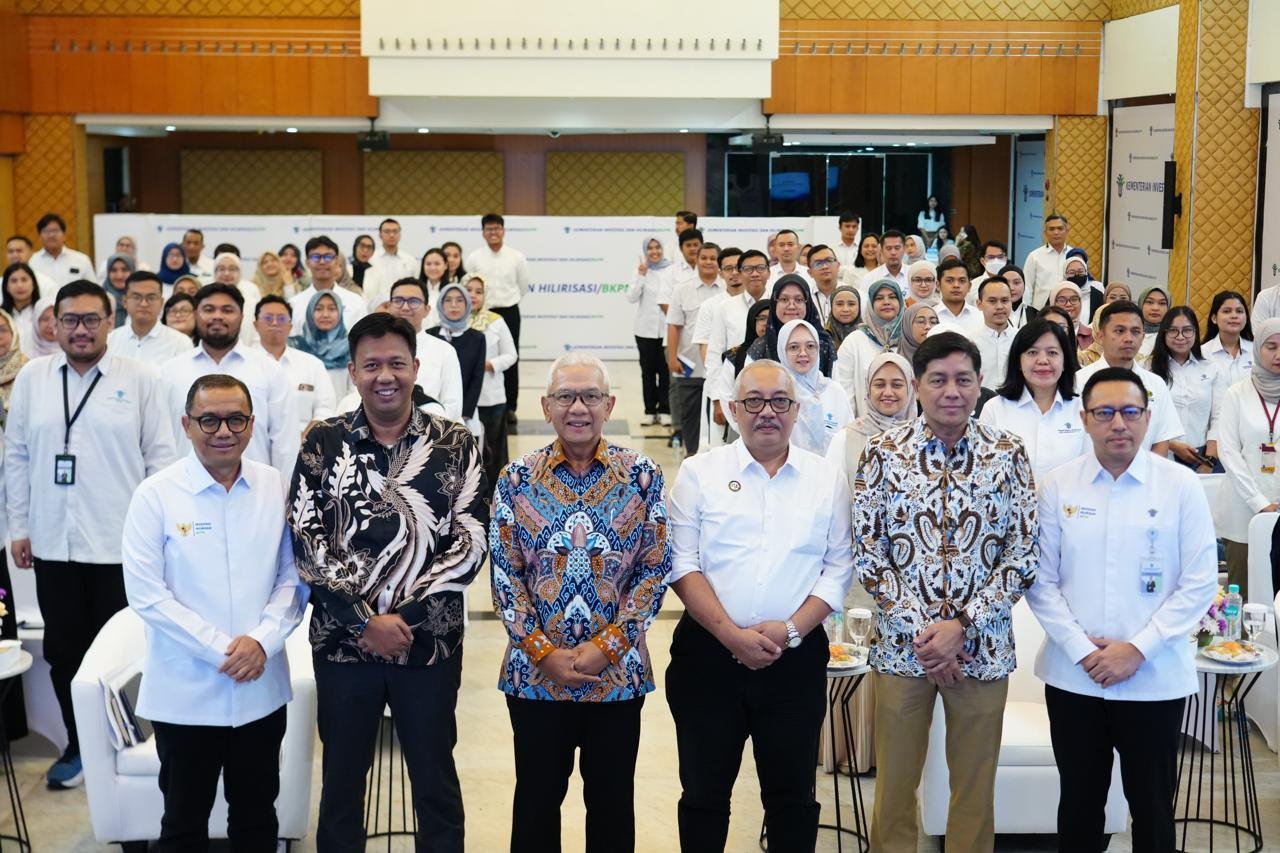
“The theme is particularly relevant amid global uncertainty and technological disruption. Information transparency is key to reducing uncertainty itself and strengthening investor confidence,” Haryo said at a public information transparency dissemination event titled “Open Information, Quality Investment, Impactful Downstreaming” at the Ministry of Investment and Downstreaming/BKPM on Monday (Sept. 21, 2026).
Haryo said Indonesia’s economic fundamentals remained solid despite geopolitical tensions, trade fragmentation and volatility in global financial markets.
Indonesia’s economy grew 5.45 percent year-on-year in the first half of 2026, while annual inflation stood at 3.19 percent in August.
Investment realization reached Rp1,010.6 trillion in the first half of 2026, representing a 7.2 percent increase from the same period a year earlier.
Indonesia’s foreign exchange reserves stood at around US$146 billion in August, while the country recorded a US$3.58 billion trade surplus during January-June 2026.
S&P also maintained Indonesia’s long-term sovereign credit rating at BBB and its short-term rating at A-2, with a stable outlook.
The government is targeting economic growth of 6 percent in 2027 and 8 percent by 2029. Haryo said achieving those targets would require investment growth to outpace GDP growth, higher labor productivity, increased exports of value-added products and greater logistics efficiency.
He said investment needed to be directed toward sectors and projects capable of generating higher added value, creating jobs and strengthening regional economies.
“Investment is an important engine of national economic growth. Ultimately, all investment will flow into regions and will depend heavily on the readiness of regional ecosystems,” Haryo said.
He urged regional governments to ensure that investment-related information was clear, consistent and easily accessible. Such information should go beyond business licensing and include regional economic profiles and potential, spatial planning, infrastructure, energy and utilities, investment incentives, leading commodities, local supply chains, as well as the availability of small and medium-sized enterprises and supporting industries.
The government is also continuing to strengthen the implementation of the Online Single Submission (OSS) system through Risk-Based Business Licensing under Government Regulation No. 28 of 2025.
At the same time, the government is addressing investment bottlenecks through the Debottlenecking Task Force. As of Aug. 31, 2026, the task force had received 177 complaints from businesses, of which 135 had been resolved.
The complaints covered issues including licensing, taxation, customs, spatial planning, logistics and energy.
Downstreaming is also being positioned as a key driver of investment and regional economic development. Under the 2025-2029 National Medium-Term Development Plan (RPJMN), priority downstreaming sectors include mining, plantations, fisheries and forestry.
The government has identified 28 priority commodities with potential investment opportunities of up to US$618.1 billion, potential exports of US$857.9 billion and the potential to create more than 3 million jobs by 2040.
The government is also continuing to develop Special Economic Zones (SEZs) as strategic investment centers. As of June 2026, Indonesia had 25 SEZs, with cumulative investment of around Rp368 trillion and employment of more than 283,000 workers.
Meanwhile, Secretary of the Ministry of Investment and Downstreaming and Secretary-General of BKPM Rudy Salahuddin said public information transparency required collaboration and coordination among government institutions.
“With better information governance, we hope to strengthen public trust, support the creation of a quality investment climate, and ensure that investment and downstreaming policies are understood and deliver tangible benefits to the public,” Rudy said.
The Coordinating Ministry for Economic Affairs has also continued to strengthen its public information governance. Since 2020, the ministry has maintained an “Informative” rating for six consecutive years. In 2025, it recorded a score of 95.47.
The ministry’s Public Satisfaction Index for public information services also reached 94.72, placing it in the A or “Very Good” category.







Discussion (0)
No comments yet.