
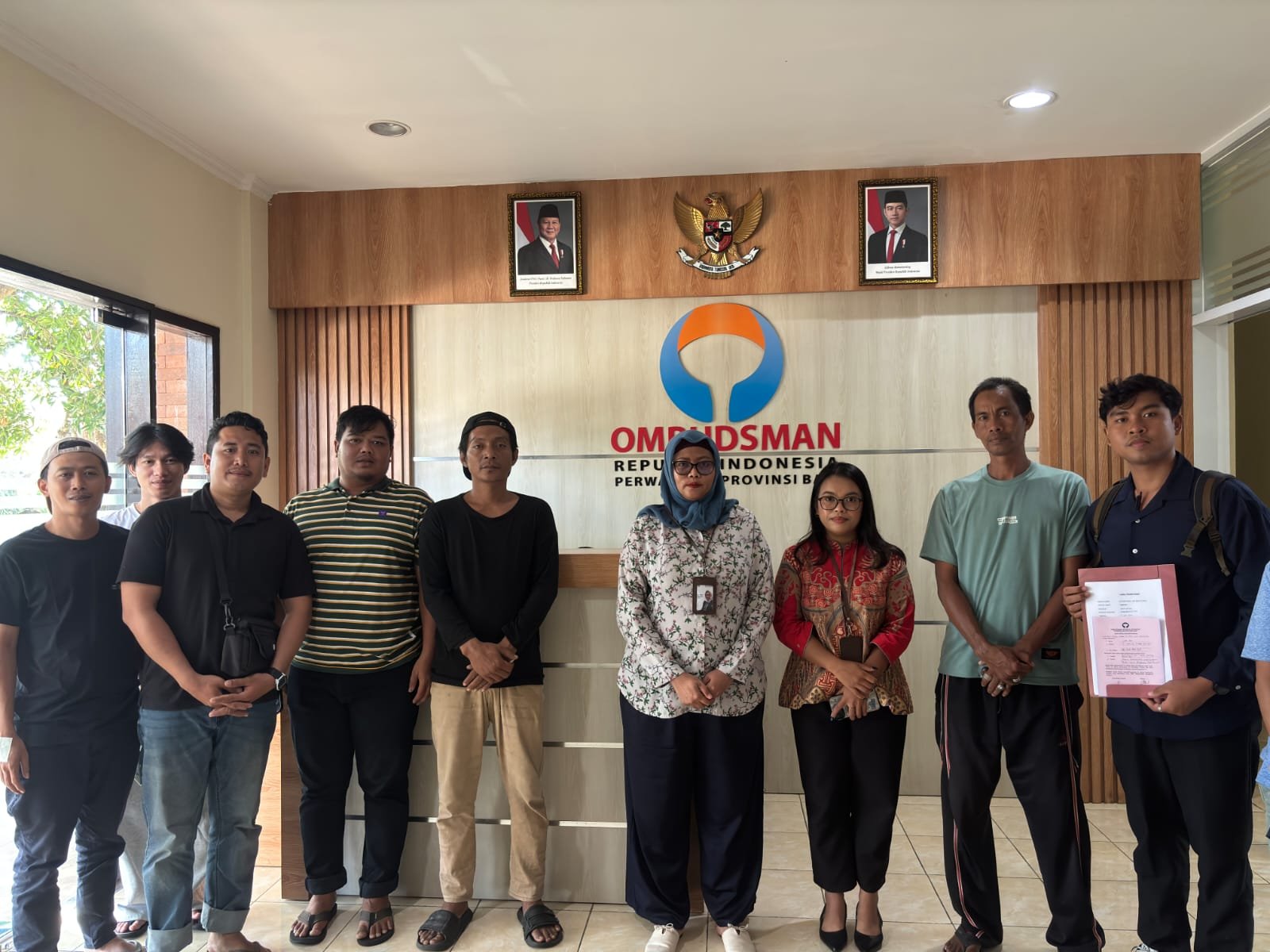
BALINEWSID.COM, BULELENG — Residents of Nirwana Housing Complex in Dauh Margi Hamlet, Pemaron Village, Buleleng District, together with the Indonesian Legal Aid Foundation–Bali Legal Aid Institute (YLBHI–LBH Bali), have filed complaints over alleged environmental, health and economic impacts linked to the operation of the Pemaron Diesel Power Plant (PLTD).
The complaints were submitted on Tuesday, September 8, 2026, to a number of government institutions, including the Buleleng regent, Buleleng Regional House of Representatives (DPRD), Buleleng Environmental Agency, Bali governor, Bali DPRD, the Bali Forestry and Environmental Agency, and the Ministry of Environment.
The residents and their legal advocates also reported alleged maladministration to the Bali Representative Office of the Indonesian Ombudsman and alleged human rights violations to the National Human Rights Commission (Komnas HAM).
The move marks an escalation after residents had previously raised their concerns with PT PLN Indonesia Power’s Bali Generation Business Unit (UBP Bali).
Residents and YLBHI–LBH Bali argue that the issue goes beyond objections to the company’s operations and involves the government’s responsibility to supervise and take action against activities allegedly affecting the environment and surrounding communities.
According to the complainants, the Pemaron combined-cycle gas turbine power plant (PLTGU), with a capacity of 97.6 megawatts (MW), has operated since 2004. Diesel units were subsequently added between 2012 and 2014 before being shut down and later reactivated in November 2024.
The residents claim the diesel units were reactivated after the surrounding area had developed into a densely populated residential neighborhood.
Residents of Nirwana Housing Complex reportedly began occupying their homes in 2020 through a subsidized housing program backed by BTN, before the diesel units were reactivated.
Residents have complained of engine noise, vibrations and smoke allegedly generated by the power plant’s operations. They say the impacts are also being felt by vulnerable groups, including toddlers, children, pregnant women, elderly people and people with disabilities.
According to residents, independent measurements have recorded noise levels that frequently exceed 55 decibels (dB), which they say is the threshold applicable to residential areas under Bali Governor Regulation No. 16 of 2016.
They also allege that the plant’s operation could potentially violate environmental quality standards, including standards concerning disturbance, ambient air quality and emissions.
YLBHI–LBH Bali argues that the government has the authority to supervise the facility’s activities. Under Government Regulation No. 22 of 2021, such supervision may include field inspections, requesting information, collecting samples, inspecting installations and, where violations or serious threats to people or the environment are found, ordering activities to be stopped.
However, residents claim that since the diesel units were reactivated in November 2024, authorities have yet to take sufficiently firm supervisory or enforcement measures to address their complaints.
The residents and their advocates have therefore characterized the situation as involving alleged maladministration and potential human rights violations.
Residents Question Need for Plant Amid Bali Power Surplus
The dispute has also raised questions about why the Pemaron diesel plant continues to operate when Bali’s electricity system is allegedly experiencing a surplus.
Citing Appendix B.7 of Energy and Mineral Resources Ministerial Decree No. 188.K/TL.03/MEM.L/2025, the residents and YLBHI–LBH Bali said Bali’s peak electricity demand in 2024 stood at 1,164 MW, while available supply reached 1,522 MW, resulting in a reported surplus of 358 MW.
Based on those figures, they calculate that even if the 97.6 MW Pemaron plant were shut down, Bali’s electricity system would still have an estimated surplus of around 260.4 MW.
They are therefore questioning the continued operation of the diesel plant and whether it remains technically necessary for the island’s electricity system.
The residents and YLBHI–LBH Bali have also raised concerns over possible economic implications arising from power purchase agreements, including take-or-pay arrangements, under which payments for capacity or energy may continue in accordance with contractual terms even when actual electricity demand does not fully correspond to available capacity.
They say the matter should be comprehensively examined by the authorities to determine whether the continued operation of the Pemaron plant is genuinely based on the technical requirements of Bali’s electricity system or other considerations.
Residents Demand Suspension if Violations Are Confirmed
The residents and YLBHI–LBH Bali are urging the Bali governor, Buleleng regent, Bali Forestry and Environmental Agency and Buleleng Environmental Agency to immediately conduct field inspections, collect samples, measure environmental quality standards and verify the plant’s environmental impact assessment documents, environmental approval and business permits.
They are also calling on the authorities to use their legal powers to suspend the plant’s operations if investigations confirm violations that harm residents or the environment.
The residents further want authorities to hold responsible parties accountable and ensure environmental restoration and the protection of affected residents’ rights, particularly those belonging to vulnerable groups.
The Bali Representative Office of the Indonesian Ombudsman has been asked to investigate the alleged maladministration through field investigations, monitoring and coordination with relevant institutions.
Meanwhile, Komnas HAM has been asked to examine the alleged human rights violations through monitoring, examination and/or investigation in accordance with its authority.
The Ministry of Environment has also been urged to examine the plant’s environmental documents and operations through environmental supervisory officials and environmental law enforcement authorities.
Residents are calling for sanctions if violations are established, potentially including written warnings, government enforcement orders, temporary suspension of operations, freezing or revocation of environmental approvals and/or business permits in accordance with applicable laws.
The residents of Pemaron and YLBHI–LBH Bali say their complaints are aimed at ensuring that the community’s right to a good and healthy environment is not compromised by the operational interests of the power plant.






Discussion (0)
No comments yet.