
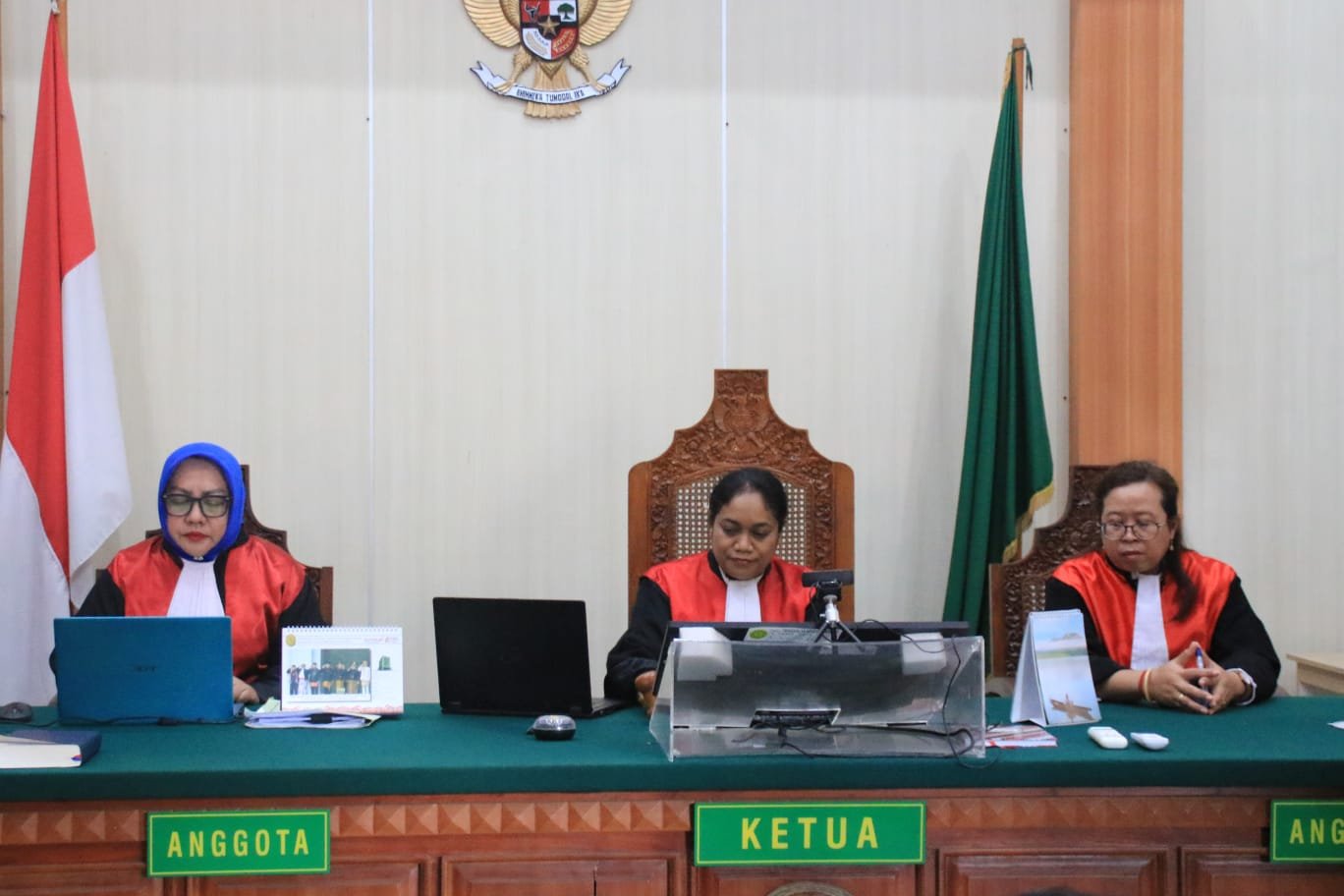
BALINEWSID.COM, DENPASAR — The hearing of a civil lawsuit filed by lawyer Togar Situmorang against four media outlets in Bali at the Denpasar District Court was postponed on Monday (Aug. 24, 2026), with the defendants preparing to challenge the court’s jurisdiction.
The hearing was initially scheduled to determine the next stages and schedule for the proceedings. However, Presiding Judge Abang Marthen Bunga, S.H., M.Hum., was unable to attend. The hearing was subsequently opened by a substitute judge, who decided to postpone the proceedings until Monday, Aug. 31, 2026.
Situmorang was represented by his legal team during the hearing. Meanwhile, the legal team representing the four media outlets said it was ready to take a key legal step at the next hearing by filing an objection over the court’s absolute jurisdiction.
I Made “Ariel” Suardana, S.H., M.H., coordinator of the legal team representing the four media outlets under the Solidaritas Jurnalis Bali (SJB), said the defendants would argue that the dispute should be handled through the Press Council rather than the general court system.
“We are fully prepared. At the next hearing, we will file an objection on absolute jurisdiction, arguing that this dispute should be resolved through the Press Council mechanism, not the general courts,” Ariel said after the hearing.
According to Ariel, the Denpasar District Court does not have absolute jurisdiction to hear a dispute arising from journalistic content. He said the dispute should be handled in accordance with Law No. 40 of 1999 on the Press.
“In our initial response to the lawsuit, we will raise the issue of absolute jurisdiction. This means the Denpasar District Court has no authority to hear the case because it falls under the jurisdiction of the Press Council,” said Ariel, who is also chairman of Peradi Sai Denpasar.
Ariel said the media outlets had already fulfilled their legal obligations by providing the plaintiff with the opportunity to exercise his right of reply.
“Resolution through the Press Council should be prioritized, especially since the right of reply has already been provided. So what else is being disputed? Therefore, there is no unlawful act here,” he said.
He compared press disputes to professional ethics cases in other professions that are handled by specialized professional bodies.
“If a lawyer is alleged to have violated professional ethics, would the case be heard in a district court? Lawyers have a professional ethics council. A similar mechanism should apply to press disputes,” Ariel said.
The dispute had previously gone through a mediation process, but the two sides failed to reach an agreement.
The defendants’ legal team rejected conditions proposed by the plaintiff, arguing that they had already entered into the substance of the lawsuit.
Following the failed mediation, the defendants said the issue of absolute jurisdiction should be determined before the court proceeds to examine the substance of the lawsuit.
Ariel expressed optimism that the case could be resolved relatively quickly if the panel of judges fully considered the provisions of the Press Law and the role of the Press Council.
“If the judges understand the Press Law and the institution responsible for resolving press disputes, the case could be concluded in three hearings: the reading of the lawsuit, the defendants’ response, and an interlocutory ruling,” he said.




Discussion (0)
No comments yet.