
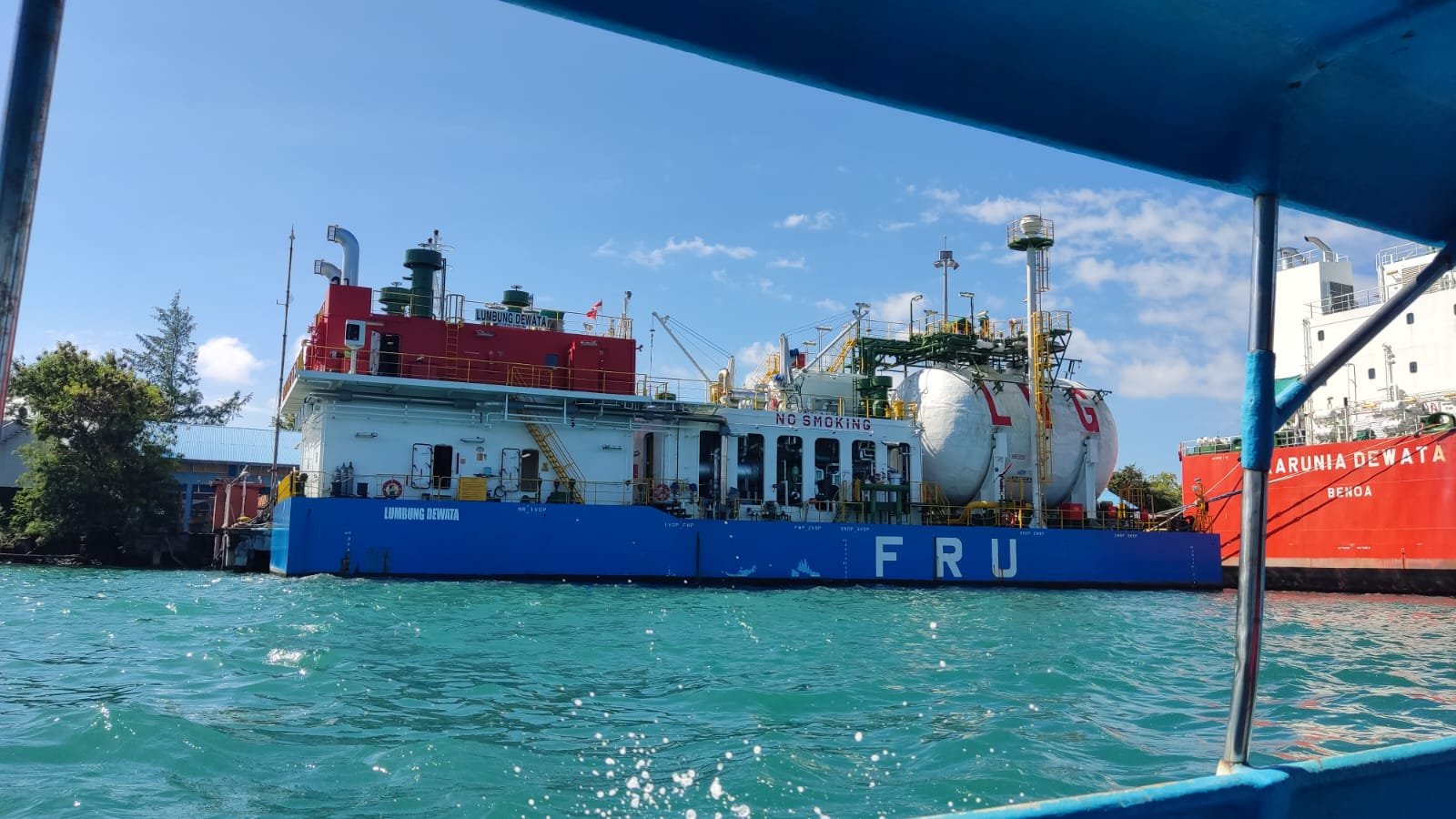
BALINEWSID.COM, JAKARTA — Efforts to strengthen national energy resilience while preserving the environment in Bali have entered a new phase, marked by a plan to build a 145,000-cubic-meter Liquefied Natural Gas (LNG) storage terminal in the Serangan Beach area, Denpasar.
The project is seen as a strategic move to reduce Indonesia’s reliance on imported fuel oil (BBM) and to support Bali’s vision as a sustainable tourism destination.
The transition program from diesel fuel to LNG is expected to address Bali’s high fuel consumption. Current data shows that diesel consumption in the province reaches around 500,000 metric tons annually, placing Bali among the largest diesel consumers in Indonesia. At current market prices, the cost of supplying this fuel is estimated at approximately Rp 8.3 trillion.

Energy business practitioner and Institut Teknologi Bandung (ITB) alumnus Dicky Ahmad Gustyana said the LNG storage facility could significantly cut costs while enhancing energy independence.
“With the LNG storage in Serangan, the country could save up to USD 500 million per year. More importantly, LNG is not an import-dependent commodity vulnerable to geopolitical tensions. It is sourced domestically from the Tangguh gas field in Papua,” Dicky said in a statement on Wednesday (April 9, 2026).
He added that reliance on imported fuel often impacts Indonesia’s trade balance and domestic price stability, particularly during geopolitical crises.
“When tensions rise in the Middle East, supply becomes scarce, prices surge, and the rupiah comes under pressure. With domestic LNG from Tangguh, Indonesia can be more self-reliant and shielded from external shocks,” he said.
From an environmental perspective, the shift to LNG is considered a major step forward for Bali as a global tourism hub. LNG is significantly cleaner than diesel, which is known for high emissions.
“Bali is the showcase of Indonesia’s tourism. If the air is polluted by widespread diesel generators, tourists may leave. Transitioning to LNG is not just about energy—it’s about protecting Bali’s image and economic future,” Dicky added.
The initiative also aligns with the central government’s plan to retire 13 diesel power plants across the country. With supporting infrastructure such as the Serangan LNG terminal, cleaner and more stable energy supplies for hotels, restaurants, and industries in Bali are expected to improve.
Given the economic and environmental urgency, stakeholders in the energy and tourism sectors are calling for full support for the LNG terminal development.
“This LNG storage project must be supported collectively. It is a tangible step toward the energy self-sufficiency vision outlined by President Prabowo Subianto. Bali should become a pilot project for clean energy transition in Indonesia,” Dicky concluded.








Discussion (0)
No comments yet.