
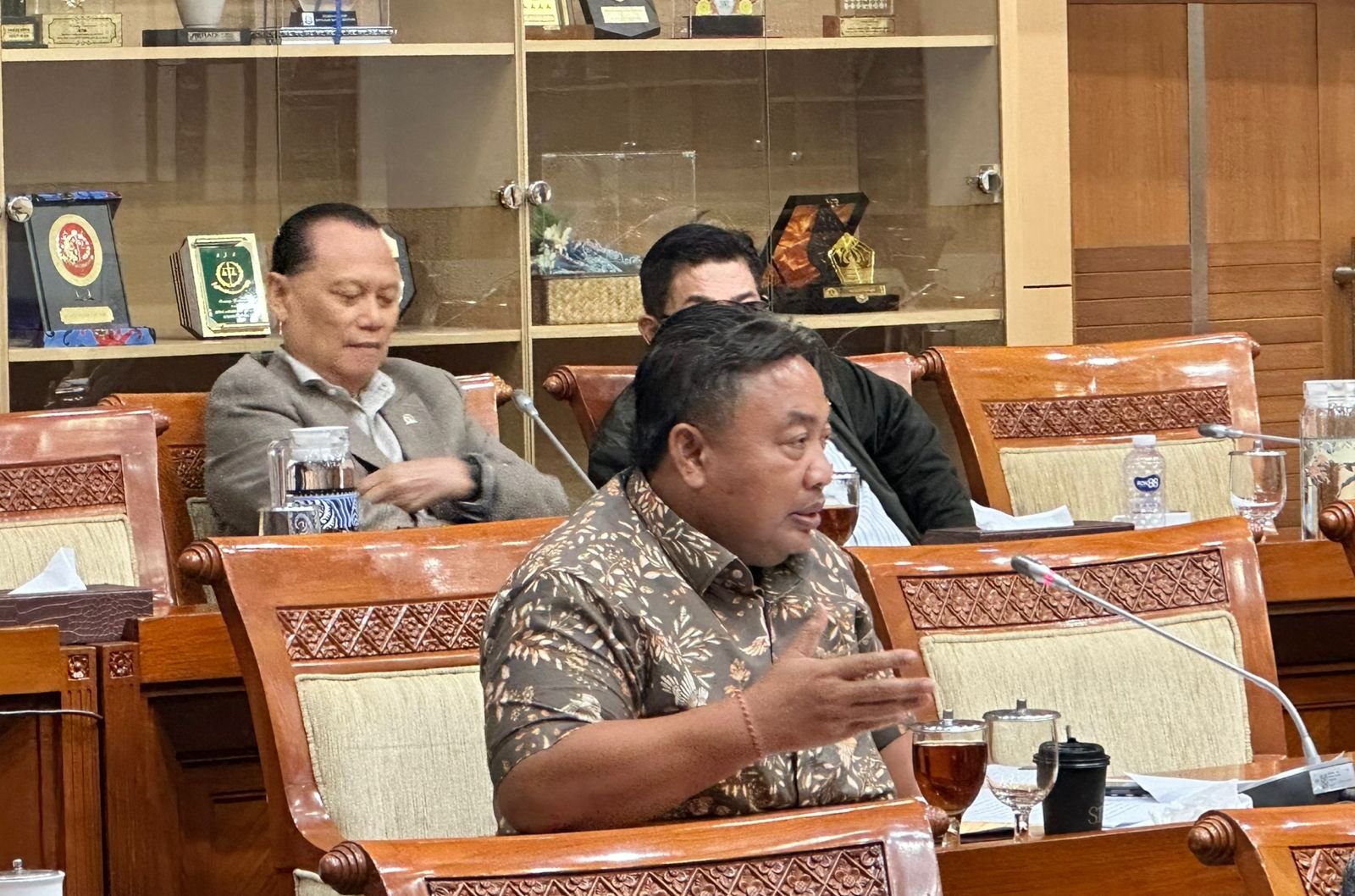
BALINEWSID.COM, DENPASAR – March 31, 2026 — Indonesia’s House of Representatives (DPR RI) is accelerating deliberations on the Asset Forfeiture Bill (RUU Perampasan Aset) in a bid to pass it into law, with Commission III actively seeking input from legal experts.
Nyoman Partha, a member of Commission III from Bali, confirmed in Denpasar on Tuesday that discussions on the bill are being intensified. He said the commission recently held a public hearing (RDPU) with several prominent legal scholars, including Prof. Bayu Dwi Anggoro, Head of the DPR’s Expertise Body; Maradona, S.H., LL.M., Vice Dean of the Faculty of Law at Airlangga University; and Prof. Hibnu Nugroho, a criminal law professor at Jenderal Soedirman University.
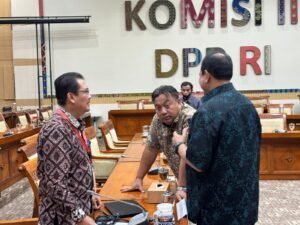
“The engagement is aimed at gathering comprehensive input for the drafting of the Asset Forfeiture Bill related to criminal acts,” Partha said.
He emphasized that the bill has become increasingly urgent amid Indonesia’s ongoing struggle with corruption. Data from Transparency International Indonesia shows that the country’s Corruption Perception Index (CPI) score dropped to 34 in 2025, placing Indonesia 109th out of 180 countries, down from a score of 37 and rank of 99 in 2024.
“The Asset Forfeiture Bill is essential in strengthening efforts to combat corruption and economic crimes. The high level of state losses caused by various criminal acts has not been optimally recovered under the current legal mechanisms, which are still largely conviction-based,” he explained.
According to Partha, the existing conviction-based approach often faces obstacles, such as difficulties in proving cases, suspects fleeing, or dying before a verdict is reached—situations that prevent the state from seizing illicit assets.
To address these challenges, the bill introduces a new profit-oriented approach through a Non-Conviction Based (NCB) Asset Forfeiture mechanism. This would allow the state to confiscate assets through civil proceedings with more flexible standards of proof.
“The objective is to ensure that crime does not yield benefits for perpetrators, accelerate the recovery of state losses, and cut off illicit financial flows,” he added.
However, Partha acknowledged that several key issues could spark debate, including concerns over the NCB mechanism potentially conflicting with the presumption of innocence, the application of reversed burden of proof, limits on law enforcement authority, risks of abuse of power, protection of property rights and human rights, as well as the management of seized assets.
He noted the ongoing legal discourse between the conviction-based approach—requiring a criminal verdict before assets can be seized—and the non-conviction-based model, which allows confiscation without a prior criminal conviction.
“We will seek a middle ground between these two legal concepts,” he said, adding that the bill is also expected to address asset recovery from crimes such as money laundering, human trafficking, nominee arrangements, narcotics offenses, and other financial schemes.





Discussion (0)
No comments yet.