
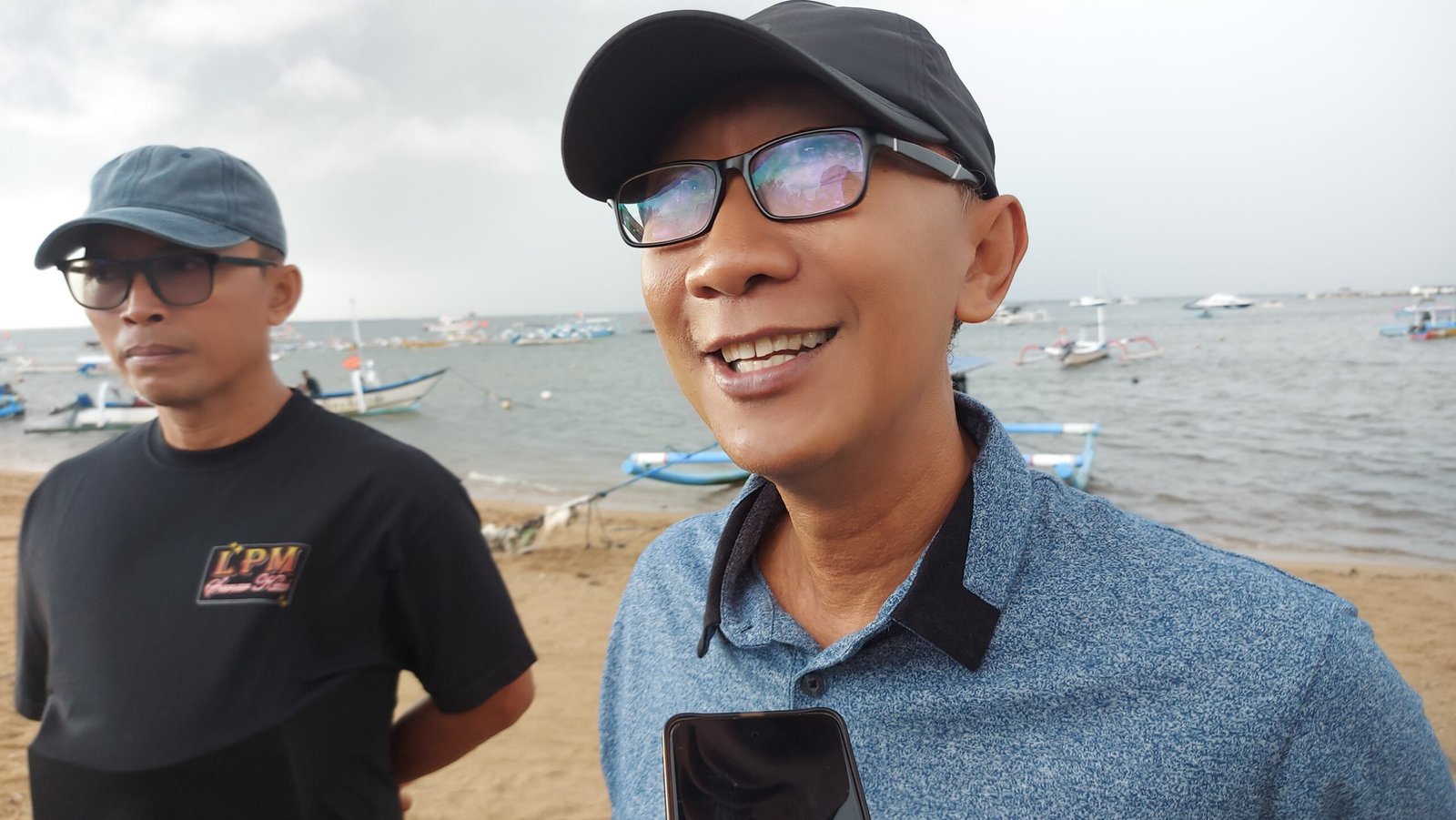
BALINEWSID.COM, DENPASAR —The planned construction of a Floating Storage Regasification Unit (FSRU), or Liquefied Natural Gas (LNG) Floating Terminal, in Bali waters has drawn public attention. The facility is set to be built approximately 3.5 kilometers offshore from Sidakarya Beach, covering the waters of Sidakarya, Serangan, and Intaran Traditional Village.
Bendesa Adat (Customary Village Head) of Intaran, I Gusti Agung Alit Kencana, emphasized that there is no reason for the Intaran Traditional Village or its residents to reject the LNG project, provided it is located 3.5 kilometers from the coastline.
Speaking during a beach clean-up initiative organized by the Bali chapter of the Online Journalists Association (IWO) on Sunday (15/2/2026), Alit Kencana clarified that public concerns were initially related to the proposed location of the project.
“The issue frequently heard that Balinese people reject the LNG project is not true. What we disagreed with was the initial plan to place it only 500 meters from the shore. Now that we have been informed it will be shifted 3.5 kilometers offshore—meaning it will be in the middle of the sea—there is no reason for us to oppose it,” he stated firmly.
According to Alit Kencana, earlier opposition stemmed from concerns about potential environmental damage, including risks to marine ecosystems, coral reefs, mangrove forests, and Bali’s tourism sector. However, after receiving detailed briefings from both the government and project initiators, the community gained a better understanding of the project’s purpose and safety measures.
He explained that LNG is planned to replace diesel fuel in power plants, providing a cleaner energy source to support Bali’s position as a world-class tourism destination. The project is also expected to anticipate potential energy shortages in the future.
“From the socialization sessions we attended, it was conveyed that the project carries minimal risk. LNG is not something new for Bali. There has already been an LNG terminal operating at Port of Benoa since 2016, and it has been running safely for 10 years,” he said.
Nevertheless, he acknowledged that energy projects inherently carry certain risks and stressed that safety must remain a top priority.
“Even though it is said to be safe, energy projects always have potential risks. We hope all possible risks are carefully calculated and mitigated. Every development project must provide positive impacts for the community,” he added.
Alit Kencana also conveyed these views directly to the Governor of Bali during a recent visit to Sanur.
He expressed hope that the floating LNG terminal, which is scheduled for development in 2026, will proceed smoothly without causing environmental or social issues, while delivering tangible benefits to the people of Bali. (FF)




Discussion (0)
No comments yet.