
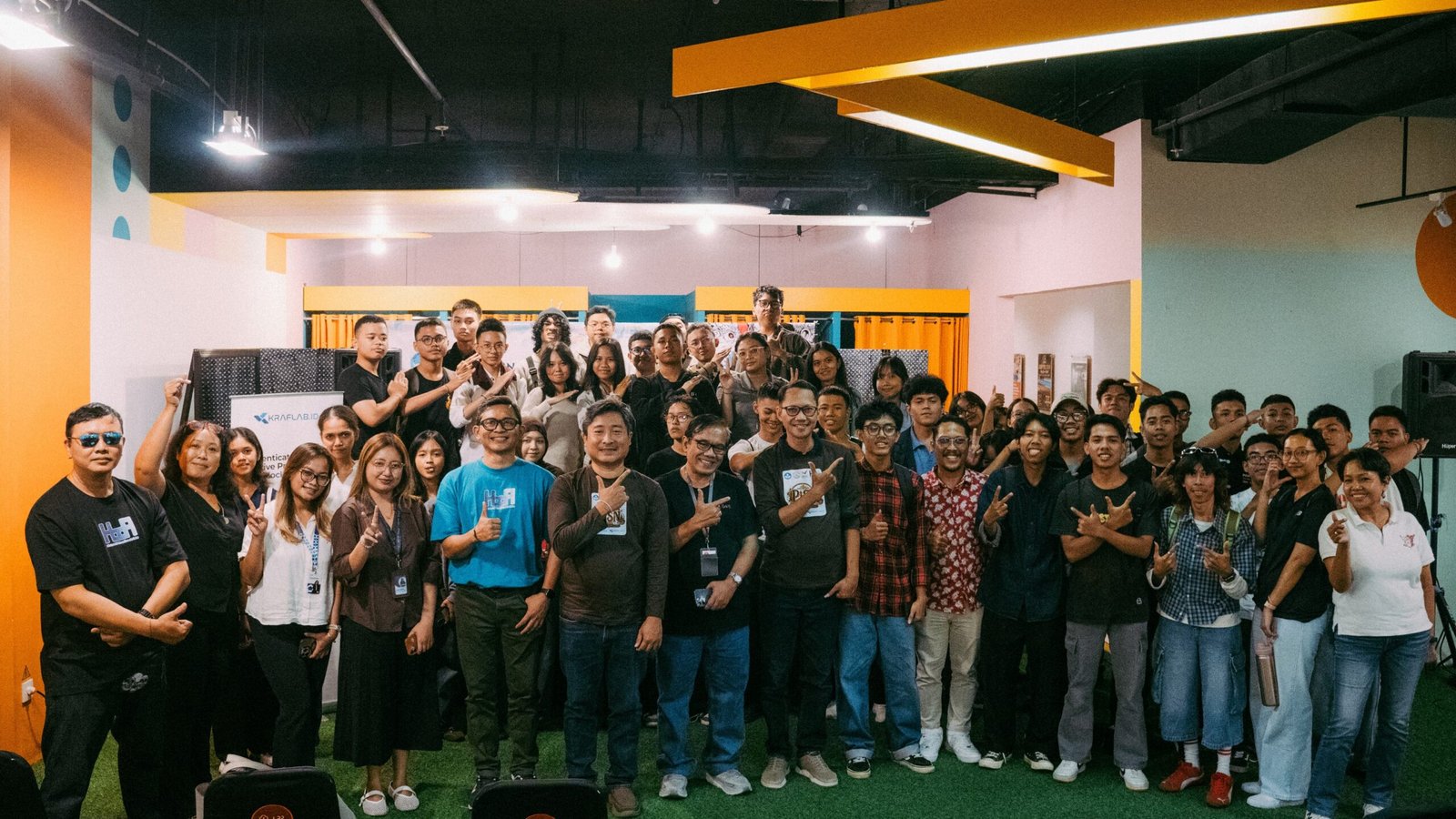
BALINEWSID.COM, BADUNG — The Indonesian Institute of Business and Technology (INSTIKI), in collaboration with House of Creative Artist (HOCA), has launched the 2026 Nusantara Art Innovation Program (PISN 2026), bringing together art, education, technology and intellectual property protection.
The program, supported by Indonesia’s Ministry of Higher Education, Science and Technology, reached its main stage with the opening of the visual art exhibition “UTOPIA X DISTOPIA: UnBALIveable” at Park 23 Creative Hub in Tuban, Bali, on August 7, 2026.
The exhibition features 72 artworks created by students, university students and professional artists from several Indonesian cities.
A total of 32 works were submitted by students of INSTIKI and the Indonesian Institute of the Arts Bali (ISI Bali), while 29 works were created by students from SMKN 1 Denpasar and SMK Duta Bangsa Denpasar. Another 11 works were contributed by artists from Bali, Jakarta and Makassar.
The exhibition brings together different generations and artistic backgrounds, providing a platform for young creators and professional artists to explore the relationship between humans, technology and life in Bali.
UTOPIA 2026 is curated by Dr. I Made Marthana Yusa, M.Ds and Yere Agusto.
The theme “UTOPIA X DISTOPIA: UnBALIveable” explores the contrasting ideas of utopia, representing an ideal condition, and dystopia, reflecting conditions marked by social and technological challenges.
The theme has become increasingly relevant amid the rapid development of artificial intelligence (AI), which is creating new opportunities for artists while also raising concerns over originality, ownership, documentation and intellectual property protection.
Through PISN 2026, participants are not only encouraged to produce artistic works but are also educated about the importance of protecting their creative output through intellectual property rights.
The program was implemented through several stages, beginning with intellectual property awareness sessions for vocational school students and university students, followed by workshops on KRAFLAB technology, artwork submission, curation and the final exhibition.
KRAFLAB, a digital technology platform developed by BALIOLA, was introduced to participants as a tool for digitally documenting creative works.
Through the platform, participants learned how to create digital creator identities, upload their artworks, undergo the curation process and obtain digital certificates based on blockchain technology.
The digital certification system is intended to provide an additional digital record of artwork ownership while helping creators document their works in the digital environment.
The organizers have set a target of issuing at least 50 blockchain-based digital certificates for artworks that successfully pass the selection and curation process.
Participants in UTOPIA 2026 include students of Visual Communication Design and members of INSTIKI’s GRADASI student organization, Visual Communication Design students from ISI Bali, students from SMKN 1 Denpasar and SMK Duta Bangsa Denpasar, HOCA members and senior artists.
This year’s exhibition also expands the scope of the previous UTOPIA program. While UTOPIA 2025 focused largely on senior artists from HOCA, the 2026 edition brings together university students, vocational school students and professional artists in a single exhibition space.
Beyond the exhibition itself, PISN 2026 is designed as a collaborative platform connecting higher education institutions, art communities, young creators, the creative industry and the technology sector.
HOCA also introduced its new identity during the program. Previously known as House of Cartoon Mania, the organization has adopted the name House of Creative Artist, reflecting its broader focus beyond cartoon and illustration to include fine art, visual communication design, digital art and other forms of creative expression.
The collaboration between INSTIKI, HOCA, BALIOLA through KRAFLAB, and the Ministry of Higher Education, Science and Technology is expected to contribute to the development of Indonesia’s art and creative economy ecosystem.
The program also seeks to open a broader dialogue about the future of art, culture, humanity and technology.
Through PISN 2026, art is positioned not merely as a visual product but as a space for examining how people respond to technological change, including the rapid development of AI.
At the same time, the program highlights the importance of maintaining artistic identity, value and originality while strengthening the protection and documentation of creative works in the digital era.



Discussion (0)
No comments yet.