
BALINEWSID.COM, NAGEKEO – Ferdinandus Dhosa, commonly known as Ferdin, has denied allegations of assault reported by online media outlet WartaGlobal.id, calling the report exaggerated and inconsistent with the actual events.
Ferdinandus was accused in the report of carrying out a brutal assault against Labolewa Village Head Valens Nusa and a resident, Tobias Dega, in Aesesa District, Nagekeo Regency, on Saturday (March 14, 2026).
When contacted for confirmation, Ferdinandus firmly rejected the claims.
“I never took the law into my own hands, let alone committed assault as reported. The news is overly exaggerated and does not reflect the facts on the ground,” he said.
He also denied claims that he had beaten, knocked down, and stepped on the victims in a rice field.
“The report said I hit them until they fell and then stomped on them in the field. That is completely untrue. There were witnesses at the scene who saw what really happened,” he added.
Ferdinandus explained that he had only taken a machete to verify whether cattle that had been damaging his rice crops had actually eaten the plants.
“I took the machete not to threaten anyone. I only wanted to check whether there was rice inside the cow’s stomach. If there was no rice, I was ready to compensate Tobias with two cows. But if there was rice, then the owner should be responsible for the damage. At that time, Tobias admitted the cow was his,” he said.
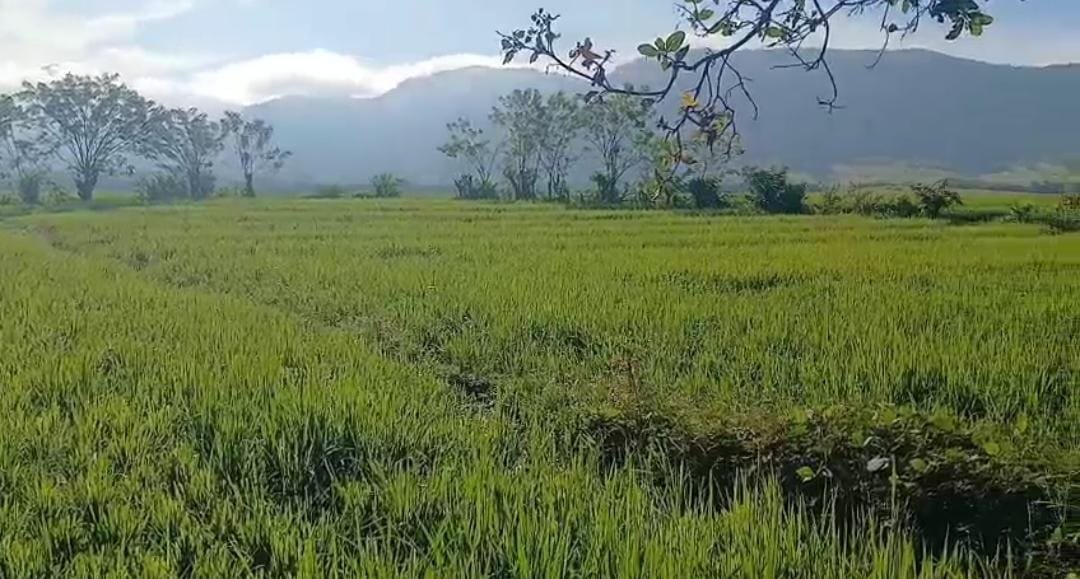
According to information gathered from local sources, the incident stemmed from Ferdinandus’ frustration after his rice crops in the Pomabala area were repeatedly damaged by free-roaming cattle at night.
In an effort to identify the owner, he set up a trap. In the early hours of Saturday, the suspected cow entered the trap. Ferdinandus then went to Tobias Dega’s house and invited him to see the trapped animal and the damaged crops.
At the location, Tobias acknowledged ownership of the cow, while another cow was identified as belonging to Valens Nusa.
During the encounter, Ferdinandus reminded the village head of the importance of setting an example in enforcing livestock control regulations.
“As a village head, he should set an example for residents. There are regional regulations on livestock control that should be implemented, especially during planting season,” he said.
Ferdinandus admitted he felt emotional upon learning that one of the cattle belonged to a public official, but stressed that he never demanded compensation. Instead, he requested a traditional reconciliation ritual known as “Keta Ja.”
“I only asked Tobias to bring a chick and a red coconut for the Keta Ja ritual, as a form of apology to nature and ancestors for the damage to my rice field,” he explained.
The request was agreed upon, and both parties carried out the ritual together at the site.
“I thought the matter was resolved. We have forgiven each other,” Ferdinandus said.
He criticized WartaGlobal.id’s report as unbalanced and misleading, arguing that it unfairly portrayed him as the wrongdoer despite being the victim of crop damage.
“Now I’m being blamed, even though I’m the one whose crops were destroyed. I have accepted the situation sincerely,” he said.
Ferdinandus urged media outlets to present balanced reporting and avoid provoking tensions in cases that have already been peacefully settled.
“News should not worsen the situation. We have already reached a peaceful resolution,” he emphasized.
He also raised concerns about journalistic independence, noting that the reporter who wrote the article is allegedly the younger sibling of the Labolewa village head.
“That’s why I consider the report one-sided. Journalists should be professional and stick to facts in the field,” he said.
Ferdinandus concluded by calling on journalists to uphold the code of ethics by verifying information and presenting balanced coverage.
“Professionalism in journalism depends on adherence to ethical standards—seeking and delivering truthful and balanced news,” he said.

Discussion (0)
No comments yet.