
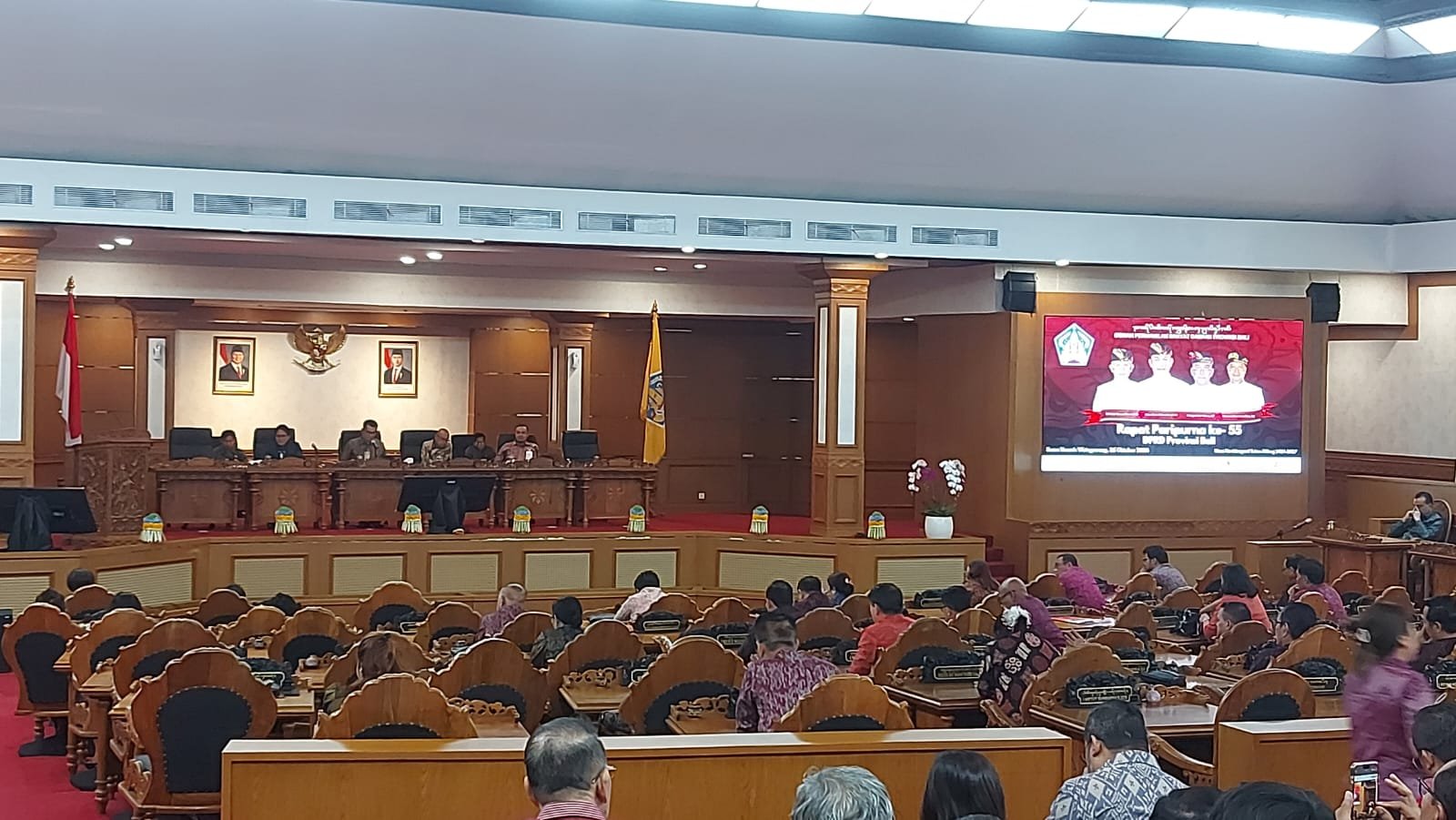
BALINEWSID.COM, DENPASAR — Several factions in the Bali Regional Legislative Council (DPRD Bali) have raised concerns over the fuel crisis that triggered long queues at gas stations and traffic congestion across the island for approximately a week. The lawmakers called for stronger contingency planning, improved fuel distribution monitoring, and accountability from state-owned energy company Pertamina for the impact on the public.
The concerns were raised during the factions’ general views on the draft 2027 Bali Provincial Budget (APBD) at the Bali DPRD office on Monday, October 26, 2026.
Ni Kadek Darmini of the Indonesian Democratic Party of Struggle (PDI-P) faction said the recent disruptions to fuel availability and distribution should serve as an important lesson for the Bali Provincial Government.
She stressed that the government must move beyond responding to crises after they occur and instead strengthen regional resilience and preparedness.
“Therefore, PDI-P calls on the Bali Provincial Government to strengthen the performance of relevant regional agencies and coordinate with the central government and all stakeholders to prepare mitigation measures in the event of supply disruptions, policy changes, or emergencies that could affect the public’s basic needs,” Darmini said.
She added that the fuel crisis should be a turning point for establishing a stronger early-warning and contingency system, enabling Bali to anticipate potential risks, respond more effectively to disruptions, and maintain the continuity of daily life.
Meanwhile, Gede Harja Astawa of the Gerindra-PSI faction highlighted the impact of fuel shortages, which caused vehicle queues to spill onto public roads and triggered traffic congestion. The situation disrupted workers’ mobility and the distribution of food supplies.
The faction called for greater transparency through a digital information platform providing real-time data on fuel availability at individual gas stations.
“Statements are indeed necessary to maintain public calm, but reality cannot be changed by words alone. Only concrete action can change the situation and meet the expectations of an increasingly critical and well-informed public,” Harja said.
He emphasized the need for immediate and strategic measures to restore normal conditions and prevent a similar crisis from happening again.
Harja also praised the people of Bali for remaining calm while queuing for fuel, maintaining orderly lines, avoiding the spread of hoaxes on social media, and following instructions from military personnel, police officers, and pecalang—traditional Balinese community security officers.
Golkar Proposes Special Fuel Coordination Body
The Golkar Party faction proposed establishing a special body to coordinate fuel supply management and strengthen energy resilience in Bali.
I Wayan Gunawan of the Golkar faction said the long queues at gas stations demonstrated the need for a more structured, integrated, and sustainable approach to handling fuel supply problems.
Golkar proposed that the provincial government study the establishment of a Bali Provincial Fuel Supply Management and Resilience Coordination Agency.
If creating a separate agency is deemed unnecessary, the government could instead establish a dedicated coordination unit with clearly defined functions and authority.
The proposed body would not take over the responsibilities of Pertamina or the Downstream Oil and Gas Regulatory Agency (BPH Migas). Instead, it would serve as a provincial coordination hub to monitor fuel demand and distribution, identify potential supply disruptions at an early stage, and accelerate the resolution of issues involving multiple agencies.
Democrat-Nasdem Demands Compensation from Pertamina
The Democrat-Nasdem faction called on Pertamina and its management to take responsibility for the fuel shortage crisis, which began on October 12, 2026.
Komang Wirawan said the crisis had caused public concern and affected Bali’s economic stability and public security. Fuel shortages were also said to have contributed to higher prices for basic necessities and increased economic costs, placing an additional burden on residents.
The faction estimated that the losses suffered by the people of Bali as a result of the crisis could reach trillions of rupiah. On that basis, it demanded compensation from Pertamina for the affected public.
“We, the Democrat-Nasdem faction, demand that Pertamina and its management take responsibility by compensating the people of Bali, with compensation distributed directly through corporate social responsibility (CSR) programs to all Balinese residents,” Wirawan said.
The demand represents one of the strongest calls for accountability raised by the legislative factions over the impact of the fuel crisis.
The various concerns raised during the budget discussions underscore that the fuel crisis was not merely a matter of energy availability. It also affected transportation, the distribution of essential goods, and household and business costs.
The factions called for concrete policy measures following a comprehensive evaluation of the crisis, with the aim of strengthening Bali’s fuel supply resilience, improving coordination among relevant stakeholders, and preventing similar disruptions in the future.




Discussion (0)
No comments yet.