
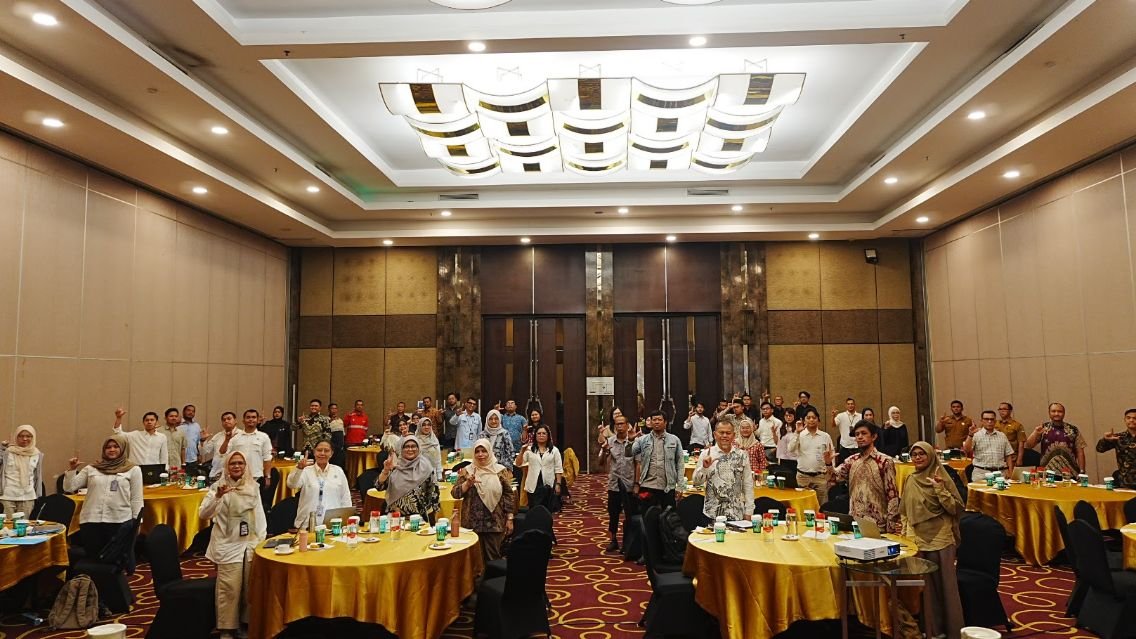
BALINEWSID.COM, JAKARTA — Indonesia’s Ministry of Environment and the Environmental Control Agency (KLH/BPLH) is drafting national standards for electronic waste (e-waste) management as the government seeks to close gaps in the handling of discarded electronic devices from households, offices and industry.
The initiative is being led by the ministry’s Center for Environmental Instrument Standardization (PSILH). It was discussed with representatives from government ministries, local authorities, electronics manufacturers, waste-processing industries and non-governmental organizations at a forum on e-waste management standards in Bekasi, West Java, on Sept. 8, 2026.
PSILH Head Upik Siti Asliah said e-waste management required an integrated system covering the entire process, from collection and sorting to transportation and final treatment.
“E-waste management must be carried out comprehensively from upstream to downstream. However, there are still gaps in implementation that require policy certainty,” Upik said.
The standards under development are expected to establish procedures for sorting, categorizing, transporting and further processing e-waste, particularly waste generated by households and offices, while remaining aligned with existing environmental regulations.
The government said the rapid growth in the use of electronic devices has added to the challenge. According to 2025 data from Statistics Indonesia (BPS), Indonesia’s imports of electronic goods reached 201 tons, while more than 1,000 computer and electronics manufacturing industries operate in the country.
The management of obsolete electronic equipment owned by government institutions has also come under scrutiny. The disposal and transfer of state-owned goods, or BMN, have yet to be fully integrated with environmental protection requirements, according to the KLH/BPLH.
At the community level, e-waste management remains heavily reliant on the informal sector, including collectors and small-scale traders. The government has raised concerns over manual dismantling practices that are carried out without adequate standard operating procedures.
The use of hazardous chemicals during the dismantling process could potentially lead to significant environmental pollution if not properly managed, the ministry said.
Jakarta’s Environmental Agency has developed a formal collection system that includes e-waste drop boxes at public facilities and direct pickup services. KLH/BPLH said the approach could serve as a model for other regions.
The government is also studying ways to integrate informal-sector workers into the formal e-waste management supply chain.
The proposed standards will cover electrical and battery-powered devices that are damaged or no longer in use, ranging from small electronic equipment to bulky appliances.
KLH/BPLH also plans to strengthen coordination with other government agencies, including the Directorate of Auctions and the Directorate of State Asset Policy Formulation at the Ministry of Finance. The coordination is aimed at incorporating environmental considerations into the transfer and disposal of state-owned electronic equipment.
Upik said input from stakeholders and existing best practices would be important in developing standards that could be implemented effectively.
“We hope these e-waste management standards can become practical and effective guidelines that can be applied comprehensively by all stakeholders,” she said.
The government said the standards are expected to provide clearer guidance for government institutions, businesses, service providers and communities in managing electronic waste while reducing the risk of environmental pollution.




Discussion (0)
No comments yet.