
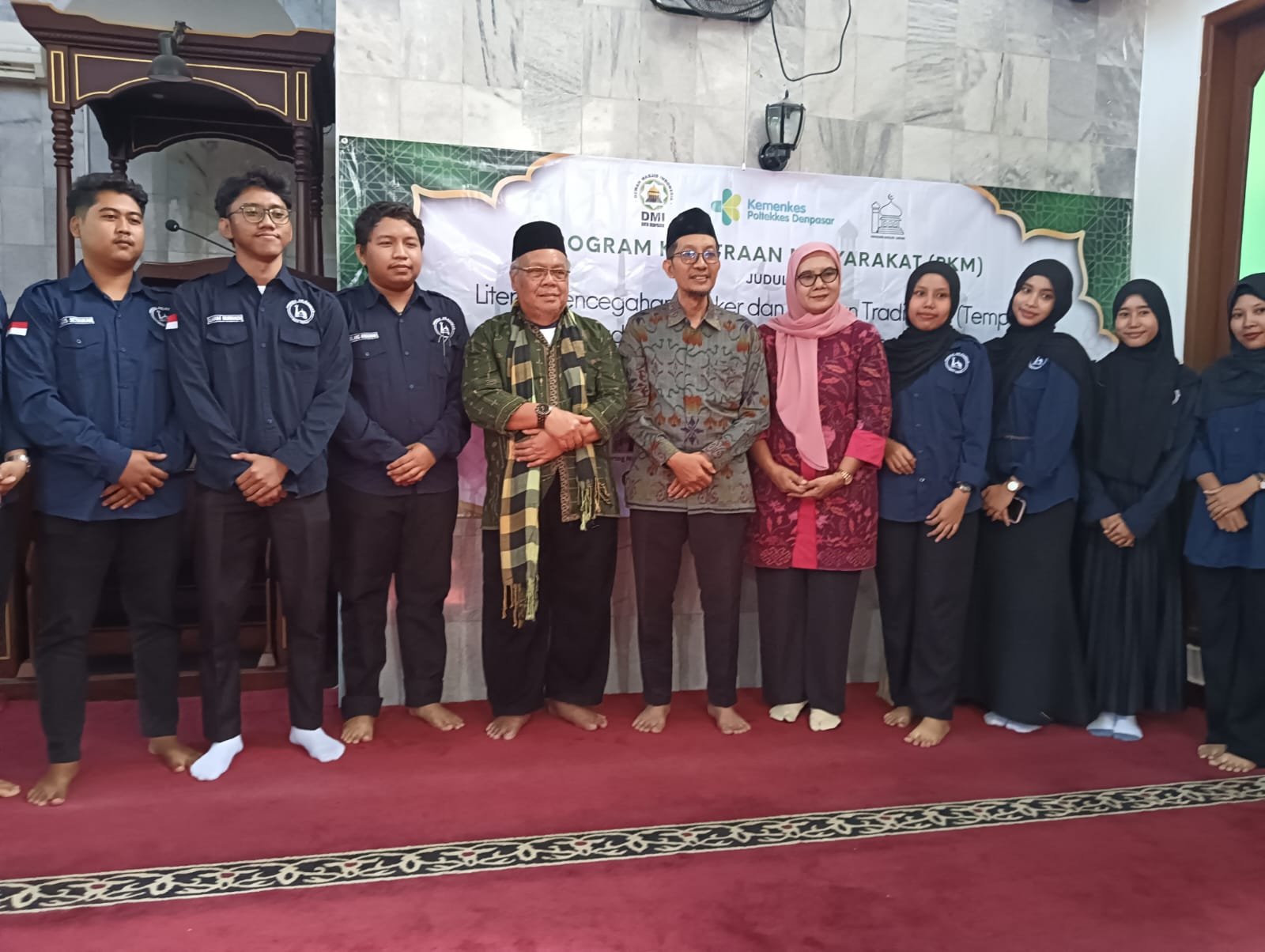
BALINEWSID.COM, DENPASAR – A total of 91 mosque youths from across Denpasar participated in a Youth Health Seminar titled “Recognize Cancer Early, Protect Your Future” at Masjid Sadar, Denpasar, on Sunday (June 28, 2026). The event was organized under the Community Partnership Program (PKM) of the Denpasar Health Polytechnic of the Ministry of Health (Poltekkes Kemenkes Denpasar) in collaboration with the Denpasar branch of the Indonesian Mosque Council (DMI) and the Masjid Sadar Foundation.
The seminar focused on raising awareness about cancer prevention among young people by promoting healthy lifestyles, balanced nutrition, and the benefits of traditional Indonesian foods. Participants showed strong enthusiasm throughout the discussions and interactive sessions.
Three experts from Poltekkes Kemenkes Denpasar served as keynote speakers: Dr. Badrut Tamam, S.TP., M.Biotech., Ir. Hertog Nursanyoto, M.Kes., and Dr. Ni Komang Wiardani, S.ST., M.Kes.
Dr. Badrut Tamam explained that the seminar was part of the institution’s community service initiative aimed at improving health literacy among mosque youth, particularly regarding cancer prevention and healthy dietary habits.
“This program is designed to help young people understand what cancer is, how it can be prevented, and the importance of adopting healthy eating habits from an early age. We also introduced tempeh as a traditional Indonesian food with promising anti-cancer potential,” he said.
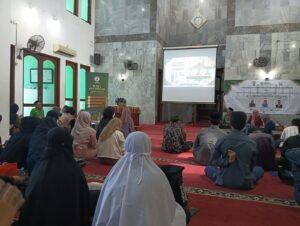
Although organizers had prepared for 100 participants, 91 mosque youths attended the seminar, representing various youth mosque organizations across Denpasar.
Dr. Tamam highlighted that tempeh contains bioactive compounds, including isoflavones and bioactive peptides, which scientific studies suggest may help inhibit cancer cell growth and suppress enzymes associated with cancer development.
“Tempeh is an affordable and widely available traditional food. Beyond being nutritious, it has significant potential as a functional food that supports cancer prevention. This is a message we want more people to understand,” he added.
He noted that the PKM team has previously promoted tempeh through community outreach programs at local integrated health service posts (Posyandu), where it has been introduced as a complementary food for toddlers and as part of nutritional education for mothers.
Meanwhile, Dr. Ni Komang Wiardani delivered a presentation on healthy dietary patterns for cancer prevention. She said tempeh has already become a familiar part of daily meals for many families in Denpasar because it is an excellent source of plant-based protein.
She also explained that tempeh has been developed into a variety of food products, including tempeh nuggets, which have been incorporated into supplementary feeding programs for children at several Posyandu, particularly in Kesiman Kertalangu Village.
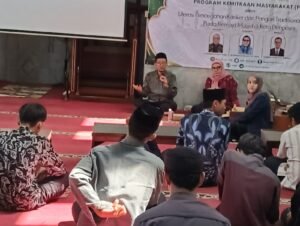
“Tempeh is easy to include in a balanced family diet. It is nutritious, affordable, and can be processed into many attractive food products that appeal to both children and adults,” she said.
Ir. Hertog Nursanyoto emphasized the importance of encouraging Generation Z to return to healthier eating habits amid the growing popularity of fast food and Western-style diets.
“One of the reasons cancer rates continue to rise is the shift toward unhealthy dietary patterns. Through this seminar, we want to encourage young people to rediscover the value of traditional foods like tempeh, which offer far greater health benefits than many modern processed foods,” he said.
In addition to expert presentations, participants received seminar kits, lunch, and electronic certificates. Organizers hope the program will inspire mosque youth to become health ambassadors within their communities while promoting healthier lifestyles to reduce the risk of non-communicable diseases, including cancer.





Discussion (0)
No comments yet.