
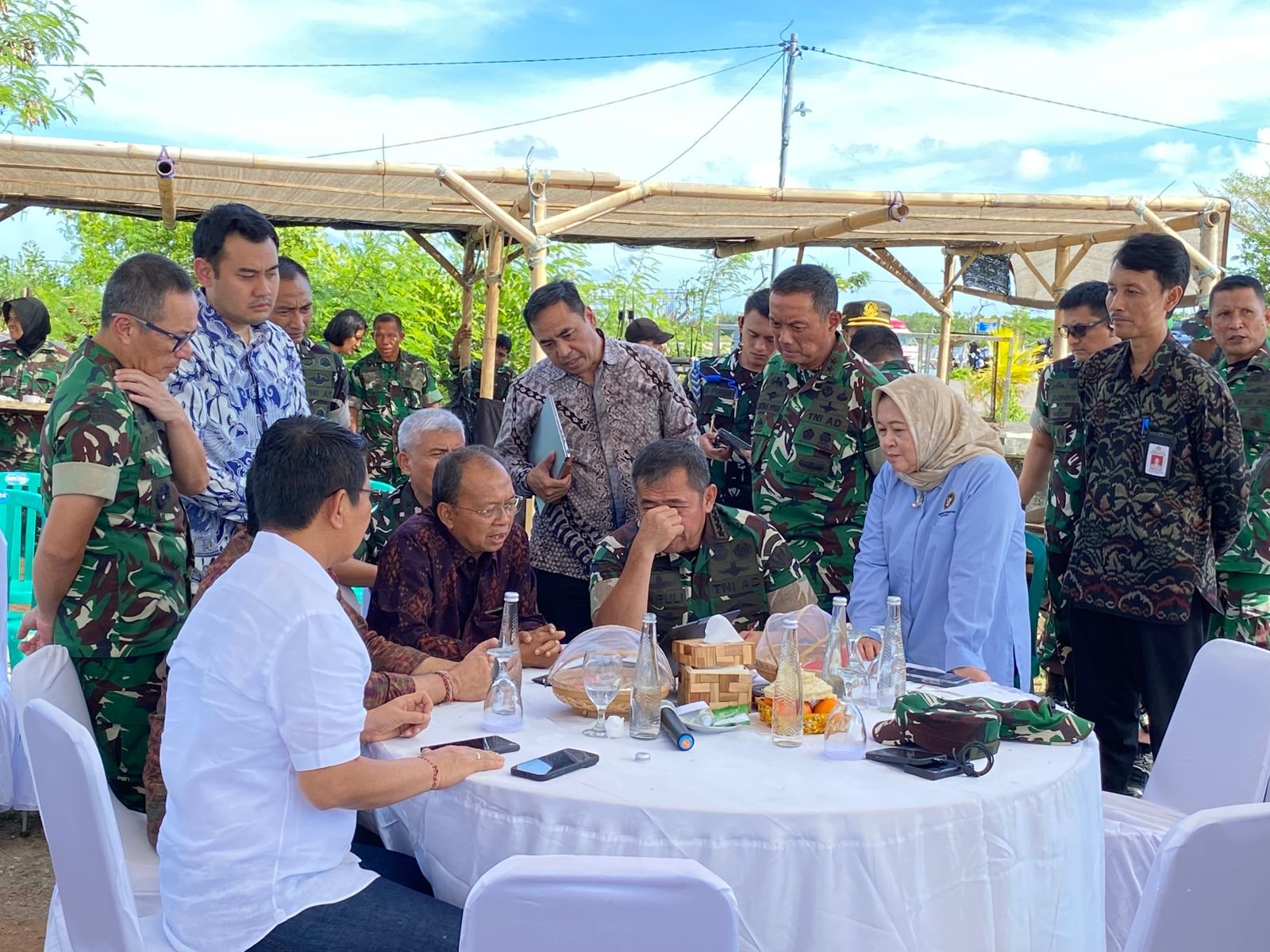
The initial phase of the project was directly inspected by Indonesian Army Chief of Staff Maruli Simanjuntak alongside Bali Governor Wayan Koster, Denpasar Mayor I Gusti Ngurah Jaya Negara, and Badung Regent I Wayan Adi Arnawa at the former Akame Restaurant site in Benoa on Friday (May 22, 2026).
Field observations showed several heavy machines already operating on the site, carrying out excavation and land leveling work across the six-hectare project area.
Operations Director of PT Daya Energi Bersih Nusantara, Maulana Muhammad, said the land preparation process marked the beginning of the project’s early-stage development ahead of the groundbreaking ceremony.
“Land preparation for the groundbreaking has started now. We still have around 40 to 45 days before the groundbreaking on July 8,” Maulana said.
He explained that the acceleration of work on the site was made possible through collaboration between multiple parties, including support from local governments and the Indonesian Army.
“We received support from the Denpasar City Government, the Badung Regency Government, and also the Indonesian Army to help speed up land preparation,” he stated.
According to Maulana, the Waste-to-Energy facility will be built on approximately six hectares of land provided by Pelindo. The facility is expected to process around 1,500 tons of waste per day into electrical energy.
He emphasized that waste sorting efforts in Bali would continue despite the plant’s ability to process various types of waste.
“The regional government hopes waste sorting will continue so that waste management in Bali remains well organized,” he said.
Maulana added that the plant is projected to generate around 100 tons of residual waste daily. The residue will later be utilized as raw material for paving blocks, roof tiles, and road leveling materials.
“Later, Danantara will build a dedicated factory to process these 100 tons of residue into products that can benefit the community,” he said.
The government is targeting the Benoa Waste-to-Energy project as one of Bali’s long-term solutions for handling its growing waste problem, especially following the closure policy of the Suwung landfill.




Discussion (0)
No comments yet.