
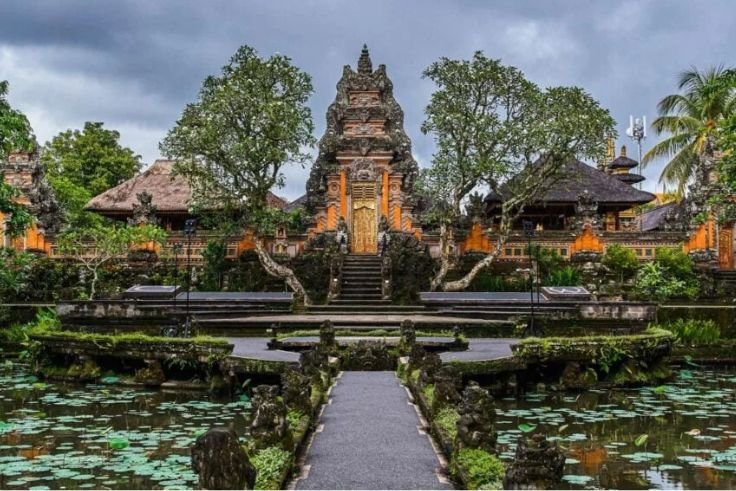
UBUD, BNEWSID.COM – Known as one of Bali’s most celebrated cultural destinations, Ubud is not only famous for its lush landscapes and traditional arts, but also for its historic royal palaces that continue to serve as centers of Balinese customs and cultural life.
These palaces, locally known as puri, are more than historical landmarks. They remain residences of Bali’s royal descendants, including families carrying the titles Cokorda and Anak Agung. Several of the palaces are also open to visitors, offering travelers a closer look at Bali’s royal heritage and architectural beauty.
Here are five royal palaces in Ubud that continue to preserve Bali’s living traditions:
1. Puri Saren Agung
Also widely known as the Ubud Royal Palace, Puri Saren Agung stands in the heart of Ubud and remains one of the area’s most iconic cultural attractions. The palace features classic Balinese architecture, intricate stone carvings, and beautifully arranged courtyards.
Besides serving as the residence of the Ubud royal family, the palace regularly hosts traditional Balinese dance performances in the evenings, attracting both domestic and international tourists.
The palace is currently home to Cokorda Gede Putra Sukawati and family.
2. Puri Langon
Located on Gang Mawar in Ubud, Puri Langon is recognized for its elegant architectural details and golden decorative accents that create a majestic and sacred atmosphere.
The palace remains an important part of Ubud’s spiritual and cultural heritage and is inhabited by Cokorda “Wah” Suyasa.
3. Puri Agung Peliatan
Situated at the intersection of Jalan Raya Peliatan, Puri Agung Peliatan is known for its strong historical and artistic legacy. The palace has long been associated with the development of Balinese dance and gamelan performances that later gained international recognition.
The complex continues to preserve traditional Balinese architectural elements and is occupied by Cokorda Nindia and family.
4. Puri Kantor Ubud
Located on Jalan Suweta, west of the Ubud Royal Palace, Puri Kantor Ubud holds important historical value. The palace was once home to prominent Indonesian national figures and also hosted renowned painter Walter Spies during his time in Bali.
Walter Spies played a major role in influencing the growth of modern Balinese art, making the palace historically significant in Bali’s artistic development.
Today, the palace is inhabited by Cokorda Asmara and family.
5. Puri Kauhan Ubud
Dating back to the 19th century, Puri Kauhan Ubud on Jalan Raya Ubud is now frequently used for workshops, cultural discussions, and academic activities. Despite its public functions, the palace continues to maintain its traditional role within Ubud’s royal community.
The palace is home to Anak Agung Ari Dwipayana and family.
To this day, these five royal palaces remain active centers of cultural and religious activities in Ubud, especially during traditional ceremonies and Hindu festivals. Their continued presence reflects how Bali’s royal traditions continue to coexist alongside the island’s modern tourism industry.

Discussion (0)
No comments yet.