
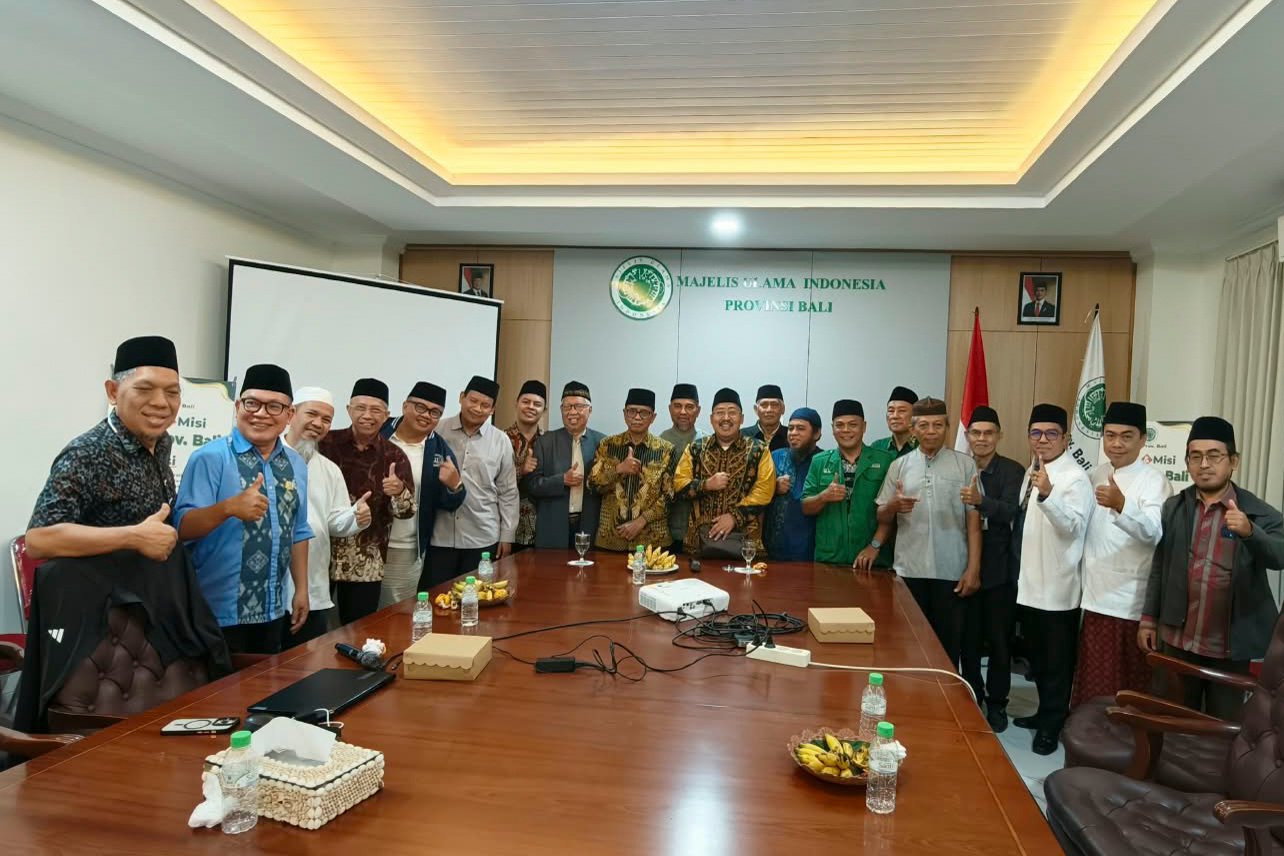
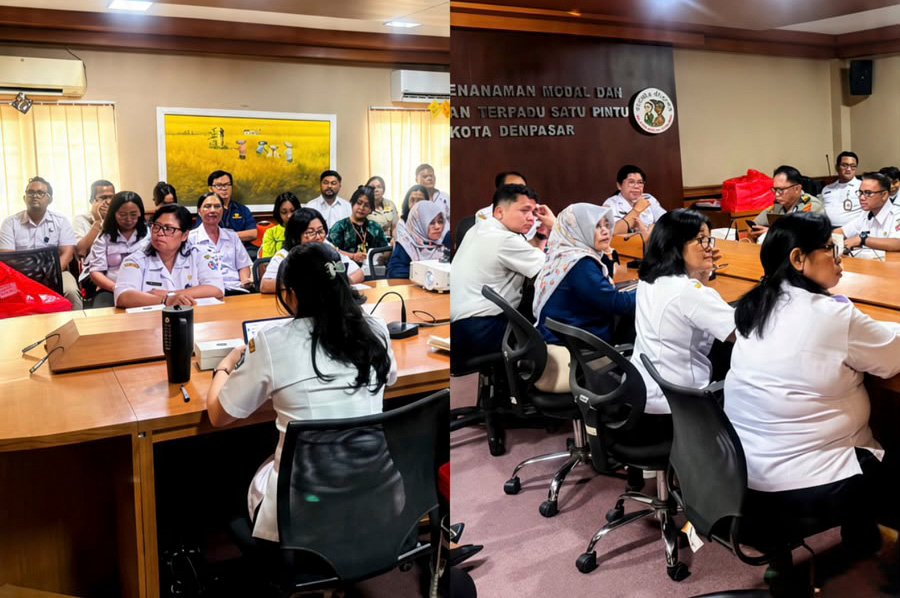
BALINEWSID.COM, DENPASAR — The Indonesian Ulema Council (Majelis Ulama Indonesia/MUI) Central Board conducted a monitoring and evaluation (M&E) program at the Bali Provincial MUI office on September 22–23, 2026, focusing on organizational governance, program performance, digital da’wah, and the development of Muslim-friendly tourism.
The M&E team was led by Dr. Rida Hesti Ratnasari, SP., M.Si., accompanied by MUI Central Board Regional Coordinators KH. Fahrur Rozi and Yai Mabroer. The team was received by the Daily Executive Board of the Bali Provincial MUI.
The two-day program began with a presentation on organizational developments and a review of MUI Bali’s performance. During the meeting, the Central Board also handed over the Book of Resolutions of the 11th MUI National Congress (Munas XI), held in 2025.
Rida said the M&E program was part of the Central Board’s efforts to align the organization’s direction and priorities at both the national and regional levels.
“This activity is part of the MUI Central Board’s efforts to assess organizational developments, evaluate program implementation, and provide guidance and direction for the development of MUI programs at the regional level so that they become more measurable, coordinated, and provide tangible benefits to the Muslim community and society,” Rida said.
One of the key issues discussed was the need to expand digital da’wah in response to changes in the way people communicate and access information. MUI encouraged the development of digital religious outreach that is inclusive, educational, and moderate, particularly to engage younger generations.
MUI also reaffirmed its institutional role as a coordinating body with religious, community, and national functions. The organization emphasized that it should not take over the technical roles and responsibilities of other Islamic mass organizations.
The meeting also addressed economic empowerment through the development of Pancasila-based and Islamic economic initiatives. One proposal discussed was the establishment of Danantara Syariah Nusantara, aimed at developing a more independent economic ecosystem for the Muslim community through professionally managed cooperatives.
On social issues, MUI highlighted concerns over online gambling and illegal online lending. Preventive measures are expected to focus on family literacy and religious outreach to strengthen public resilience against the social and economic risks associated with these practices.
Family resilience and youth character building were also among the priorities discussed. MUI emphasized moral education and the strengthening of the family’s role as a foundation for building a healthy and resilient society.
In the tourism sector, MUI Bali promoted the development of the Muslim-Friendly Tourism concept. The initiative is intended to make Bali more accessible and accommodating to Muslim travelers while continuing to respect local wisdom, customs, and Balinese traditions.
Regulations concerning Bali’s traditional villages, known as Desa Adat, were also discussed. MUI called for dialogue, legal analysis, and comprehensive studies in reviewing regulations related to traditional villages.
The approach is intended to provide legal certainty, protect citizens’ rights, and maintain harmony among religious communities. MUI Central Board officials said a judicial review could be considered if deemed necessary.
The M&E program also placed strong emphasis on improving organizational accountability. MUI Central Board said future programs should be supported by a clear Term of Reference (TOR) and measurable Key Performance Indicators (KPIs).
For programs designed as community movements, success should not be measured solely by whether an event has been held. MUI stressed that participation levels and the tangible impact of programs on communities should also be taken into account.
Rida said there must be a clear link between program planning and implementation.
“The TOR and the actual implementation of activities must be coherent. What is planned must be reflected in the implementation and the results must be concretely accountable,” she said.
The two-day M&E program concluded with field visits, dialogues with Islamic mass organizations and community leaders, as well as a meeting with the Governor of Bali.

Discussion (0)
No comments yet.