
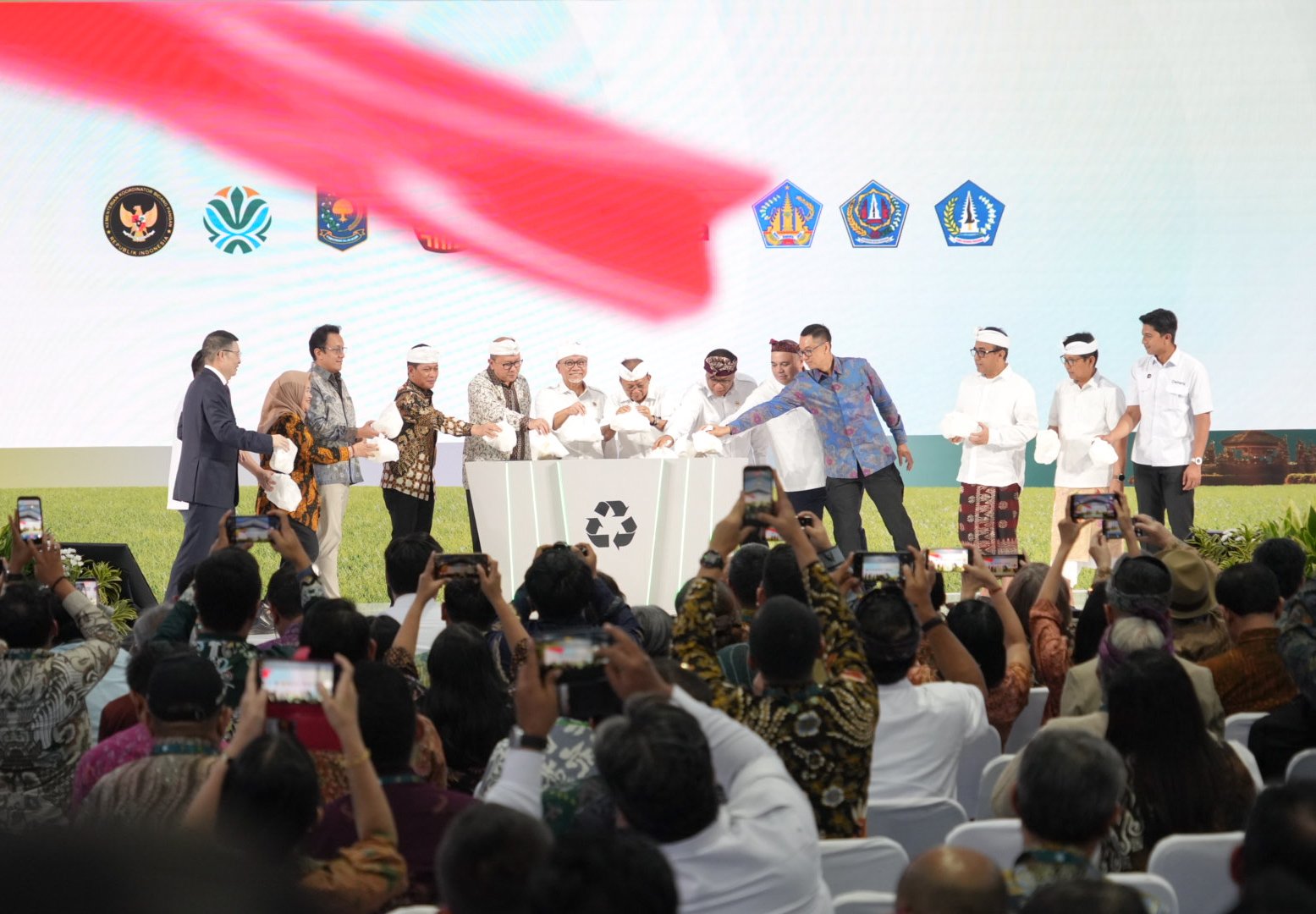
BALINEWSID.COM, DENPASAR – Indonesia has officially launched the construction of a Waste-to-Energy (WTE) Plant in Bali, marking a major milestone in the country’s efforts to accelerate the resolution of its growing waste management crisis. The groundbreaking ceremony was held on Wednesday (July 8, 2026) at the Pelindo Benoa area in Pedungan, South Denpasar, adjacent to the Suwung Final Disposal Site (TPA Suwung).
The project, led by the Ministry of Environment and the Environmental Control Agency (KLH/BPLH), is expected to replace the open dumping system at the overburdened Suwung landfill with a modern, environmentally friendly waste treatment facility.
Minister of Environment and Head of BPLH, Moh Jumhur Hidayat, said the Bali project is the first implementation of Presidential Regulation No. 109 of 2025 on Urban Waste Management. He emphasized that the initiative is part of a nationwide transformation of Indonesia’s waste management system, combining advanced waste-processing technology with waste reduction efforts at the source.
“Bali has become a priority because it is one of Indonesia’s leading international tourism destinations and is facing an urgent waste management challenge,” Jumhur said.
The combined waste generated by Denpasar City and Badung Regency currently reaches approximately 1,600 tons per day, with 72.18 percent of it still being disposed of at the Suwung landfill, which has exceeded its capacity.
Once operational, the Waste-to-Energy Plant is expected to process at least 1,200 tons of waste per day into renewable electricity. The remaining waste will be managed through the Reduce, Reuse, Recycle (3R) approach to ensure a comprehensive and sustainable urban waste management system.
According to Jumhur, the government plans to develop similar Waste-to-Energy facilities in 34 urban agglomerations covering around 60 to 70 regencies and cities across Indonesia. Regions with lower daily waste volumes will continue to be encouraged to strengthen waste management at the source through circular economy practices and technologies suited to local conditions.
The strategic national project has also received full support from Indonesia’s sovereign investment agency, Danantara Indonesia. Chief Executive Officer Rosan Roeslani described the Bali groundbreaking as a historic moment, marking the first Waste-to-Energy project under Danantara’s national renewable energy program.
He said the project reflects President Prabowo Subianto’s directive to accelerate solutions to Indonesia’s waste problem while expanding clean energy development.
Beyond significantly reducing waste accumulation and producing renewable electricity, the facility is projected to create around 1,200 green jobs, contribute to national carbon emission reductions, and stimulate sustainable green economic growth.
Bali Governor Wayan Koster welcomed the collaboration between the central government, local authorities, and strategic partners, expressing hope that construction would proceed smoothly and be completed on schedule—or even ahead of target.
The Ministry of Environment believes the Bali Waste-to-Energy Plant will become a national model for modern, integrated, and sustainable urban waste management. In addition to reducing dependence on landfills, the project is expected to strengthen Indonesia’s clean energy transition, lower greenhouse gas emissions, and help build a cleaner and more environmentally resilient future.




Discussion (0)
No comments yet.