
BALINEWSID.COM, Surabaya — Indonesia’s Ministry of Environment/Environmental Control Agency (KLH/BPLH) is stepping up efforts to strengthen the circular economy as a key strategy for improving the country’s plastic waste management and developing its domestic recycling industry.
The commitment was highlighted at the National Seminar titled “Circular Economy Principles and the Legal Framework for Plastic Waste Management to Meet Domestic Recycled Raw Material Needs toward a Clean Indonesia,” held at Universitas Airlangga in Surabaya on Thursday, September 24, 2026.
Indonesia currently generates approximately 10.83 million tons of plastic waste annually. At the same time, the country has 227 recycling companies with a combined installed capacity of 3.16 million tons per year, yet their utilization rate stands at only 48 percent.
The figures point to a significant gap between the large volume of plastic waste generated domestically and the availability of suitable raw materials for the recycling industry. In 2024, the recycling sector still imported approximately 263,000 tons of raw materials to meet the requirements for high-quality recycled materials. Meanwhile, around 61 percent of domestic plastic waste remains inadequately managed.
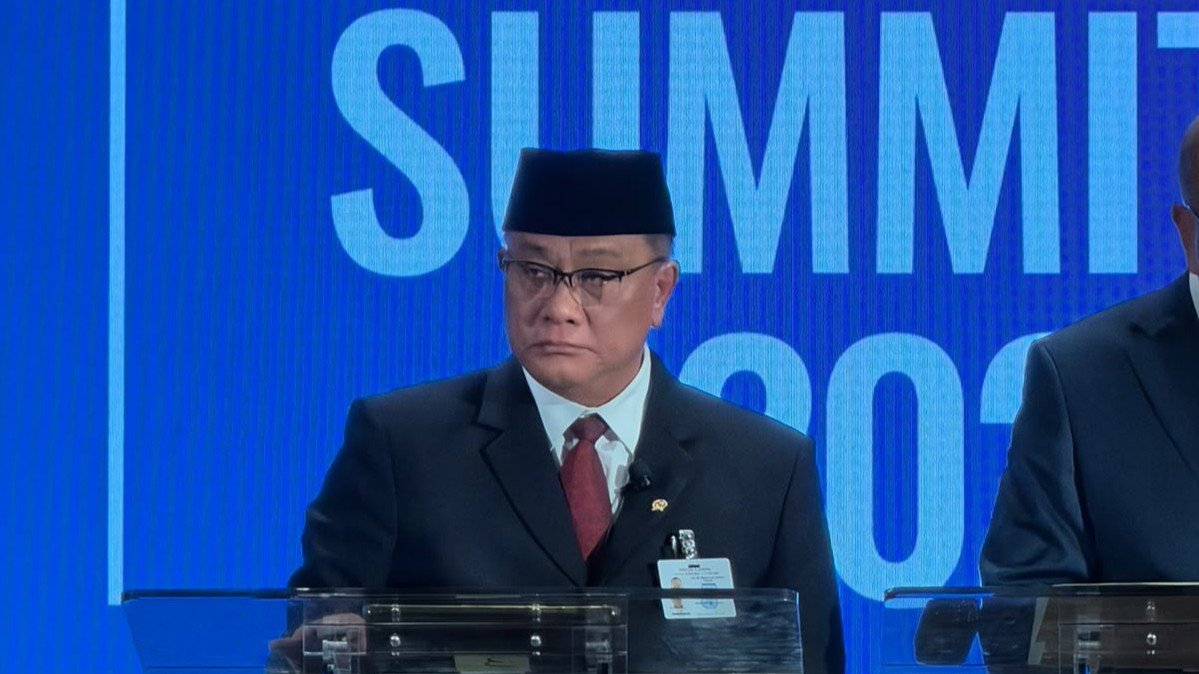
Secretary of the Ministry of Environment and Secretary-General of the Environmental Control Agency, Rosa Vivien Ratnawati, emphasized that the circular economy should no longer be viewed merely as a technical approach to waste management, but as an essential part of Indonesia’s environmental governance.
“The circular economy is not merely a technical option in waste management, but a constitutional instrument. In its implementation, it is not a choice, but an obligation,” Rosa Vivien said during the seminar.
Bridging the Supply Gap and Strengthening EPR Regulations
The development of Indonesia’s plastic recycling ecosystem continues to face three major structural challenges.
First, Indonesia does not yet have a nationally binding quality standard for recycled plastic raw materials that is aligned with industrial requirements. Second, economic instruments have yet to be optimized to make recycled materials competitive with virgin plastic in the market. Third, the implementation of Extended Producer Responsibility (EPR) remains largely voluntary rather than mandatory, limiting the effectiveness of supervision, law enforcement, and sanctions.
The informal sector—including waste pickers, waste collectors, and community waste banks—also plays a crucial role in the recycling value chain. According to the ministry, the sector supplies approximately 85 percent of the raw materials used by the recycling industry.
The economic potential of the circular value chain is substantial. Its value is estimated at approximately Rp3 trillion at the initial collection stage, increasing to Rp5.8 trillion after sorting and reaching approximately Rp10.9 trillion after the materials are processed by the recycling industry.
The government therefore considers it important to integrate informal-sector workers and businesses into the formal waste management system through business legalization, social protection, standardized sorting practices, and the digitalization of transactions.
Cross-Sector Collaboration for a Cleaner Indonesia
To build a stronger and more sustainable recycling ecosystem, KLH/BPLH is promoting a legal and policy framework based on five key pillars: binding cross-agency regulations; mandatory EPR obligations supported by effective sanctions; standardized recycled raw materials; integration of the informal sector; and fiscal and non-fiscal incentives and disincentives.
The government also seeks to establish a clear distinction between mandatory EPR obligations and companies’ Corporate Social and Environmental Responsibility (TJSL) programs, in order to ensure greater transparency and accountability.
Director of the Graduate School of Universitas Airlangga, Prof. Achmad Chusnu Romdhoni, welcomed the research findings and policy recommendations discussed during the seminar.
“The research provides recommendations that will require a process and time to implement, but they are highly feasible. With KLH/BPLH acting as the conductor of this effort, I believe plastic waste governance in Indonesia can improve in the future,” Prof. Romdhoni said.
Through coordinated policies involving the government, businesses, academics, and the informal sector, KLH/BPLH aims to ensure that waste separation at source and the strengthening of the domestic recycling industry remain consistent priorities.
The government sees a well-integrated circular economy as an important pathway toward turning plastic waste into economic value while advancing Indonesia’s long-term goal of achieving a cleaner and more sustainable country.


Discussion (0)
No comments yet.