
BALINEWSID.COM, BADUNG — Community-based waste management at TPS-3R Seminyak is facing mounting pressure after previously generating up to Rp500 million (around $30,000) in month revenue. Restrictions on landfill disposal, labor shortages, and the need for technological transformation are now significantly affecting operations.
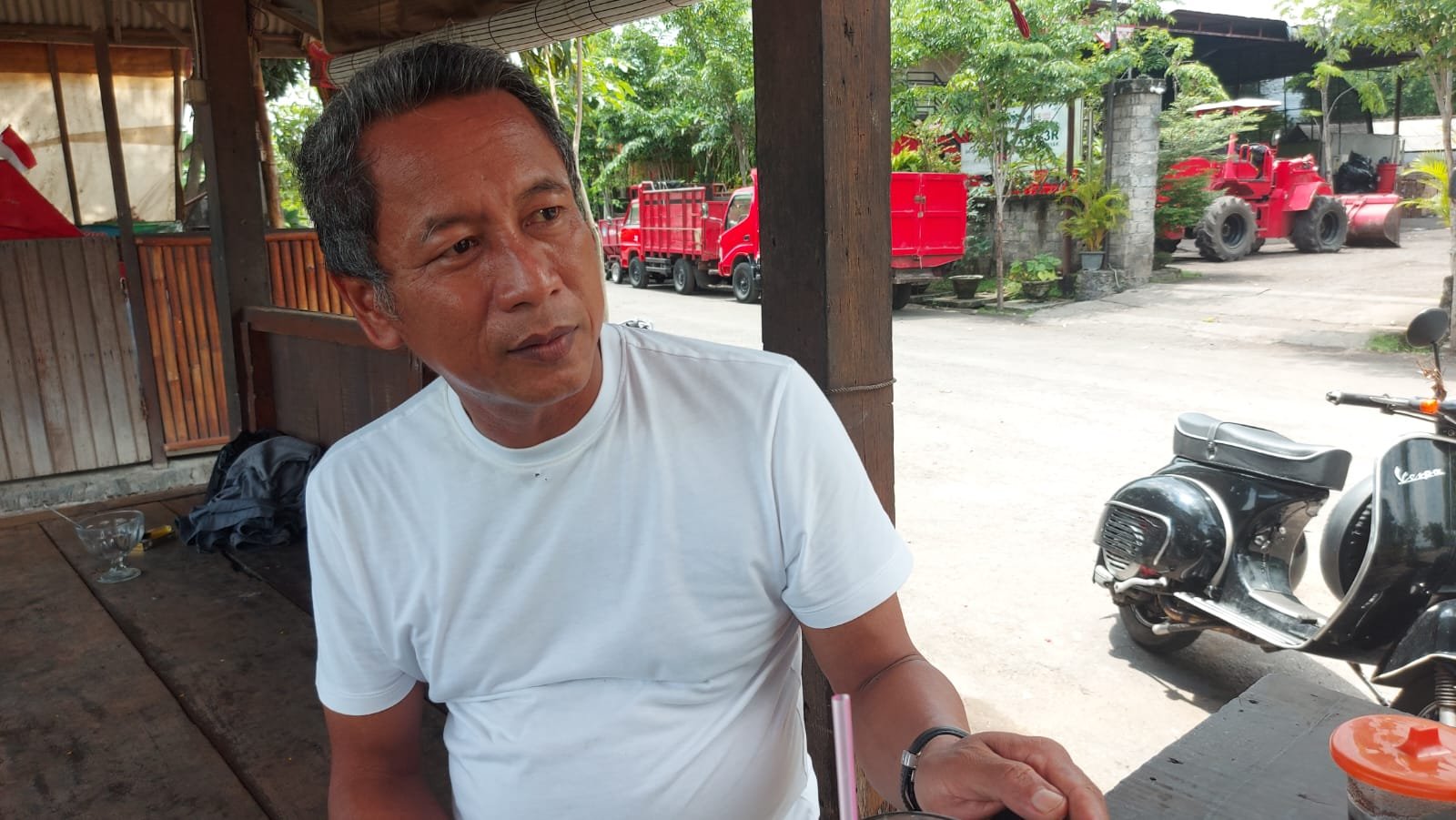
Head of TPS-3R Desa Adat Seminyak, Komang Ruditha Hartawan, known as Koming, emphasized that waste sorting at the source remains the backbone of the system. He said this approach simplifies the entire process, from collection to final treatment.
“The most important thing is sorting at the source. It makes everything easier because only residual waste ends up in the landfill,” he said.
Through this sorting system, recyclable materials such as aluminum, cardboard, PET plastic bottles, and glass are sold to third parties. TPS-3R Seminyak also functions as a collection point for plastic bottles, which are compressed before being shipped to factories outside Bali.
Despite generating revenue, Koming stressed that the operation is not profit-oriented. Income is primarily used to cover operational costs and maintain environmental cleanliness.
“There is economic value, but we are not profit-driven. Our focus is on keeping the environment clean,” he explained.
The operation began to feel significant strain following restrictions on waste disposal to the landfill (TPA). As a result, service coverage has been reduced and revenue has dropped by around 40 percent. Previously serving large hotels and restaurants outside the area, TPS-3R now focuses solely on the Desa Adat Seminyak.
“We used to reach Rp500 million in month. Now it has dropped because we are focusing only on our own area,” Koming said.
Operational costs, however, remain high. Previously ranging from Rp350 million to Rp390 million in month, expenses have decreased slightly due to a reduction in workforce from 52 employees to just 26. A lack of interest in working in the waste sector has become a major challenge.
“It is very difficult to find workers in the waste management sector,” he added.
In terms of fleet, TPS-3R Seminyak owns around 28 vehicles, but only six are currently in operation.
To address these challenges, the management is preparing to adopt new waste processing technologies. One proposed solution is a steam-based treatment system that operates without incineration. The technology is claimed to process up to 30 tons of waste per day with minimal residue.
The remaining residue, estimated at around 100 kilograms per day, could potentially be used as an alternative fuel to replace coal in industries such as cement plants and power generation.
“If this technology works, we will no longer need the landfill. It could be a long-term solution,” Koming said.
Beyond technology, the success of waste management in Seminyak is also supported by traditional village regulations (pararem), which require residents to sort their waste. Unsorted waste will not be collected, including from businesses such as hotels and restaurants, which are required to strictly separate their waste.
Koming emphasized that the effectiveness of the system depends heavily on public awareness.
“Without awareness, even the best facilities will not work,” he said.
He also expressed support for the proposed closure of landfills in Bali, provided that upstream readiness is strengthened, particularly in public education and mindset changes.
“The waste problem must be solved at the source, starting from households. That is the key,” he concluded.
With a combination of traditional regulations, community participation, and plans to adopt modern technology, TPS-3R Seminyak is expected to remain a model for sustainable waste management in Bali despite ongoing challenges.




Discussion (0)
No comments yet.