
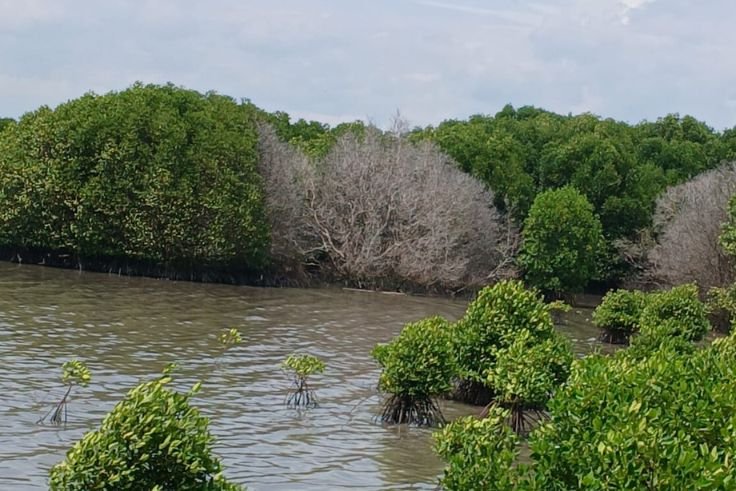
DENPASAR, BALINEWSID.COM – A recent scientific study has revealed strong indications that hydrocarbon contamination may be responsible for the sudden death of hundreds of mangrove trees in the Taman Hutan Raya Ngurah Rai area of South Bali. The findings were based on plant health diagnostics conducted by a research team from Udayana University’s Agricultural Hospital on Monday (Feb 23, 2026).
The research team, led by Dr. Dewa Gede Wiryangga Selangga, reported that the mangrove mortality occurred simultaneously within specific vegetation blocks. Observed symptoms included chlorosis (yellowing leaves), necrosis (tissue death), peeling bark, stunted growth, and root rot. These patterns indicate abiotic stress caused by environmental factors rather than pathogenic infection.
The affected site is located on the western side of the entrance to the Jalan Tol Bali Mandara, an area crossed by a fuel distribution pipeline operated by Pertamina Patra Niaga. Field data showed that maintenance activities were carried out along the pipeline between Benoa Port and the Pertamina fuel depot in Pesanggaran from September to November 2025. Researchers suspect that fuel seepage may have entered the mangrove substrate and was not fully remediated after the technical work.
Although Pertamina conducted a visual inspection on Feb 21, 2026 and reported no visible oil layer on the water surface, scientists emphasized that hydrocarbon contamination in mangrove ecosystems often remains trapped within sediment. Oil that penetrates soil pores can block root respiration and release toxic compounds that disrupt plant nutrient absorption, potentially killing trees within weeks of exposure.
Several mangrove species were affected, including Sonneratia alba, Rhizophora apiculata, and Avicennia marina, with damage estimated across dozens of are. Researchers also noted that altered hydrological conditions caused by nearby infrastructure development may have worsened the impact by slowing water flow, allowing pollutants to accumulate in localized areas.
Laboratory analysis using Gas Chromatography–Mass Spectrometry (GC-MS) is currently underway to confirm the presence and concentration of hydrocarbons in sediment samples collected around the mangrove root zones.
Recommended Actions
The study outlined several strategic recommendations, including routine mangrove health monitoring, bioremediation using oil-degrading bacteria, environmental audits of energy infrastructure pipelines in South Bali, sediment rehabilitation prior to replanting, and stricter enforcement of environmental regulations.
Researchers warned that continued degradation of mangrove ecosystems could pose serious risks not only to biodiversity but also to Bali’s tourism sustainability, as mangroves play a critical role in coastal protection against erosion and natural disasters.
“Without decisive intervention, mangrove loss in South Bali could continue and ultimately threaten coastal resilience and Bali’s environmental reputation,” the research team stated. (*)






Discussion (0)
No comments yet.