
BALINEWSID.COM – Some of Bali’s most extraordinary places aren’t the easiest to reach. Hidden deep within the lush mountains of Petang, Badung Regency, Nungnung Waterfall rewards adventurous travelers with one of the island’s most spectacular natural landscapes.
Unlike many of Bali’s popular tourist attractions, Nungnung offers no bustling cafés, luxury facilities, or crowded photo spots. Instead, visitors are welcomed by the thunderous sound of cascading water, cool mountain air, and a dense tropical forest that has remained remarkably untouched.
Its breathtaking scenery, pristine environment, and unforgettable hiking experience have earned Nungnung Waterfall the No. 7 position in Balinews.id’s ranking of the 11 Best Waterfalls in Bali.
A Mountain Paradise in Central Bali
Located in Nungnung Village, Petang District, Badung Regency, the waterfall sits approximately 900 meters above sea level, giving the area a refreshingly cool climate throughout the year.
Travel times are approximately:
- Denpasar – 1.5 hours
- Ubud – 1 hour
- Canggu – 1.5 hours
- Seminyak – 1.5 hours
- I Gusti Ngurah Rai International Airport – around 2 hours
The destination lies along one of Bali’s scenic mountain routes connecting northern Badung with Pelaga, Bedugul, and Bangli, making it an excellent stop during a full-day nature tour.
A Waterfall That Sustains the Community
Long before becoming a tourist attraction, Nungnung Waterfall served as an important water source for the local community.
Its fresh mountain water has supported agriculture, daily household needs, and traditional Balinese ceremonies for generations. Today, tourism is managed by the local community, ensuring that economic benefits are shared while preserving the area’s natural beauty and cultural heritage.
Many villagers continue to work in coffee, clove, cacao, citrus, and vegetable farming, while tourism has created additional opportunities through guiding services, food stalls, parking management, and small accommodation businesses.
One of Bali’s Most Spectacular Waterfalls
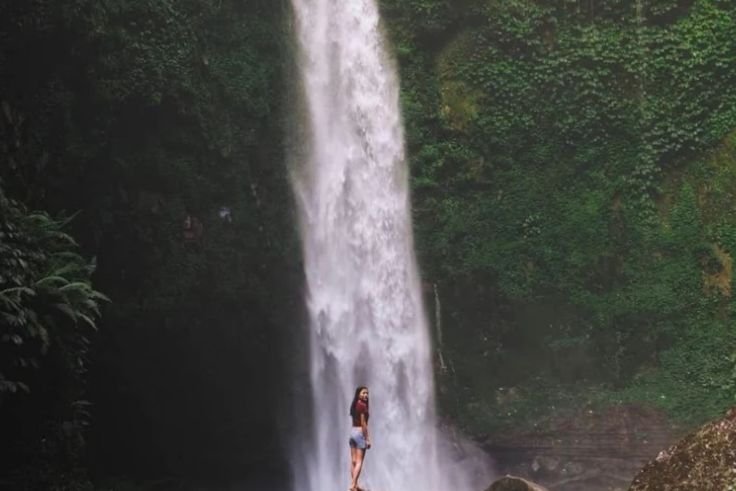
Standing approximately 50 meters tall, Nungnung Waterfall crashes into a rocky basin below, creating a constant mist that cools the surrounding valley.
The towering cliff walls are covered with moss, vines, and tropical vegetation, while sunlight filtering through the forest canopy creates dramatic scenery throughout the day.
The powerful flow of water, particularly during the rainy season, can be heard long before visitors reach the base of the waterfall, adding to its impressive atmosphere.
The Famous 500-Step Journey
Visiting Nungnung is more than sightseeing—it’s an adventure.
From the entrance, travelers descend around 500 concrete steps into the valley. The trek typically takes 20 to 30 minutes, while the climb back requires considerably more effort.
Although physically demanding, the route passes through beautiful mountain forests, coffee plantations, and lush green landscapes, making the journey itself a memorable part of the experience.
Many visitors say the rewarding hike is what makes Nungnung different from other waterfalls across Bali.
Activities Beyond Photography
Nungnung Waterfall appeals to travelers seeking authentic nature experiences rather than crowded social media hotspots.
Popular activities include:
- Mountain trekking
- Landscape photography
- Long-exposure waterfall photography
- Bird watching
- Meditation and relaxation
- Enjoying peaceful picnics in designated areas
- Exploring nearby coffee and clove plantations
Visitors may also approach the natural pool beneath the waterfall, although swimming should only be attempted with caution due to changing water conditions.
Visitor Facilities
Despite its remote mountain setting, Nungnung Waterfall offers essential facilities, including:
- Spacious parking area
- Ticket counter
- Public restrooms
- Gazebos for resting
- Local food stalls serving Balinese cuisine, coffee, and snacks
- Waste disposal facilities
- Local guides for visitors wishing to explore the surrounding village and natural attractions
Many travelers consider enjoying a hot cup of locally grown Bali coffee after climbing back up the stairs as one of the highlights of the visit.
Best Time to Visit
The best time to explore Nungnung Waterfall is between 8:00 a.m. and 11:00 a.m., when temperatures remain cool and natural lighting is ideal for photography.
The dry season, from April through October, provides the safest trekking conditions.
During the rainy season, visitors should exercise extra caution, as the stairways can become slippery and water levels may rise significantly.
Nearby Attractions
Nungnung Waterfall pairs well with several other destinations in Bali’s highlands, including:
- Pelaga Tourism Village
- Pelaga Coffee Plantations
- Pucak Mangu Temple
- Leke Leke Waterfall
- Jatiluwih Rice Terraces
- Ulun Danu Beratan Temple
- Bali Botanic Garden
These attractions create an ideal one-day mountain itinerary for travelers looking to experience a quieter side of Bali.
Supporting Sustainable Tourism
Community-based tourism at Nungnung has generated meaningful economic benefits for local residents.
Besides creating employment opportunities, tourism has increased demand for locally produced coffee, honey, agricultural products, traditional foods, and village homestays.
The destination demonstrates how responsible tourism can strengthen local economies while preserving Bali’s natural environment.
Balinews.id Review
| Category | Score |
|---|---|
| Natural Beauty | 9.8/10 |
| Natural Authenticity | 9.8/10 |
| Accessibility | 8.2/10 |
| Facilities | 8.8/10 |
| Cleanliness | 9.4/10 |
| Photography Opportunities | 9.7/10 |
| Visitor Experience | 9.8/10 |
| Adventure Value | 9.6/10 |
Final Score: 9.4/10
Why Is Nungnung Waterfall Ranked No. 7?
Nungnung Waterfall earns its place among Bali’s finest waterfalls thanks to its dramatic scenery, powerful year-round water flow, and remarkably preserved mountain environment. Standing before the towering cascade offers an unforgettable experience that showcases the raw beauty of Bali’s highlands.
Its seventh-place ranking reflects one practical consideration: accessibility. Reaching the waterfall requires descending—and later climbing—around 500 steep steps, making it less suitable for visitors with limited mobility or those seeking an easy excursion.
For travelers who don’t mind the challenge, however, Nungnung delivers one of Bali’s most rewarding natural experiences. Every step leads to a breathtaking encounter with one of the island’s grandest waterfalls, where untouched wilderness, fresh mountain air, and the sheer force of nature create memories that last long after the journey ends.








Discussion (0)
No comments yet.