
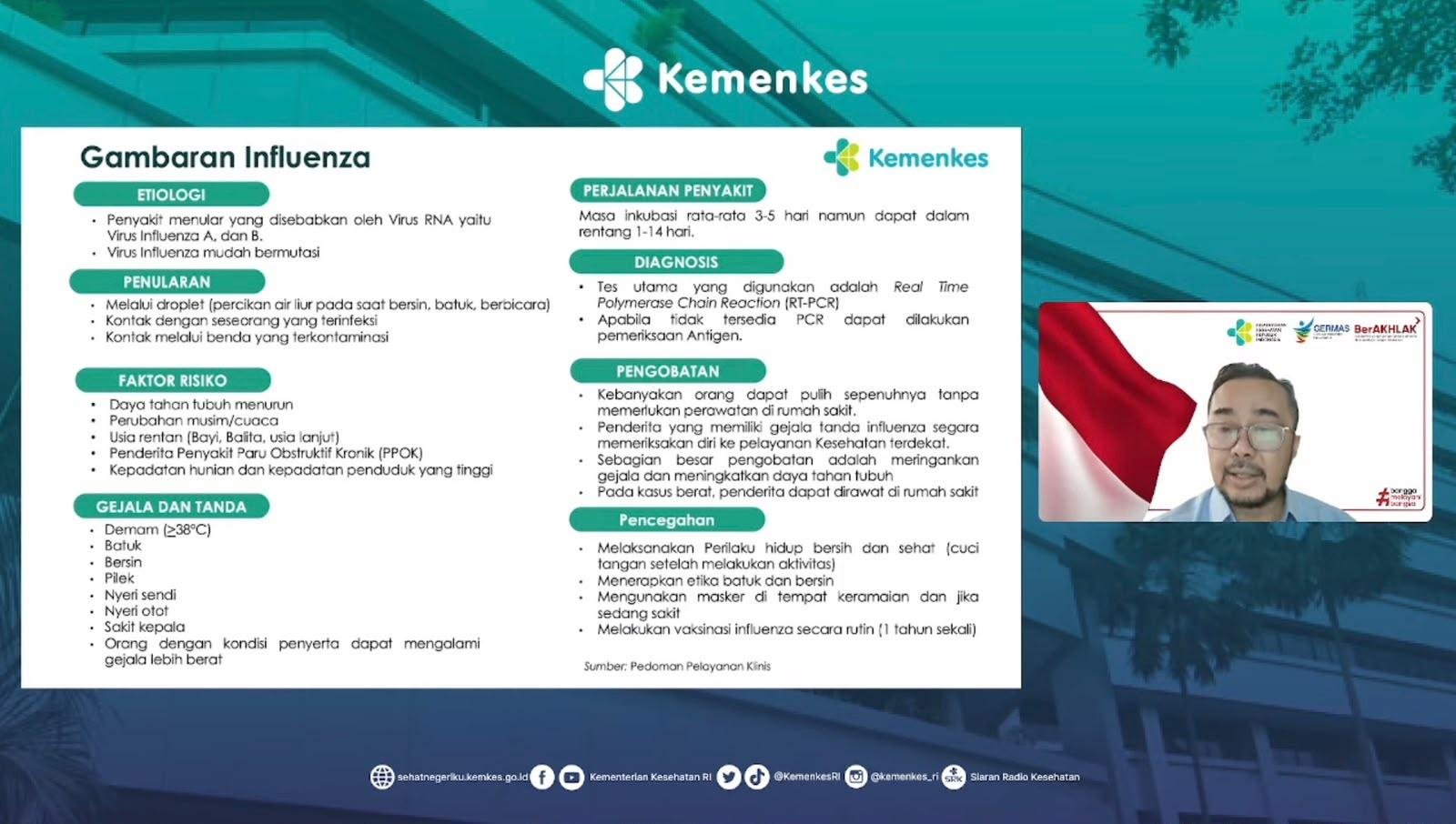
BALINEWSID.COM, JAKARTA — Indonesia’s Ministry of Health has urged the public not to panic-buy or take the antiviral drug oseltamivir without a doctor’s prescription, stressing that most influenza cases recover on their own and that the medicine is primarily intended for patients with severe symptoms and people at high risk of complications.
“Oseltamivir is not a medicine that should be used widely or taken as a precaution without medical assessment. It should only be given based on a medical examination and a doctor’s consideration, particularly for patients with severe influenza who are being treated in hospitals,” Director General of Pharmaceuticals and Medical Devices at the Ministry of Health Lucia Rizka Andalucia said at a press conference on the influenza situation in Jakarta on Monday (Sept. 28, 2026).
The ministry said the increase in influenza cases since September is part of an annual seasonal pattern also seen in other ASEAN countries, including Singapore, Malaysia, the Philippines and Thailand.
In Indonesia, influenza A(H1N1)pdm09 is currently the dominant strain detected through surveillance.
“Super Flu” Term Not Official
Acting Director General of Disease Control Andi Saguni also sought to clarify the use of the term “super flu,” which has circulated among the public.
Andi said the term is not recognized in the official nomenclature of either the World Health Organization (WHO) or Indonesia’s Ministry of Health.
He said the term is commonly used to refer to influenza A(H3N2) subclade K, but cases of the strain in Indonesia have actually declined sharply.
“Influenza A(H3N2) subclade K cases in Indonesia have declined drastically,” Andi said.
Data from the ministry’s ILI-SARI surveillance system (Influenza-Like Illness and Severe Acute Respiratory Infection) through epidemiological week 38 of 2026 showed 1,527 positive influenza specimens out of 8,757 tests, producing a positivity rate of around 17 percent.
That figure was lower than the 24 percent positivity rate recorded during the corresponding period in 2025.
Meanwhile, only 22 cases of influenza A(H3N2) subclade K were recorded throughout 2026, down sharply from 166 cases in 2025. No new cases of the subclade have been recorded since April.
The surveillance program is being conducted through 35 hospitals, 39 primary health centers, 13 public health laboratory centers and 14 health quarantine centers across Indonesia.
Oseltamivir Supply Being Expanded
To prepare for medical needs, the Health Ministry has distributed oseltamivir to 196 hospitals and is working to secure additional supplies.
Procurement is being pursued through increased domestic production as well as special import channels to address delays from local manufacturers.
Lucia said the government is using surveillance data to determine medicine requirements rather than responding to public panic.
“We use surveillance data as the basis for planning medicine needs, not panic. Every tablet will be directed to the patients who need it most based on the assessment of health professionals,” she said.
Pulmonology consultant Pompini Agustina Sitompul said most influenza infections are self-limiting, meaning they generally resolve without specific antiviral treatment when patients get adequate rest and maintain sufficient fluid intake.
Antiviral treatment is primarily indicated for severe cases requiring oxygen support, as well as certain vulnerable groups based on medical assessment. These include children under five, people over 65, pregnant women, people with underlying medical conditions, and immunocompromised patients.
Limited Benefit in Uncomplicated Cases
Pharmacology expert Dewi Selvina Rosdiana said available medical evidence also indicates limited benefits from oseltamivir in children with uncomplicated influenza.
She cited a meta-analysis involving around 2,500 outpatient children with uncomplicated influenza. The study found that oseltamivir shortened the duration of illness by an average of about 18 hours, or less than one day, compared with a placebo.
The benefit was statistically significant primarily when the drug was administered within 24 hours of symptom onset in children under six who had no history of asthma.
“Clinically, there is not yet sufficient evidence that oseltamivir provides a meaningful benefit in shortening the duration of illness in children with uncomplicated influenza,” Dewi said.
The study also found that children taking oseltamivir faced a 1.6-times higher risk of vomiting. The ministry warned that unnecessary use of antivirals could also contribute to the development of drug-resistant viruses.
The Health Ministry further advised against using antibiotics to treat influenza unless there is evidence of a secondary bacterial infection.
Public Urged to Focus on Prevention
Lucia urged people not to respond to the seasonal increase in influenza cases by stockpiling medicines.
“What people need to do is not buy as much medicine as possible, but recognize the symptoms, understand the warning signs and seek medical attention at the right time,” she said.
The ministry recommends that the public maintain clean and healthy living practices, wash hands regularly with soap, follow proper coughing and sneezing etiquette, wear masks in crowded places or when sick, maintain overall health, and receive annual influenza vaccinations.
The Health Ministry has also issued a circular on influenza preparedness and vigilance to health offices and health care facilities across Indonesia.





Discussion (0)
No comments yet.