

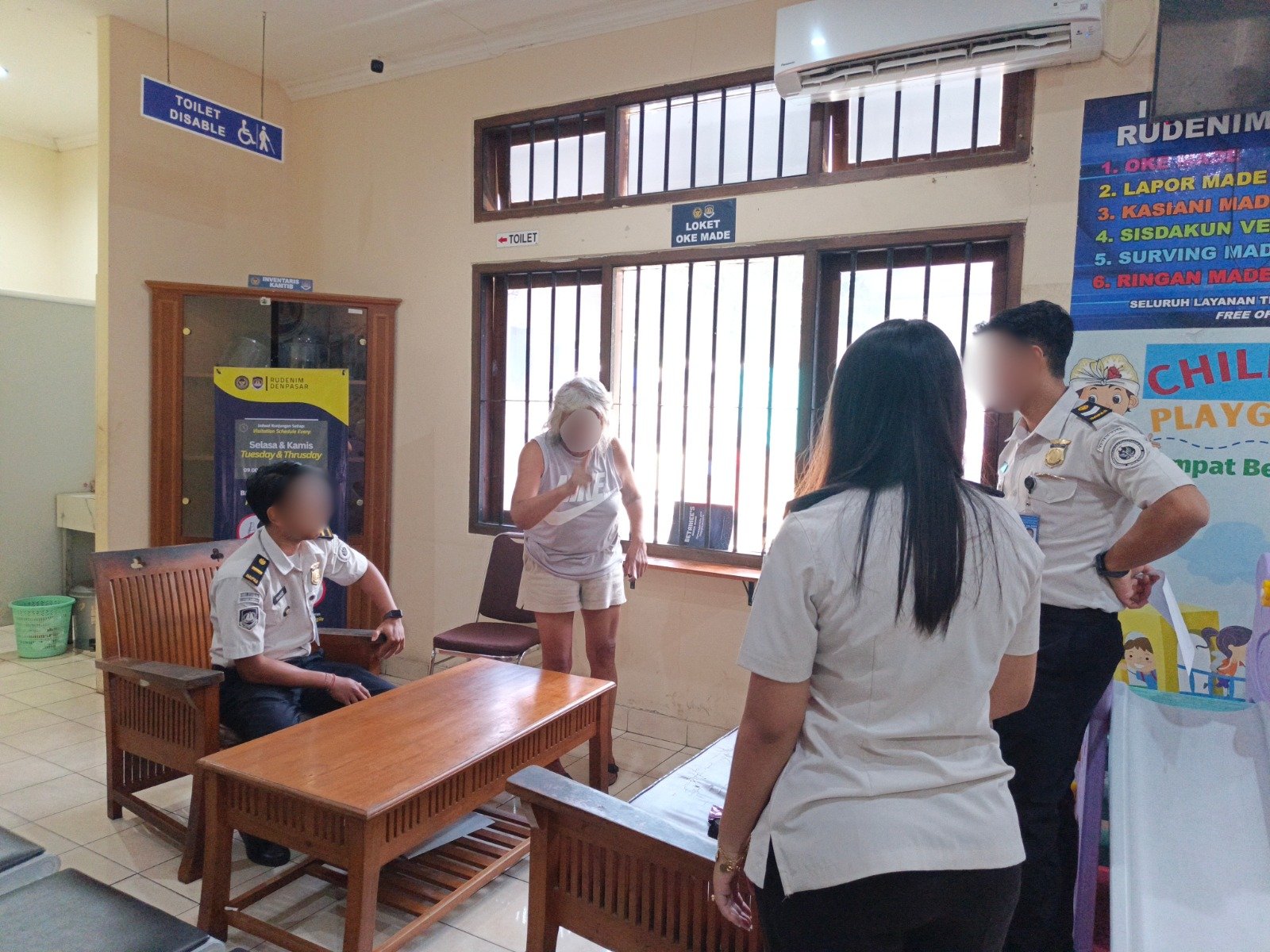
BALINEWSID.COM, DENPASAR — The number of foreign nationals held at Denpasar Immigration Detention Center (Rudenim Denpasar) has increased by nearly 59 percent this year amid intensified immigration enforcement operations across Bali and West Nusa Tenggara.
As of September 16, 2026, Rudenim Denpasar was holding 46 detainees, against a maximum capacity of 80. The figure compares with around 29 detainees recorded during the same period last year, representing an increase of approximately 58.6 percent.
The rise comes amid intensified Operation Dharma Dewata and increased detention and deportation activity by immigration authorities across Bali and West Nusa Tenggara.
From January through September 16, Rudenim Denpasar recorded 167 detention cases, with the highest monthly figure occurring in April, when 28 people were detained.
During the same period, authorities carried out 132 deportations, with April again recording the highest monthly figure at 29 deportations. A further seven detainees were transferred to other facilities.
Food Costs Reach Rp39,000 Per Detainee
The increase in the number of detainees has also affected food expenditure at the detention center.
According to data provided by Rudenim Denpasar, the food allocation is Rp39,000 per detainee per day, covering three meals.
With 46 detainees currently being held, the daily food requirement would amount to approximately Rp1.79 million, or around Rp53.82 million over 30 days, assuming all detainees remain in custody and receive the full daily food allocation throughout the period.
The data provided by Rudenim Denpasar also indicates that the food budget has increased by 55.17 percent compared with the previous period.
However, the reported 55.17 percent increase refers to the budget, not directly to the number of detainees. Based on the available figures, the detainee population itself increased by approximately 58.6 percent year-on-year.
The food allocation is based on the government’s 2026 budget standards under Minister of Finance Regulation No. 32 of 2025 on Standard Input Costs for Fiscal Year 2026.
Immigration Authority: Rising Numbers Reflect Law Enforcement
Head of the Bali Regional Office of the Directorate General of Immigration, Ramdhani, said the increase in the number of detainees was a consequence of intensified immigration law enforcement.
“The trend has indeed increased this year compared with previous years. This shows that our law enforcement activities are being carried out,” Ramdhani said on Saturday, September 18.
He said the management of detainees at Rudenim Denpasar remained orderly and under control, with immigration authorities continuing to work toward deporting detainees as soon as the necessary requirements are fulfilled.
“So far, the condition of the detainees at the Denpasar Immigration Detention Center has been running well. We are still able to arrange the necessary measures for their deportation, and there has been no mismanagement,” he said.
Ramdhani also said the agency expected to be able to cover detainee food expenses through the end of 2026.
“As for the food costs, we are still able to handle them. We have discussed the provision of meals for detainees and, God willing, we will still be able to cover the costs through the end of the year,” he said.
Deportation Can Be Delayed by Several Factors
A high number of detainees does not necessarily mean that all of them can be deported immediately.
Immigration authorities said several factors can delay the repatriation process. One is financial hardship, particularly when a detainee does not have sufficient funds to purchase a return ticket.
Administrative and travel-document issues can also cause delays, including the verification of nationality and the issuance of travel documents by the detainee’s embassy or consulate.
Health conditions may also affect the deportation process. Detainees with serious medical conditions, mental health issues or those who are elderly may require medical treatment or clearance before they are considered fit to fly.
In other cases, detainees may still be required by law enforcement agencies in connection with ongoing investigations or court proceedings.
Immigration Law Allows Detention for Up to 10 Years
The legal framework governing immigration detention is stipulated in Article 85 of Law No. 6 of 2011 on Immigration.
Under the provision, foreign nationals may be detained until they can be deported. If deportation cannot be carried out, detention may continue for a maximum period of 10 years.
After the maximum detention period has been reached, the Minister or an authorized immigration official may release the detainee from the detention center and allow them to reside outside the facility subject to certain conditions, including periodic reporting requirements.
At Rudenim Denpasar, the longest-serving detainee currently has been held since January 2026.
With 46 detainees occupying a facility designed for 80 people, the current occupancy rate stands at approximately 57.5 percent.
While the facility is not yet operating at full capacity, the rising number of detainees has increased pressure on food requirements and other operational expenses.
The figures highlight that intensified immigration enforcement involves not only the number of foreign nationals detained and deported, but also the resources required to accommodate detainees while authorities complete the administrative, legal, health and logistical processes needed for their repatriation.






Discussion (0)
No comments yet.