
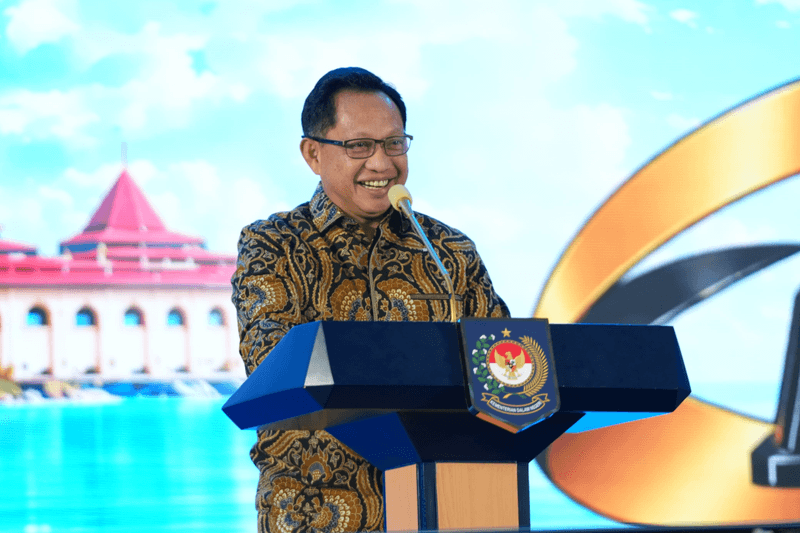
BALINEWSID.COM, JAKARTA — Bali was not included among the recipients of the 2026 Regional Government Performance Awards (Batch II) for the Maluku and Nusa Tenggara region, announced by Indonesia’s Ministry of Home Affairs (Kemendagri) at the Bidakara Assembly Hall in Jakarta on Thursday (Sept. 17, 2026).
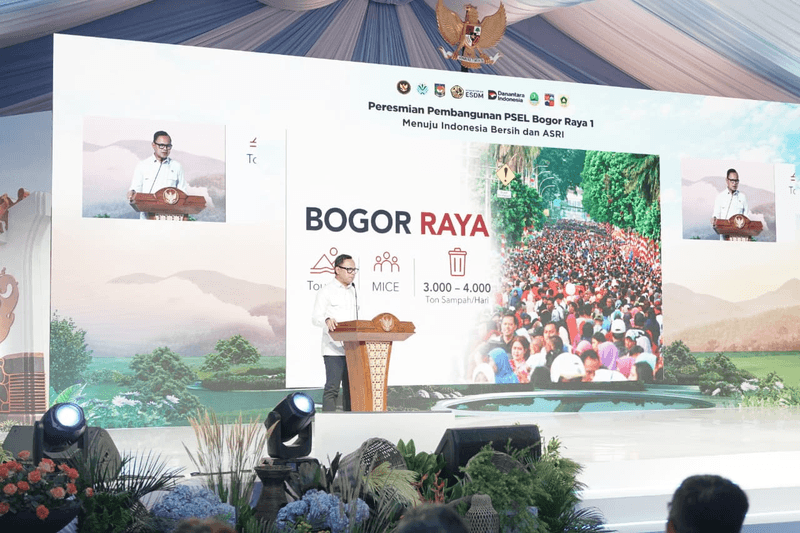
The awards recognized local governments in four categories: access to and quality of health services, public access to education services, implementation of the 3 Million Houses Program, and waste management and the ASRI environmental management program, which stands for Safe, Healthy, Clean, and Beautiful.
Home Affairs Minister Muhammad Tito Karnavian said the awards were organized by dividing local governments into six regions: Sumatra, Java-Bali, Kalimantan, Sulawesi, Maluku-Nusa Tenggara, and Papua. The regional division was intended to create a more balanced competition by taking into account the characteristics and capacities of each region.
“I’m sorry for those who have not received an award. Our assessment was carried out as objectively as possible by the team,” Tito said.
At the provincial level, East Nusa Tenggara and North Maluku received awards in the health services category. In education, the awards went to Maluku and West Nusa Tenggara.
West Nusa Tenggara and North Maluku were recognized for the implementation of the 3 Million Houses Program, while East Nusa Tenggara and West Nusa Tenggara received awards for waste management and ASRI environmental management.
Several regencies and cities in the Nusa Tenggara region were also among the award recipients. They included North Lombok, West Sumbawa, East Lombok, Ende, Nagekeo, Ngada, and East Manggarai regencies, as well as the cities of Mataram, Bima, and Kupang.
However, Bali’s absence from the Batch II list should be understood in the context of Kemendagri’s regional classification. Bali is grouped together with Java in the Java-Bali region, rather than the Maluku-Nusa Tenggara region.
Therefore, the absence of Bali from the Batch II recipients does not constitute a direct assessment of the performance of the Bali provincial government or the governments of its regencies and cities.
Kemendagri said the assessment process involved relevant ministries and government agencies according to their respective fields. The mechanism was designed to ensure that the awards were based on the performance of local governments.
Tito also emphasized that the awards were not merely ceremonial. Local governments receiving recognition could also receive fiscal incentives, which would be transferred to regional government accounts to support development programs and other local needs.
“The award is not just about giving a trophy. It also provides fiscal incentives,” Tito said.
For Bali, the indicators assessed under the regional government performance awards remain relevant, particularly the quality of health and education services, housing provision, and waste and environmental management.
However, Bali’s performance can only be directly compared with other governments in the same regional category once the assessment results for the Java-Bali region are announced.
The 2026 Regional Government Performance Awards are part of Kemendagri’s efforts to encourage local governments to improve their performance through interregional competition and performance-based incentives.




Discussion (0)
No comments yet.