
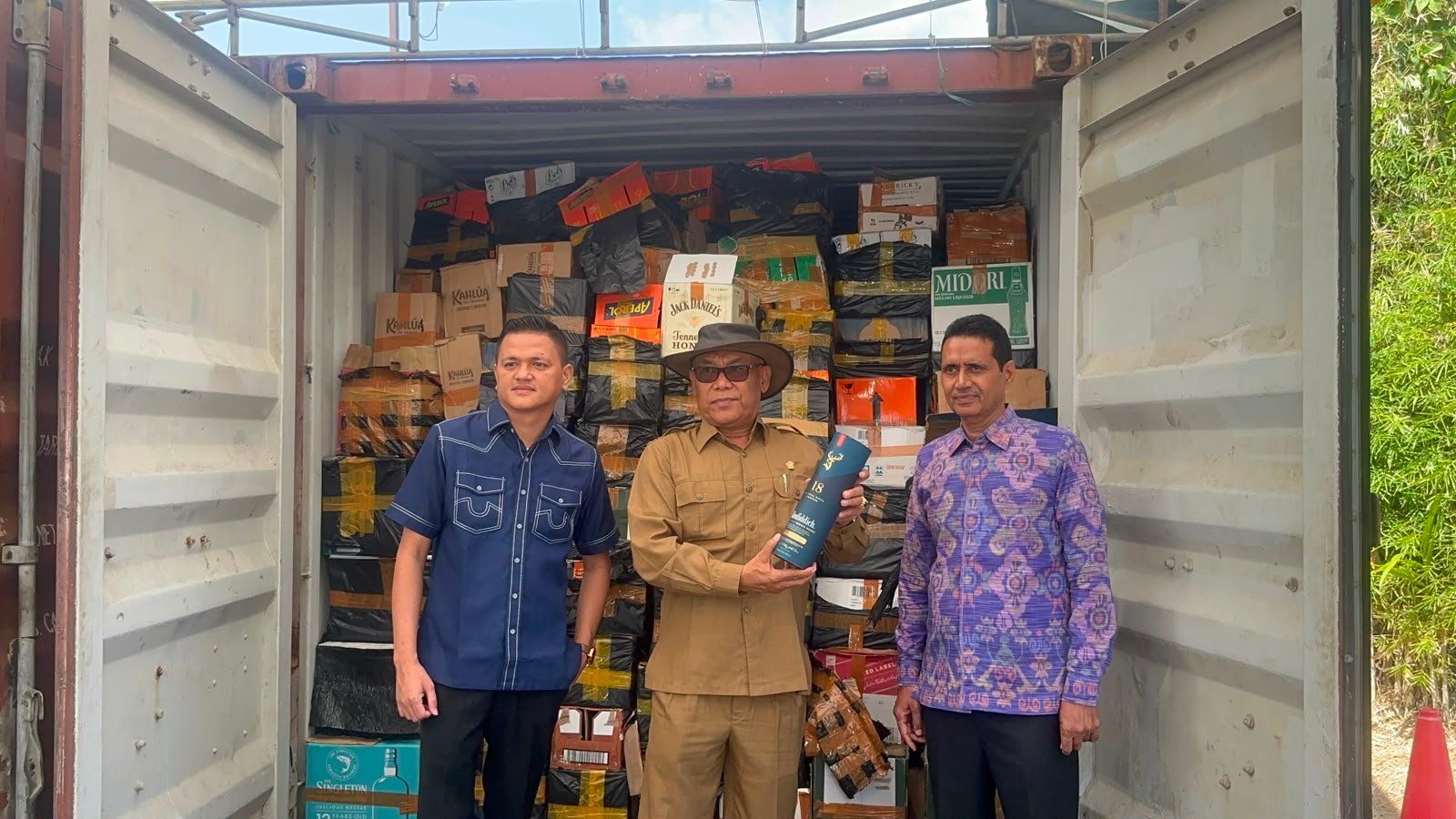
BALINEWSID.COM, DENPASAR – The Bali Provincial Legislative Council (DPRD) Commission I has raised concerns over transparency in the management of seized goods following an inspection at the Ngurah Rai Customs and Excise Office on Tuesday, August 4, 2026.
The surprise inspection, led by Commission I Deputy Chairman I Dewa Nyoman Rai, S.H., M.M., along with commission members Dr. Somvir and Zulfikar, was conducted as part of the legislature’s oversight function over customs and excise enforcement.
The delegation was received by Hasmi R. Karim, Head of Internal Compliance at the Customs and Excise Office at I Gusti Ngurah Rai, along with other officials.
During the inspection, lawmakers reviewed the procedures for enforcing regulations against illegal excise goods, including the seizure process, storage of evidence, and the subsequent handling of confiscated goods.
The lawmakers were shown a number of seized items, including hundreds of bottles of premium alcoholic beverages believed to be worth hundreds of millions of rupiah.
The inspection, however, also raised questions after Commission I said it did not receive a detailed list of the seized goods it had requested for oversight purposes.
Customs officials reportedly explained that the detailed data could not yet be provided because the investigation was still underway. They also cited the need for further verification concerning the authenticity and legal status of the goods.
Commission I Deputy Chairman I Dewa Nyoman Rai said the request for the data was part of the legislature’s constitutional oversight function and was intended to ensure that seized goods were managed transparently and accountably.
He stressed that transparency was essential to maintaining public trust, particularly when law enforcement involves goods with significant economic value.
The commission also referred to Indonesia’s Public Information Disclosure Law No. 14 of 2008, which establishes the principle of public access to information. At the same time, lawmakers acknowledged that certain information may be legally exempt from disclosure, particularly when releasing it could interfere with an ongoing law enforcement process.
Commission member Dr. Somvir focused on the legal status of the seized goods and urged authorities to respect the presumption of innocence.
He cautioned against prematurely labeling any goods as counterfeit before the evidence had been legally established.
“I question what guarantees there are. The bottles are still alleged evidence. They could be genuine, or they could be otherwise. How can they be immediately declared counterfeit before there is proof in court?” Somvir said.
He emphasized that every investigation must follow established evidentiary procedures under the criminal justice system and that all parties are entitled to legal certainty and fair treatment until a final and legally binding court decision is issued.
The inspection came after Customs and Excise, together with the Indonesian Military’s Strategic Intelligence Agency (BAIS TNI), uncovered a suspected distribution network involving alcoholic beverages allegedly bearing counterfeit excise stamps in Bali.
Authorities seized 19,142 bottles, equivalent to approximately 14,400.36 liters, of alcoholic beverages classified as Group B and Group C products from various brands.
The seized goods were estimated to be worth approximately Rp12.55 billion, while the potential state revenue loss prevented through the enforcement operation was estimated at Rp2.14 billion.
The joint operation was conducted on July 23, 2026, involving the Directorate of Enforcement and Investigation of Customs and Excise, the Bali, West Nusa Tenggara and East Nusa Tenggara Regional Customs Office, Denpasar Customs and Excise Office, and BAIS TNI.
Commission I said it would continue exercising oversight over government agencies, including Customs and Excise, to ensure that the handling of seized excise goods complies with the principles of professionalism, accountability, transparency and applicable law.
The inspection highlights the delicate balance between protecting an ongoing investigation and meeting public demands for transparency in the management of seized assets.
The Bali lawmakers said stronger coordination between oversight institutions and law enforcement agencies would be needed to ensure effective supervision without disrupting ongoing legal proceedings.




Discussion (0)
No comments yet.