
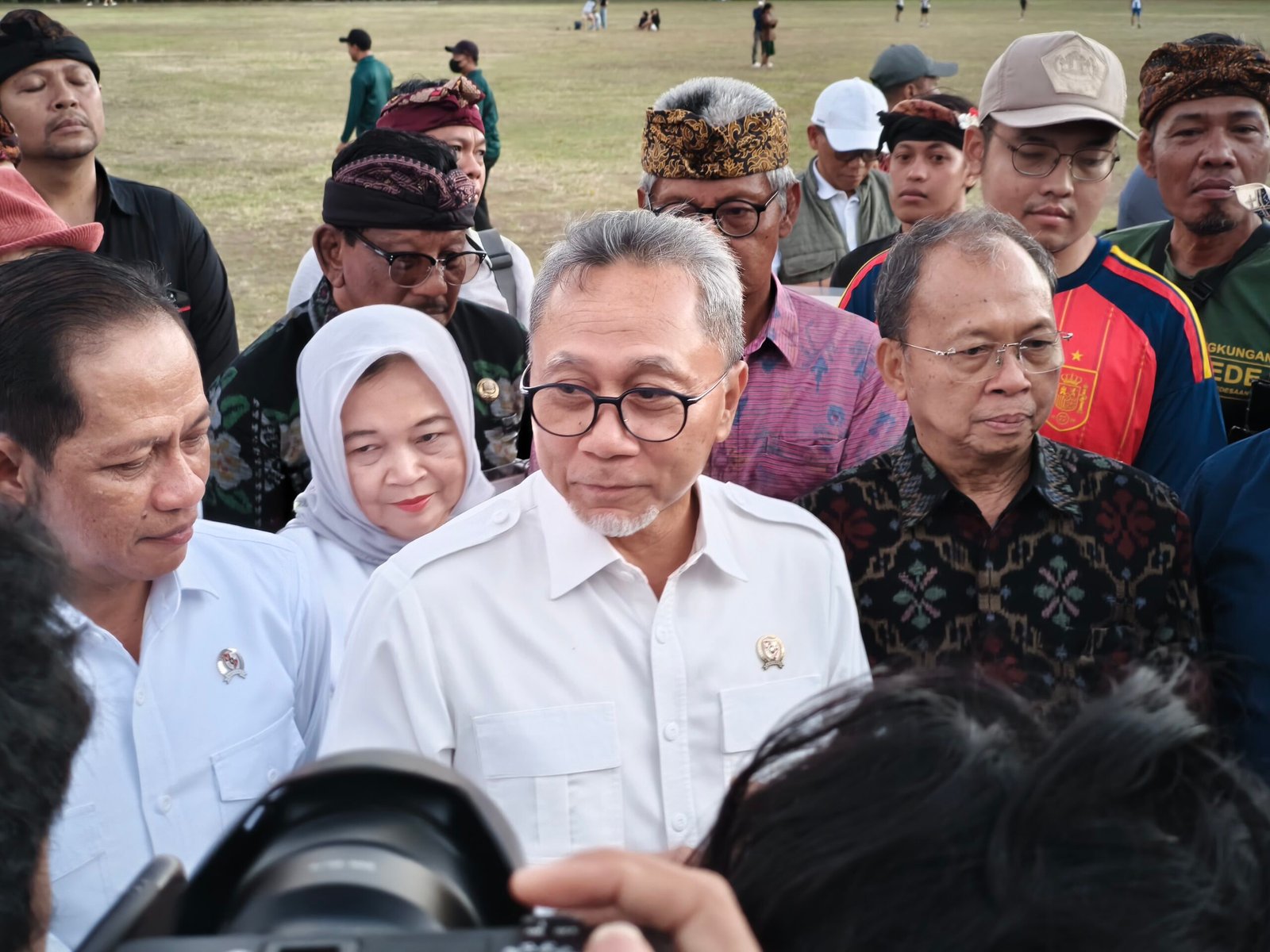
BALINEWSID.COM, DENPASAR – A dispute has emerged over the size of Bali’s waste management budget after Deputy Coordinating Minister for Food Affairs Hanif Faisal Nurofiq stated that the province allocates nearly Rp850 billion—close to Rp1 trillion—for waste management. The claim was immediately rejected by Bali Governor Wayan Koster, who said the figure does not represent Bali’s actual budget.
Hanif made the statement while addressing the declaration of the Waste Sorting from Source Movement in Denpasar on Tuesday (July 7, 2026). He said that when combining the budgets of the provincial government, eight regencies, and one municipality, Bali’s total allocation for waste management is already substantial.
“If we calculate the regional budgets allocated for waste management, the total is nearly Rp850 billion, almost Rp1 trillion. That is actually sufficient to address the waste problem. If we are serious about changing public behavior, those funds can be utilized much more effectively,” Hanif said.
According to Hanif, the biggest challenge in waste management is not funding but changing people’s behavior, particularly encouraging households to sort waste at its source.
He explained that regions which have successfully implemented source-based waste management required continuous public education and outreach. In some cases, village heads had to approach residents dozens of times before waste sorting became a common practice.
“Changing people’s behavior is not easy. It requires consistency. There are many challenges, but our commitment to solving the waste problem remains strong,” he said.
Hanif also praised the City of Denpasar and Badung Regency for achieving higher waste-sorting rates than other regions in Bali. He attributed their progress to restrictions on waste disposal at the Suwung Final Disposal Site (TPA Suwung), which forced local governments to develop innovative waste management solutions.
“Technically, Denpasar and Badung have higher waste-sorting rates because they were driven by restrictions on disposing waste at TPA Suwung. This challenging situation has encouraged innovation and creativity,” he added.
However, Governor Wayan Koster disputed Hanif’s figures, saying he had never received data indicating that Bali’s waste management budget had reached Rp850 billion.
“Perhaps the figure refers to nationwide data, not specifically Bali,” Koster said.
When asked about the actual amount allocated for waste management in Bali, Koster admitted he did not have the exact figure.
“I honestly don’t know the exact number yet,” he said briefly.
Despite the differing budget figures, the Bali Provincial Government remains committed to improving waste management across the island. The province has set a target for all regencies and municipalities to end the practice of open dumping at final disposal sites by the end of December 2026.
The provincial government also expects that restrictions on waste disposal at TPA Suwung will continue to encourage source-based waste management and strengthen public participation in waste sorting, creating a more sustainable waste management system from upstream to downstream.




Discussion (0)
No comments yet.