
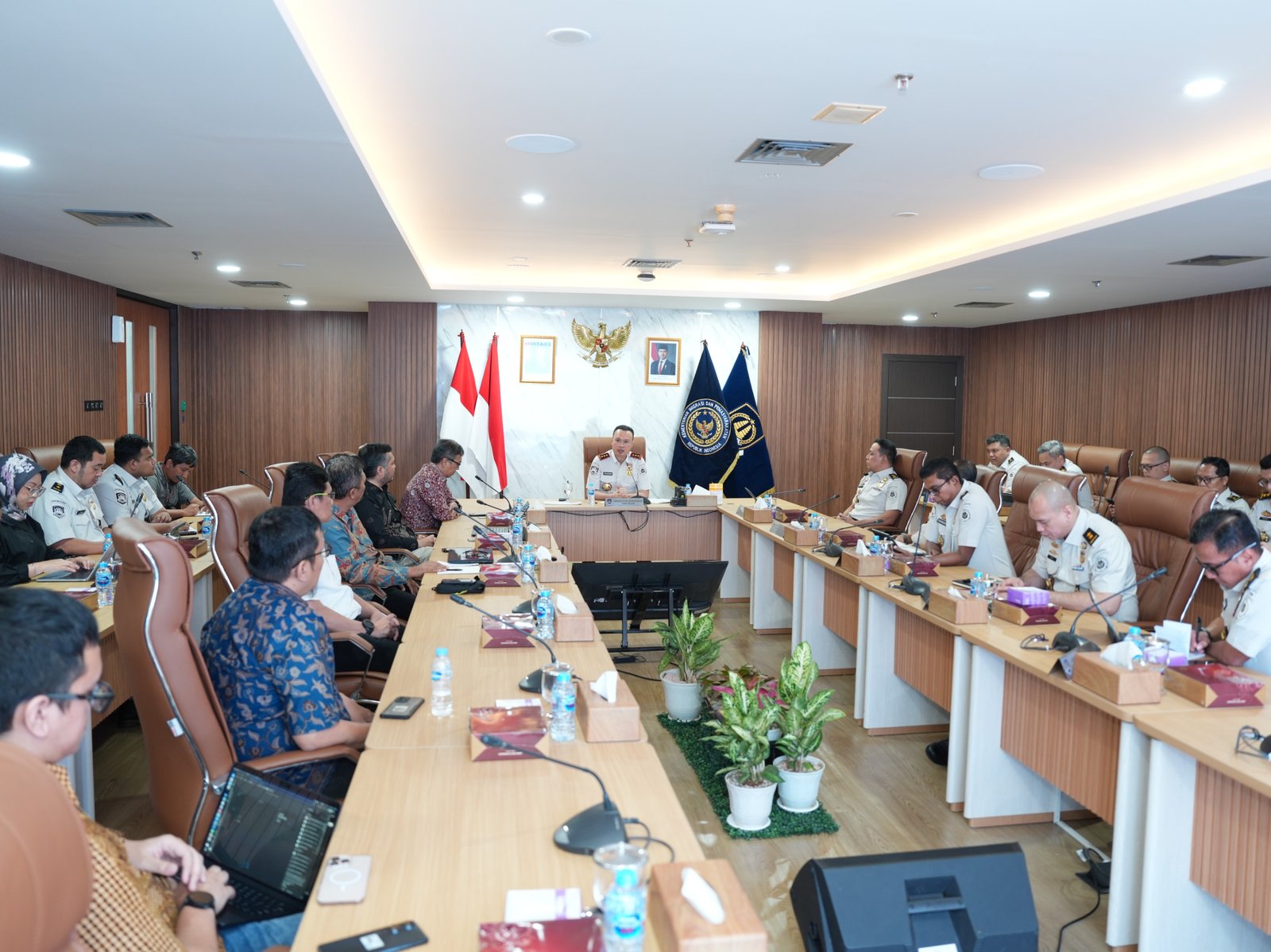
BALINEWSID.COM, JAKARTA – Indonesia’s Directorate General of Immigration has partnered with the Faculty of Mechanical and Aerospace Engineering (FTMD) at the Bandung Institute of Technology (ITB) to develop a “Digital Border Fence”, a drone-based surveillance system designed to strengthen immigration monitoring along the country’s vast land and maritime borders.
The initiative was announced following a strategic meeting between the Directorate General of Immigration and ITB representatives at the Immigration headquarters in Jakarta on Tuesday (June 30, 2026).
Director General of Immigration Hendarsam Marantoko said the idea was inspired by his visit to a defense exhibition in Singapore several months ago, where he observed advanced border security technologies dominated by foreign manufacturers.
“I was impressed by the sophisticated technologies on display, but I noticed that none of them were developed by Indonesians. Our country has talented engineers capable of producing technology of the same quality. That is why we decided to collaborate with one of Indonesia’s leading technology universities to initiate this Digital Border Fence,” Hendarsam said.
Indonesia shares approximately 3,111 kilometers of land borders, yet only 18 Integrated Border Crossing Posts (PLBN) and 38 Border Crossing Posts (PLB) are available across Kalimantan, Papua, and East Nusa Tenggara. Of these, three PLBNs have yet to become operational, while only seven PLBs currently facilitate cross-border movement due to border agreement constraints.
According to Immigration data, official crossings through land immigration checkpoints reached 679,867 travelers between January and April 2026. However, authorities continue to face significant challenges in monitoring illegal crossings through unofficial routes, commonly known as “mouse trails.”
These vulnerabilities are compounded by limited digital infrastructure in remote border areas, security risks for officers operating in conflict-prone regions, and persistent transnational crimes such as human trafficking, migrant smuggling, and commodity smuggling.
The Digital Border Fence will initially focus on Indonesia’s land borders with Malaysia in Kalimantan, Papua New Guinea in Papua, and Timor-Leste in East Nusa Tenggara. Maritime surveillance will prioritize the Riau Islands, Batam, and surrounding sea crossing routes.
To support the project, Immigration plans to deploy drone technology developed by ITB since 2019 in collaboration with PT Dirgantara Indonesia (PT DI). The drones are designed to operate continuously for up to 24 hours using solar-powered energy systems.
The surveillance platform combines two complementary unmanned aerial vehicles. The High-Altitude Long-Endurance (HALE) Drone will conduct continuous monitoring from an altitude of around 1,000 meters for up to 24 hours, providing wide-area border surveillance. Once suspicious movement is detected, the Mantis Drone will perform tactical close-range observation and visual interception.
The drone technology has previously been deployed successfully in Indonesia’s agricultural sector, providing confidence in its operational capabilities.
Hendarsam emphasized that the Digital Border Fence is not intended to physically stop illegal crossings but to deliver real-time situational awareness. When suspicious activity is detected in blind spots along the border, the system will immediately transmit precise coordinates to the nearest immigration or border security post, significantly reducing response times compared with conventional patrols.
“The drones also greatly expand our operational reach. Given the vast territory we must monitor, having fast and flexible aerial surveillance provides accurate preliminary intelligence before officers are deployed. It is also far more cost-effective than operating manned aircraft,” he said.
In the long term, the Digital Border Fence is expected to become a cornerstone of Indonesia’s immigration cybersecurity strategy while reducing reliance on foreign technologies.
Hendarsam said the collaboration between the Directorate General of Immigration, ITB, and PT Dirgantara Indonesia reflects the government’s commitment to strengthening national sovereignty through domestically developed innovation.
“By securing unofficial border routes with homegrown cyber technology and aerial surveillance, we can minimize opportunities for human traffickers and illegal border crossers while advancing Indonesia’s long-term technological independence,” he concluded.





Discussion (0)
No comments yet.