
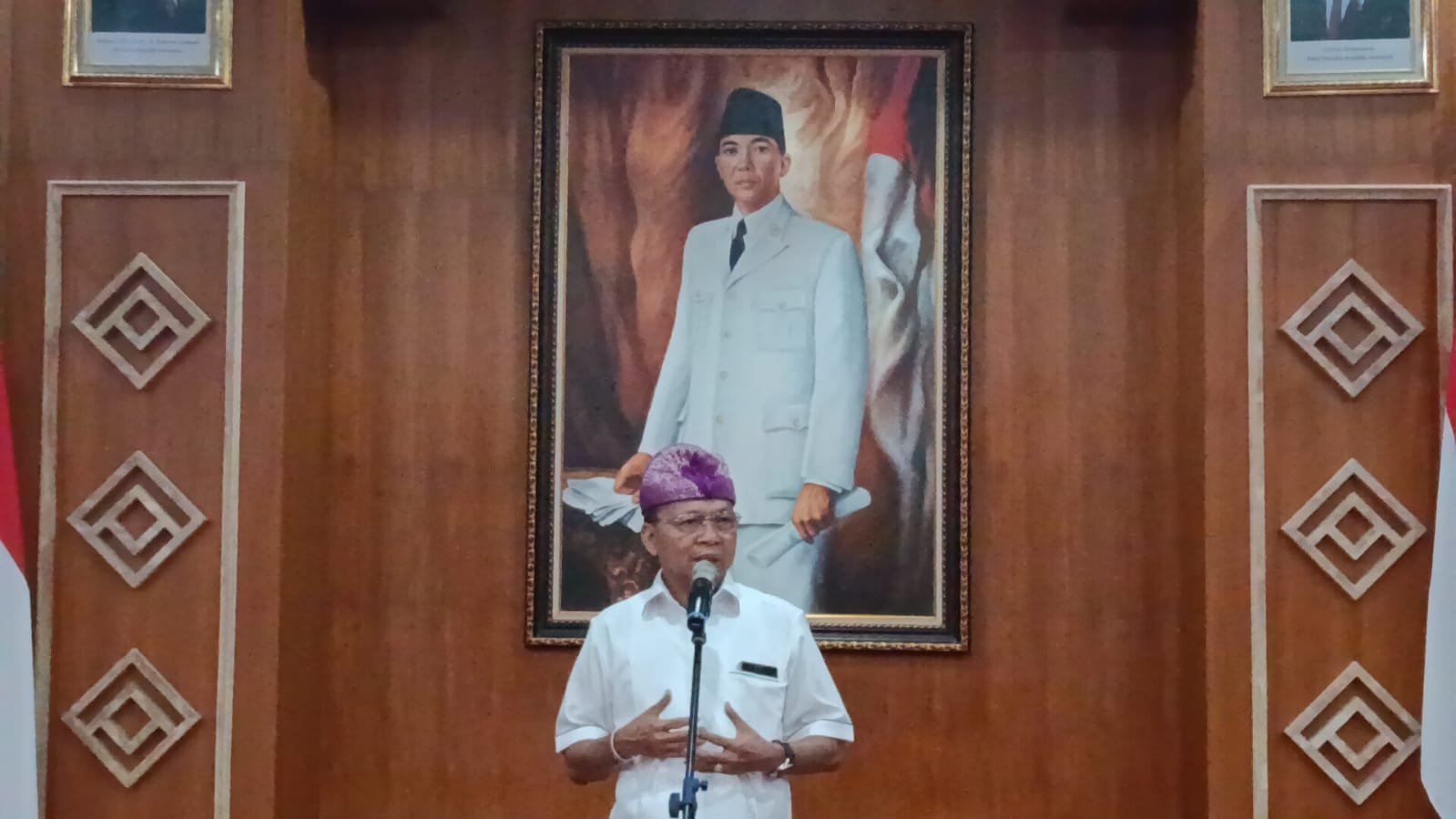
BALINEWSID.COM, DENPASAR — Bali Governor Wayan Koster has stressed that there is no room for misuse or irregularities in the management of Bali’s Foreign Tourist Levy (PWA) or tourist levy program, saying the entire payment and spending process is conducted digitally and monitored under existing regulations.
Speaking at a press conference on Friday (May 16, 2026), Koster said all levy payments are made online without any cash transactions involved.
“I need to emphasize that the foreign tourist levy is paid online and processed digitally. There are no cash payments,” Koster said.
According to him, the digital payment system minimizes the possibility of misconduct because there is no direct interaction between officers and foreign tourists during the payment process.
“There is no direct contact between people, so it does not allow for any form of misuse,” he said.
Koster explained that all tourist levy funds are directly transferred to an account at the Regional Development Bank of Bali before being forwarded to the Bali Provincial Government’s regional treasury. He said the mechanism ensures transparent and accountable financial management.
The governor added that the use of tourist levy funds has been regulated through regional bylaws and gubernatorial regulations. The funds are allocated for cultural preservation, environmental protection, infrastructure development, and tourism destination improvement across Bali.
He also stated that all expenditures are managed through the regional budget mechanism and supervised under existing laws, including audits conducted by Indonesia’s Supreme Audit Agency (BPK).
“There is no potential for misuse by anyone involved in the management of this foreign tourist levy, both in terms of revenue collection and its utilization,” said the chairman of the Bali chapter of the Indonesian Democratic Party of Struggle.
Koster said revenue from the tourist levy has continued to increase since the policy was introduced on February 14, 2024. In 2024, around 2.1 million foreign tourists paid the levy, generating approximately Rp318 billion in revenue.
Meanwhile, between January and December 2025, the number of paying foreign visitors rose to around 2.4 million people, accounting for about 34 percent of total international tourist arrivals to Bali. Total revenue during the period reached Rp369 billion.
Although compliance rates are still not fully optimal, Koster described the tourist levy as an important new source of locally generated revenue to support Bali’s development and sustainable tourism sector.
To further optimize levy collection, the Bali Provincial Government plans to strengthen public outreach and monitoring efforts, including involving representatives from foreign countries based in Bali.
Koster said he will invite 34 consuls general stationed in Bali to attend a meeting scheduled for May 21, 2026.
“In the near future, on May 21, I will invite all consuls general in Bali to contribute,” he said.





Discussion (0)
No comments yet.